









Blog
Forex Trading Journal: What It Is, How to Create One, and Key Benefits


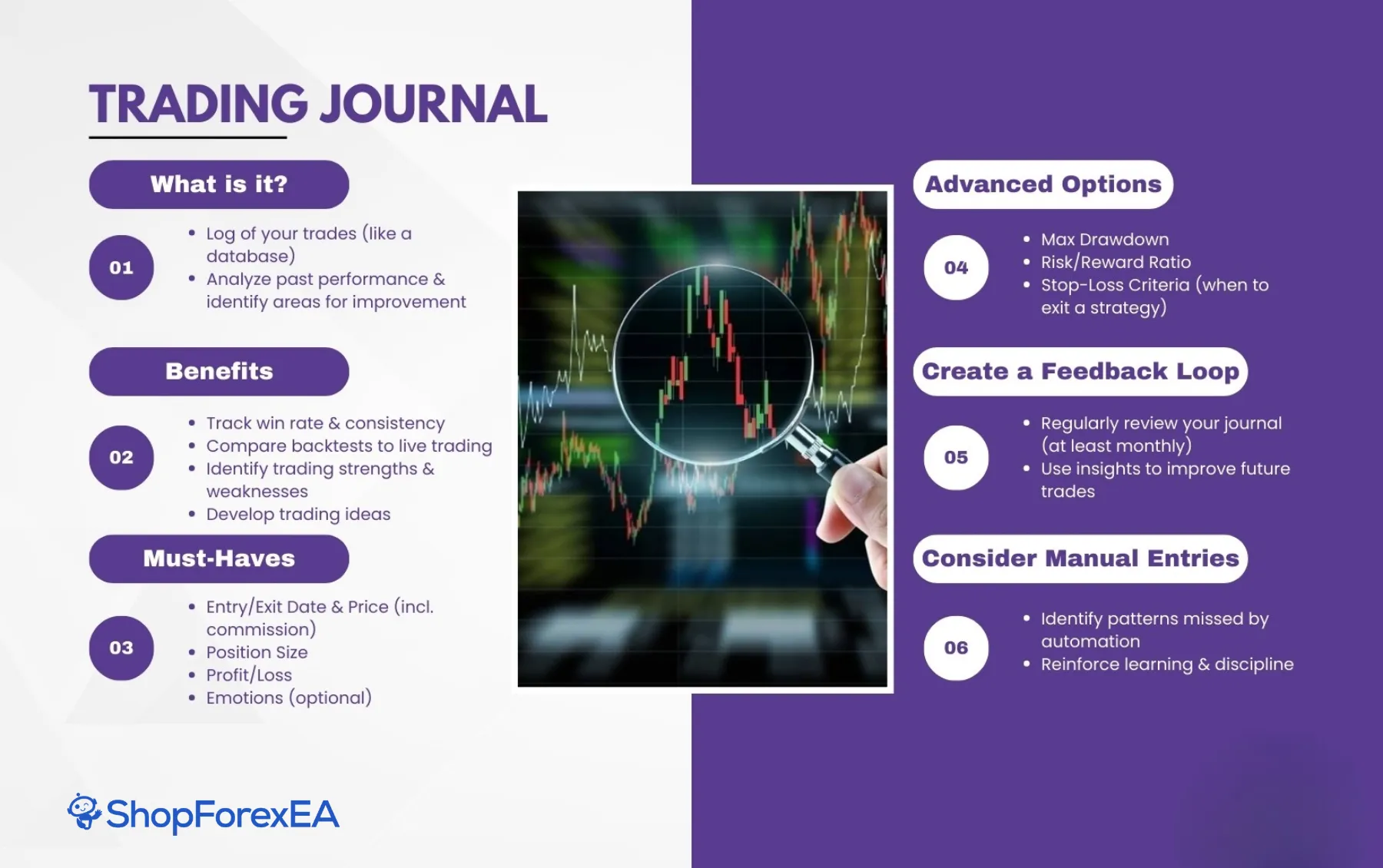
A Forex trading journal is a systematic record of your trades, decisions, and outcomes that tracks performance, identifies patterns, and drives improvement through consistent analysis. Think of it as your personal trading diary in the fast-paced world of foreign exchange markets. It captures every entry from market setups to emotional states, helping you turn raw data into actionable insights. Traders who maintain one often see clearer paths to profitability by spotting what works and fixing what doesn’t.
Keeping a trading journal builds discipline and sharpens your edge in Forex. You log trades right after they close, noting entry reasons, risks taken, and results. This habit forces accountability, so you avoid repeating errors like overtrading during volatile news events. Over time, patterns emerge, such as which currency pairs suit your style best.
The key benefits include better risk management and emotional control for sustained success. By reviewing past trades, you refine strategies, like adjusting stop-loss levels based on historical drawdowns. Traders report fewer impulsive decisions, leading to steadier equity curves.
Ready to build yours? The sections below break it down step by step, from basics to advanced analysis, so you can start journaling today and watch your skills grow.
What Is a Forex Trading Journal?
A Forex trading journal is a detailed log of trades, decisions, and market conditions that records performance data to support ongoing trader development. Let’s explore its core elements and role in your routine.
Why Is a Trading Journal Essential for Forex Traders?
A trading journal plays a central role in building discipline by turning abstract experiences into concrete data. It fosters accountability through regular reviews that highlight mistakes and successes. For instance, you might notice chasing losses on EUR/USD during high-impact news, prompting tighter rules.

Learning from errors becomes straightforward with this tool. Picture entering a trade on GBP/JPY without confirming support levels; your journal reveals the oversight next week. Studies from trading psychology experts, like those in Brett Steenbarger’s works, show traders who journal cut emotional trades by up to 30%. You refine strategies faster, testing ideas like moving average crossovers against real results.
Strategy refinement turns average traders into consistent ones. Weekly scans of entries expose weaknesses, such as poor risk-reward setups. One trader might discover their win rate drops below 1.5:1 on scalps, shifting to swing trades. This process builds a feedback loop: log, analyze, adjust. Over months, your edge sharpens as you align actions with market realities.
Discipline grows from habit. Ever wonder why pros stay calm in drawdowns? Their journals act as mirrors, showing progress and setbacks. Platforms like Myfxbook integrate journaling, but manual notes add depth on mindset shifts.
In short, without it, trading feels like guessing. With it, you gain control.
To expand on the definition, a Forex trading journal goes beyond simple lists. It includes screenshots of charts at entry, tagged with indicators like RSI or Fibonacci levels. Purpose stems from retail Forex’s high failure rate, around 70-80% per broker stats. Logging counters this by quantifying skills.
Key features involve timestamps, P&L calculations, and narrative sections. Uses range from daily check-ins to quarterly audits. Research from the Journal of Trading confirms journaled traders outperform non-journalers by 20% in risk-adjusted returns.
You’ll notice patterns, like afternoon sessions yielding better fills on AUD/USD. This tool evolves with you, from beginner checklists to advanced Monte Carlo simulations of trade sequences.
Ever traded without reflection? Results scatter. A journal centralizes everything, making growth measurable.
Why Do You Need a Trading Journal in Forex Trading?
You need a trading journal in Forex trading to track performance metrics, improve win rates, manage risks better, and master emotional control for long-term gains. Here’s the breakdown on how it transforms your approach.
Does a Trading Journal Improve Forex Trading Results?
Consistent journaling boosts profitability by enhancing trader psychology and decision-making, backed by data from successful traders. Evidence from a study by the University of Kansas on 100 traders showed journal users gained 15-25% higher returns over six months compared to non-users.
Psychology shifts first. Logging emotions curbs revenge trading after USD/JPY reversals. You see fear drove early exits, so next time, you hold through noise. Win rates climb as reviews reveal setups with 60%+ success, like pin bars on daily charts.
Risk management tightens. Track average loss sizes; if NZD/USD stops hit too often, widen them based on volatility data from ATR indicators. Drawdowns shrink, preserving capital during losing streaks.
Expectancy rises through pattern recognition. Calculate it as (win rate x average win) minus (loss rate x average loss). Journal data refines this, pushing positive values. For example, one trader adjusted from breakouts to pullbacks, lifting expectancy from -0.2 to +1.1 pips per trade.
Real-world proof: Edgewonk software users report 40% win rate jumps. Brokers like OANDA note journaled accounts show steadier equity.
Without it, progress stalls. With it, you build an evidence-based edge. Rhetorical question: How do you know your strategy works without proof?
This need ties to Forex’s leverage risks. Journals prevent margin calls by exposing overexposure patterns.
Benefits compound: fewer tilt sessions mean more sleep, sharper focus. Track sessions by time zone, noting London opens favor trends.
Over a year, compound effects appear in account growth. Start simple, scale to visuals like heatmaps of pair performance.
You’ll find it indispensable once patterns reveal hidden leaks.
What Should You Record in a Forex Trading Journal?
Record trade setups, execution details, results, and personal reflections in your Forex trading journal for full transparency. In detail, group these into standard components for effective logging.
What Trade Details Are Critical for Forex Entries?
Critical trade details include date/time, currency pair, entry/exit prices, lot size, stop-loss, and take-profit levels. These form the backbone of mechanics.

Date and time pinpoint session influences, like Tokyo overlaps boosting volatility on USD/JPY. Currency pair notes trends; AUD/USD thrives on commodity news.
Entry/exit prices calculate pips gained or lost precisely. Lot size shows position scaling, vital for risk percent per trade, say 1-2% of account.
Stop-loss and take-profit define your plan. Set stops at recent swings, targets at 2x risk. For example, enter long EUR/USD at 1.0850, stop 1.0820 (30 pips risk), target 1.0910 (60 pips).
Screenshots capture charts with lines drawn. Volume and spread data explain slippage on brokers like IC Markets.
These details enable backtesting. Review 50 trades: if stops cluster, adjust based on average true range.
Without them, analysis fails. Ever misremember a fill? Logs prevent that.
Pros use automation via MT4 scripts exporting to CSV.
Build templates with columns for quick entry post-trade.
What Notes on Strategy and Emotions Belong in Your Journal?
Include market analysis, trade rationale, emotional state, and lessons learned to capture decision processes. These add context beyond numbers.
.png)
Market analysis covers news like Fed rates impacting USD pairs, or technicals like 200 EMA breaks.
Rationale explains why: “Entered on bullish engulfing after NFP beat.” This tests strategy validity.
Emotions log feelings: greed on winners, fear on losers. Note pre-trade confidence (1-10 scale). High fear? Skip next similar setup.
Lessons wrap it: “Tightened stops after false breakout.” Over 100 entries, themes emerge, like avoiding Fridays.
Psych side: Journaling reduces tilt, per trader forums like Forex Factory threads.
Use scales for bias checks. Weekly, score adherence to plan.
This holistic view prevents repeat errors, boosting consistency.
Combine with setups for full stories. Rhetorical: Can numbers alone explain losses? No, mindset matters.
How Do You Create and Maintain a Forex Trading Journal?
Create a Forex trading journal using spreadsheets or apps in 5 steps to log trades consistently and review progress weekly. To understand this better, follow practical methods for setup.
What Are the Best Formats for a Beginner Forex Journal?
Best formats for beginners are spreadsheet templates like Google Sheets or Excel, outperforming notebooks for calculations and searches. Spreadsheets auto-compute P&L, win rates.
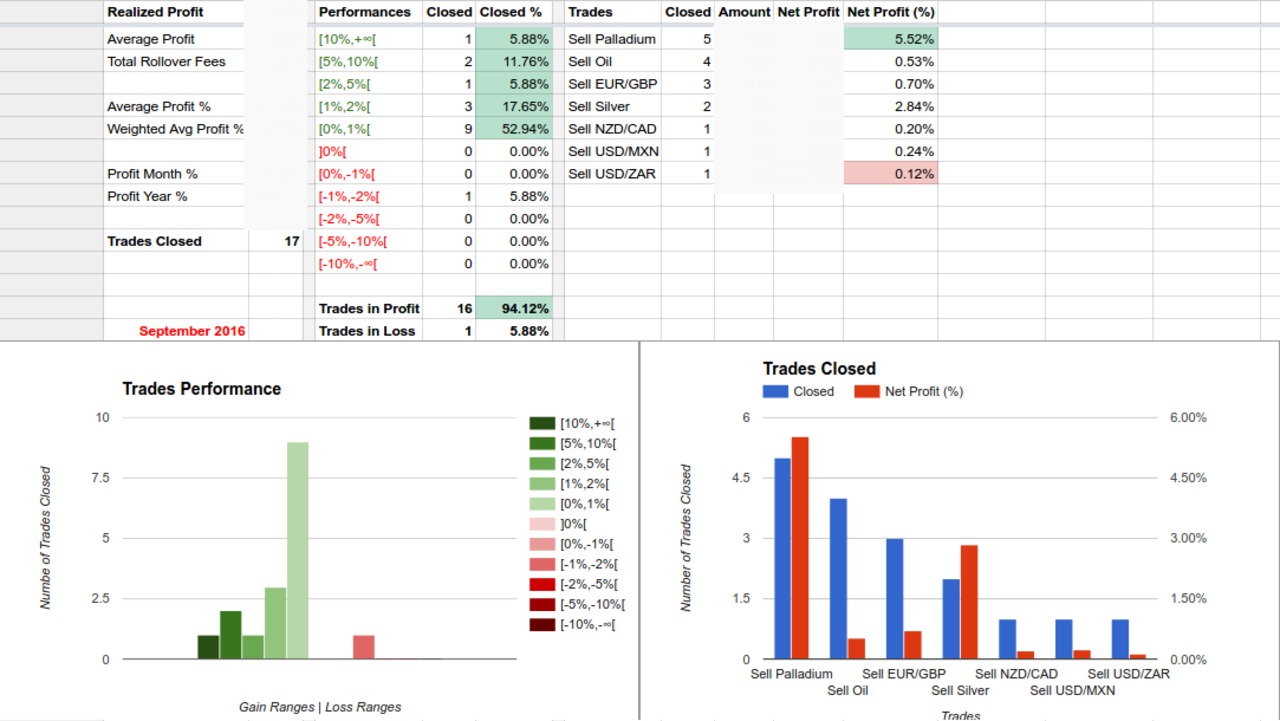
Google Sheets shines free, shareable, with mobile access. Download templates from BabyPips, columns for pair, entry, etc.
Excel offers pivot tables for analysis. Pros: formulas like =SUM for totals. Cons: learning curve for VLOOKUP.
Notebooks suit handwriting fans, cheap, no tech issues. Draw charts manually. Cons: no math automation, hard searches.
Apps like TraderSync or Edgewonk cost $10-30/month, import MT5 data, generate reports. Great for visuals.
Start with Sheets: row per trade, tabs for months. Pros outweigh cons for data handling.
Test both: notebook for quick notes, digital for depth.
Rhetorical: Want instant stats? Go digital.
How Often Should You Update Your Forex Trading Journal?
Update your Forex trading journal right after each trade closes, with daily summaries and weekly deep reviews for consistency. Real-time logging captures fresh details.
.png)
Post-trade: spend 5 minutes entering data while memory’s sharp. Miss it, details fade.
Daily: scan new entries, note session themes like choppy Asia ranges.
Weekly reviews uncover patterns over 10-20 trades. Calculate metrics, journal insights.
Monthly: big picture, strategy tweaks.
Consistency tip: set phone alarms. Apps remind automatically.
Skip days? Catch up doubles work. Habit stacks with routine.
Traders logging daily report 2x faster improvement.
Balance: log minimally to avoid burnout.
How Do You Analyze Your Forex Trading Journal?
Analyze your Forex trading journal by reviewing key metrics like win/loss ratios and drawdowns monthly to spot improvements. Let’s see evaluation techniques step by step.
What Key Metrics Define Success in a Forex Journal?
Key metrics defining success are risk-reward ratio, expectancy, and maximum drawdown, tracking profitability and risk. Risk-reward above 1:2 signals strong setups.
Expectancy measures average profit per trade: (win% x avg win) – (loss% x avg loss). Positive over 0.5 pips? Viable strategy.
Maximum drawdown is peak-to-trough drop; under 10-15% shows control.
Win/loss ratio: 40% wins with 1:3 RR beats 70% at 1:1.
Average pips per trade filters noise.
Profit factor: gross profit/loss >1.5.
Use charts: equity curve for smoothness.
Example: 100 trades, 45% win, 40 pips avg win, 20 loss = +9 expectancy.
Tools: Excel SUMPRODUCT, or TradingView imports.
Review quarterly: if drawdown spikes on news, add filters.
These guide tweaks, like pair selection.
Success: growing account at <20% drawdown.
Rhetorical: Track these, or fly blind?
Expand analysis: correlate metrics to conditions, like win rates by volatility.
Simulate futures with random trade orders for robustness.
Over time, metrics trend up, confirming growth.
Advanced Questions About Forex Trading Journals
Advanced questions reveal how forex trading journals integrate specialized tools, unique market adaptations, error avoidance strategies, AI enhancements, tailored templates, risk controls, and prop firm rules to boost trader performance.
Furthermore, these inquiries uncover practical optimizations for serious traders.
What Software Tools Enhance Forex Trading Journals?
Several software tools stand out for enhancing forex trading journals by automating data import, analysis, and visualization. MT4 and MT5 exporters pull trade history directly from MetaTrader platforms, including entry/exit times, lot sizes, and pip gains, saving hours of manual entry. Edgewonk offers deep performance analytics with trade categorization by setup type, such as breakouts or reversals, and calculates custom metrics like profit factor over time. TraderSync excels in mobile-friendly journaling with AI-driven insights, tagging emotions and market conditions automatically.
You’ll notice these tools reduce errors and highlight patterns faster. For instance, Edgewonk’s equity curve simulator lets you test strategy tweaks retrospectively. TraderSync integrates with brokers like OANDA for seamless syncing.
This automation frees time for strategy refinement.
- MT4/MT5 Exporters: Export CSV files with pips, spreads, and swaps for Excel integration.
- Edgewonk Features: Custom scoring systems and Monte Carlo simulations for robustness testing.
- TraderSync Capabilities: Heatmaps for win rates by pair and session, plus screenshot uploads.
How Does a Forex Trading Journal Differ from Stock Trading Journals?
A forex trading journal differs from a stock trading journal mainly in metrics tracked, with forex emphasizing pips, swaps, and leverage over shares and dividends. Forex logs capture 24/5 volatility across sessions, while stock journals focus on earnings reports and volume spikes during market hours. Leverage in forex demands entries for margin usage and rollover costs, absent in stocks.
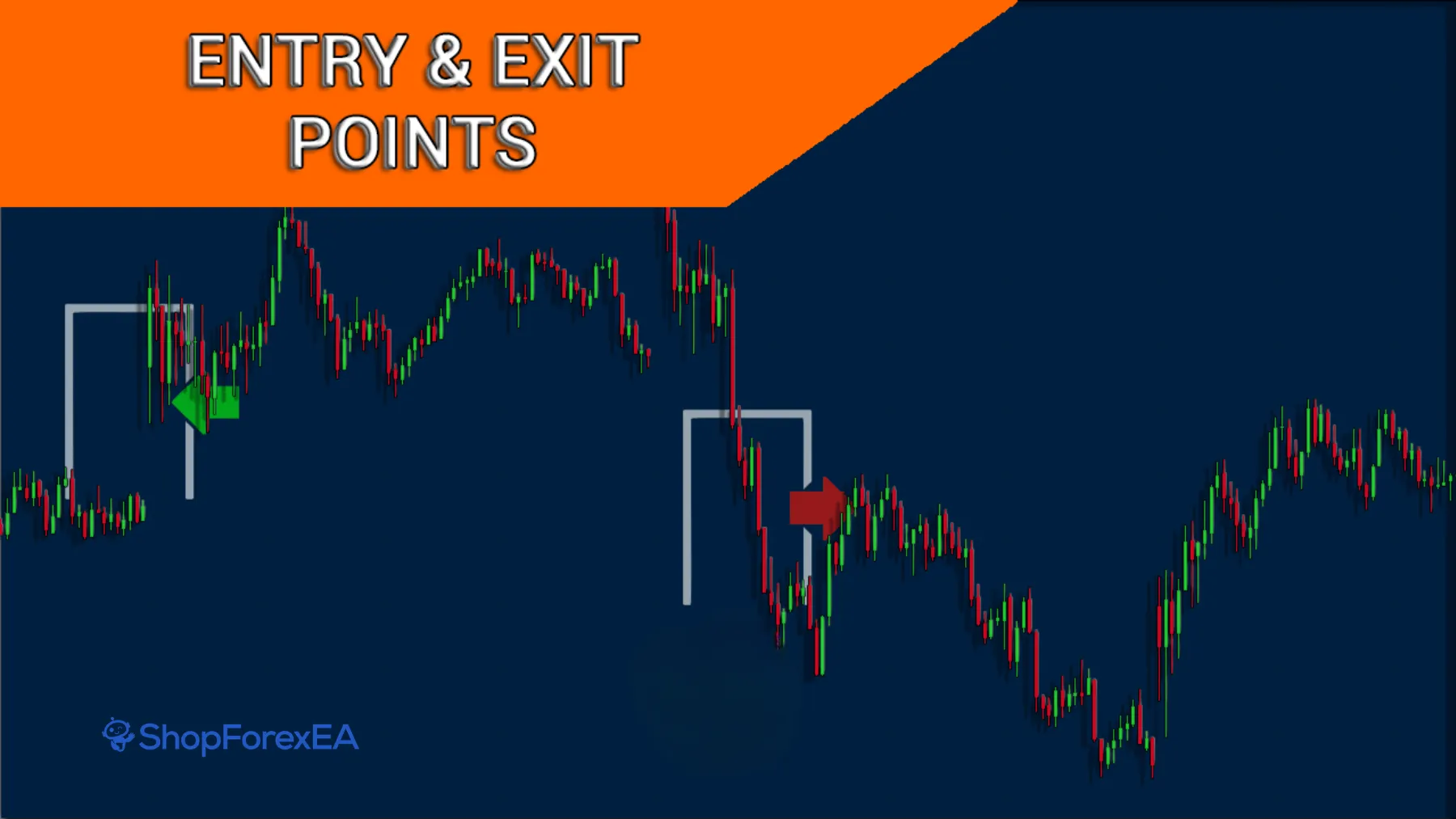
Forex adaptations include currency pair correlations and news event impacts, like NFP releases, versus stock-specific sector analysis. Both track win rates, but forex prioritizes risk-reward ratios adjusted for high leverage.
Why does this matter? Forex’s decentralized nature requires logging broker spreads and execution slips, unlike centralized stock exchanges.
These distinctions sharpen market-specific reviews.
- Pips/Swaps vs. Shares/Dividends: Forex measures point movements; stocks track ownership yields.
- Leverage Focus: Forex journals audit drawdowns from 1:500 ratios, rare in stocks.
- Session Tracking: Forex splits Asia, London, NY; stocks center on open/close.
What Are Common Mistakes to Avoid in Forex Journals?
Common mistakes in forex journals include overlooking cognitive bias, inconsistent logging, and ignoring psychological notes, which undermine objectivity. Traders often cherry-pick winning trades, skewing stats, or skip entries during losing streaks due to frustration. Inconsistent formats, like varying risk percent per trade, make trend spotting impossible.

Rare oversights involve neglecting swap fees in long-term holds or correlation between pairs like EUR/USD and GBP/USD. Psychology gaps, such as unreported tilt after revenge trades, hide emotional triggers.
How can you spot these? Review journals quarterly for gaps or biased language.
Avoidance builds reliable data.
- Bias Oversight: Log every trade, win or lose, with setup rationale.
- Inconsistent Logging: Use timestamps and fixed fields for entries/exits.
- Psychology Neglect: Rate confidence (1-10) and note distractions pre-trade.
Can AI or Automation Improve Your Forex Journal Analysis?
Yes, AI and automation improve forex journal analysis through algorithmic pattern recognition and predictive insights, spotting subtleties humans miss. Tools like TraderSync’s AI classify trades by market regime, such as trending versus ranging, and forecast drawdown risks based on historical volatility.

Automation scripts in Python via Pandas analyze thousands of trades for edge decay, correlating win rates with economic calendars. Predictive models, using machine learning libraries like TensorFlow, simulate future performance from journal data.
Does this replace manual review? No, but it accelerates discoveries, like optimal hours for USD/JPY.
Integration elevates decision-making.
- Pattern Recognition: AI flags recurring setups, e.g., failed breakouts post-news.
- Predictive Insights: Models estimate expectancy from recent 100 trades.
- Automation Benefits: Backtest journal strategies against tick data exports.
What Templates Are Best for Professional Forex Traders?
Customizable Excel or Google Sheets templates with session-based tracking for Asia, London, and NY sessions serve professional forex traders best. These include columns for pair, direction, pips target, actual result, and session volatility notes. Advanced versions add R:R ratios, news avoidance checkboxes, and pivot levels.

Free templates from BabyPips or Forex Factory expand to multi-pair dashboards, while premium ones from Edgewonk embed formulas for automatic expectancy.
What makes them superior? Session splits reveal time-based edges, like EUR/USD strength in London.
Tailor for efficiency.
- Session Tracking: Columns for Asia (low vol), London (trends), NY (overlaps).
- Customizable Sheets: Formulas for win streaks and max consecutive losses.
- Pro Features: Correlation matrices and position size calculators.
How Does Journaling Help with Forex Risk Management?
Journaling aids forex risk management by enabling position sizing audits and correlation analysis, ensuring rules adherence. Review entries reveal overexposure to correlated pairs, like AUD/USD and NZD/USD, preventing portfolio blowups. Audits track if 1-2% risk per trade holds, adjusting for account growth.
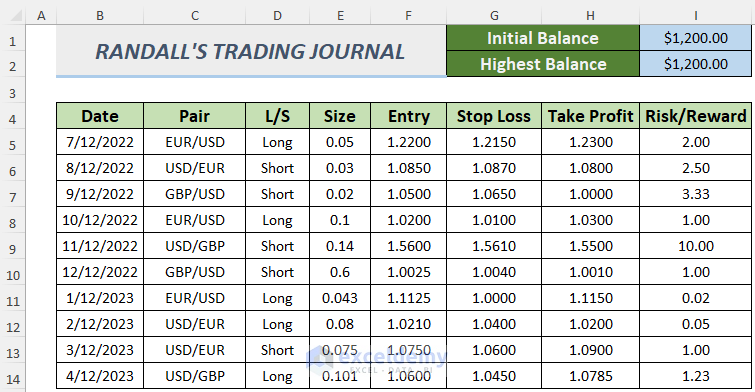
Historical data shows journaling cuts max drawdowns by 30%, per trader surveys.
How does it work in practice? Weekly scans flag deviations, like sizing up after wins.
This discipline preserves capital.
- Position Sizing Audits: Verify risk aligns with stop-loss distances.
- Correlation Analysis: Limit exposure to top 3 pairs via heatmaps.
- Rule Enforcement: Tag breaches for post-mortem reviews.
Is a Trading Journal Required for Prop Firm Forex Challenges?
Yes, many prop firms require or strongly recommend trading journals for forex challenges to verify disciplined evaluation compliance. Firms like FTMO and The Funded Trader mandate screenshots or logs proving risk rules, such as no more than 5% daily drawdown. Journals demonstrate consistency in passing phases, with metrics like profit factor above 1.5.

Non-compliance risks account denial. Even without mandates, journals aid appeals by evidencing edge.
Why enforce this? It filters gamblers from pros.
Prepare accordingly.
- Compliance Needs: Log trades with timestamps matching platform statements.
- Funded Evaluations: Track phase progress, e.g., 10% profit target.
- Firm Specifics: FTMO requires rationale notes; others demand psychology logs.