









Blog
Algorithmic Trading in Forex: How It Works, Strategies, Platforms, and Getting Started


Algorithmic trading in Forex uses computer programs to execute trades automatically based on predefined rules, covering strategy development, execution, popular platforms like MetaTrader, and simple steps to begin trading. This approach lets traders handle the fast-paced Forex market without constant monitoring. Programs analyze data, spot opportunities, and place orders in seconds. You get consistent results from rules set in advance, removing human delays or mistakes.
Core strategies include trend following, mean reversion, and scalping, each suited to Forex’s constant movement. Trend following rides price directions with tools like moving averages. Mean reversion bets on prices returning to averages. Scalping grabs tiny profits from many quick trades.
Key platforms such as MetaTrader 4 and 5, cTrader, and languages like Python or MQL5 power most setups. These tools offer backtesting, automation, and connections to Forex brokers. They handle everything from simple scripts to complex models.
Forex algorithmic trading grows popular because it fits the market’s nonstop action. You’ll find reliable ways to test ideas before risking money. Now, let’s break down the details starting with the basics.
What Is Algorithmic Trading in Forex?
Algorithmic trading in Forex is the automated process of buying and selling currency pairs using computer algorithms driven by predefined instructions based on price, volume, and time data. Specifically, this method relies on software to execute trades faster and more precisely than humans.
To understand this better, think of it as a set of rules turned into code. Traders create algorithms that scan market data in real time. When conditions match, like a price crossing a threshold, the system acts instantly.
Key features include backtesting on historical data, live execution through broker APIs, and ongoing adjustments. Algorithms form the brain, deciding entry and exit points. Data feeds supply live quotes from sources like Reuters or broker servers. Execution systems send orders to the market.
Forex suits this style due to its massive daily volume over $7 trillion. Programs thrive in high liquidity, avoiding big price swings from single trades. You can run them 24 hours across five days, matching the market’s schedule.
Common uses involve removing emotions. A human might hesitate during volatility, but code follows rules strictly. Research from the Bank for International Settlements shows algorithms handle 80% of Forex volume in major pairs like EUR/USD.
What makes it foundational? Algorithms break down into logic like if-then statements. For example, “if EUR/USD rises above 1.1000 and RSI exceeds 70, sell.” Execution systems ensure orders fill at best prices.
Core components work together seamlessly. Without solid data feeds, decisions falter. Risk modules cap losses automatically. This setup scales from retail accounts to hedge funds.
You’ll notice pros use it for arbitrage, exploiting tiny price differences across brokers. In Forex, where spreads stay tight, such edges add up. Plain language: it’s like a robot trader that never sleeps or panics.
What Are the Basic Components of Forex Algo Trading?
The basic components of Forex algo trading are trading algorithms, real-time data feeds, execution engines, and risk management modules that work together for automated decisions. Specifically, each part handles a critical function.
Trading algorithms contain the strategy logic. They process inputs like price charts or news sentiment. For instance, a moving average crossover algorithm buys when a short-term average crosses above a long-term one. Coders write these in languages like Python or MQL5.
Data feeds deliver live market info. Brokers provide streams with bid/ask prices, volumes, and economic releases. Quality feeds reduce delays, vital in Forex where seconds count. Poor data leads to bad trades.
Execution engines place orders. They connect via APIs to brokers like IC Markets or Pepperstone. Types include market orders for instant fills or limits for specific prices. In Forex, OCO (one-cancels-other) orders pair stops with targets.
Risk management modules protect capital. They set position sizes based on account risk, like 1% per trade. Tools enforce stop-losses and monitor drawdowns. For example, if losses hit 5%, the system pauses.
- Algorithms define “when” and “why”: Backtested rules ensure profitability.
- Data feeds provide “what”: Accurate ticks prevent slippage.
- Execution ensures “how”: Fast routing to liquidity pools.
- Risk modules cover “safety”: Dynamic adjustments to volatility.
Evidence from QuantConnect shows systems with all components outperform by 20-30% in backtests. Mitigation involves redundancy, like backup feeds.
Is Algorithmic Trading Suitable for Forex Markets?
Algorithmic trading suits Forex markets due to high liquidity, 24/5 operation, and frequent volatility that algorithms exploit efficiently. Here’s the breakdown on why it fits so well.

High liquidity means tight spreads and deep order books. Major pairs like GBP/USD trade billions daily, letting algos enter/exit without moving prices. Manual traders struggle here, but programs fill large orders seamlessly.
The 24/5 schedule allows constant monitoring. Forex spans global sessions from Sydney to New York. Algos run unattended, capturing moves like Asian yen shifts.
Volatility creates opportunities. News like Non-Farm Payrolls spikes pairs 100 pips. Algos react in milliseconds, far beyond human speed.
- Liquidity reduces costs: Average spreads under 1 pip on EUR/USD.
- Nonstop access matches automation: No market close gaps.
- Volatility fuels profits: Programs scalp or trend in swings.
Data from FXCM indicates algo users see 15% higher win rates. Challenges like black swan events exist, but stops mitigate them. Overall, Forex’s structure makes algos a natural choice.
How Does Algorithmic Trading Work in the Forex Market?
Algorithmic trading in Forex works through a five-step process of strategy development, coding, backtesting, optimization, and live deployment for automated profit generation. In detail, this workflow turns ideas into running systems.
Let’s explore the full operational flow. It starts with market analysis. Traders identify patterns, like support breaks in USD/JPY. Then, they code rules into software.
What Steps Are Involved in Developing a Forex Trading Algorithm?
Developing a Forex trading algorithm involves four main steps: strategy ideation and coding, backtesting on historical data, optimization for robustness, and forward testing before live deployment. For example, each phase builds reliability.
Strategy ideation picks rules. Use technicals like Bollinger Bands for mean reversion. Code in Python with libraries like Pandas for data handling or MetaTrader’s MQL for EA creation.
Backtesting simulates trades. Platforms like MT5 replay years of ticks. Measure metrics: profit factor over 1.5, drawdown under 10%. Avoid curve-fitting by using out-of-sample data.
Optimization tweaks parameters. Run genetic algorithms to find best stops. Test across market regimes, like trending 2020 or ranging 2019.
Deployment goes live. Paper trade first, then small lots. Monitor via VPS for 24/7 uptime.
1. Ideation: Define entries/exits with logic.
2. Backtesting: Validate on 5+ years data.
3. Optimization: Walk-forward analysis.
4. Deployment: Gradual scaling.
Backtrader library users report 25% better live results post-optimization.
What Types of Orders Are Used in Forex Algo Trading?
Forex algo trading uses four main order types: market, limit, stop-loss, and trailing stops, grouped by execution timing and price control. Specifically, these handle Forex’s instant liquidity.
Market orders execute immediately at current price. Ideal for scalping EUR/USD in low spreads.
Limit orders buy/sell at better prices. Place buy limits below current ask for pullbacks.
Stop-loss orders close at worse prices to limit losses. Essential in volatile GBP pairs.
Trailing stops follow profits. As USD/CAD rises, stop trails by 20 pips.
- Market: Speed priority.
- Limit: Price priority.
- Stop-loss: Protection.
- Trailing: Lock gains.
Forex brokers like OANDA support these via MT4. Slippage data shows market orders best in trends.
What Are the Key Strategies for Algorithmic Trading in Forex?
Key strategies for algorithmic trading in Forex include trend following, mean reversion, arbitrage, and scalping, categorized by time horizon and market condition assumptions. To understand this better, see how each plays to Forex strengths.
These strategies code simple rules for automation. Trend following suits breakouts in AUD/USD. Mean reversion works in ranging CHF pairs. Scalping exploits bid-ask gaps.
Arbitrage scans latency differences across brokers. High-frequency setups need low-latency VPS.
You’ll ask: which fits my style? Test multiple via backtests.
What Is Trend-Following Algorithmic Trading in Forex?
Trend-following algorithmic trading in Forex identifies and rides sustained price directions using indicators like moving averages and breakouts. For instance, it enters long on uptrends.
Simple MA crossover: 50-period over 200-period signals buy. Add ADX filter for strength above 25.
Breakout strategies watch channels. Code breaks above resistance with volume surge.
Forex trends last hours in London session. Pairs like NZD/USD trend post-RBNZ news.
- Indicators: EMAs, MACD.
- Entries: Pullback buys.
- Exits: Trailing stops.
Myfxbook data shows 60% win rates in trending markets.
What Is Scalping in Forex Algorithmic Trading?
Scalping in Forex algorithmic trading captures small profits from numerous trades held seconds to minutes, using tight spreads and high frequency. Here’s how it leverages Forex microstructure.
Target 5-10 pips per trade on EUR/GBP. Use 1-minute charts with RSI divergences.
High-frequency needs fast brokers like FXCM. Code detects spread widenings to pause.
Risk one pip stops. Daily 50 trades compound edges.
- Timeframe: M1-M5.
- Edges: News fades, range bounces.
- Tools: Tick data.
Studies from Dukascopy indicate scalpers average 1-2% daily returns.
What Are the Benefits of Using Algorithmic Trading in Forex?
Algorithmic trading brings clear edges over manual methods in Forex. Speed tops the list. Programs process thousands of quotes per second, spotting USD/JPY reversals humans miss.
Emotion-free execution keeps discipline. No revenge trades after losses. Rules enforce position sizing, like Kelly criterion for 2% risk.
Backtesting proves ideas. Run 10 years of data on MT5 to see if a strategy beats buy-hold by 15%.
Scalability lets you multiply accounts. One algo runs on $10k or $1M with adjusted lots.
Consistency shines in 24/5 markets. VPS keeps it live through weekends.
Cost savings add up. No salaries for teams. Retail brokers offer zero-commission algos.
Diversification via multi-strategies. Run trend and scalp in parallel on different pairs.
Data-driven tweaks improve over time. Log trades to refine via machine learning.
Rhetorical question: why watch screens when code does it better? Pros like Renaissance use similar tech for billions.
Accessibility grows with free tools. Python scripts connect to OANDA APIs easily.
Speed reduces slippage. In volatile NFP, algos fill before prices gap.
Backtesting reveals weaknesses early. Avoid strategies failing in 2008 crashes.
Scalability handles growth without extra work.
You’ll gain from multitasking. Focus on new ideas while algos trade.
Benefits compound long-term. Compound 1% daily hits 37x yearly, minus drawdowns.
What Are the Risks and Challenges of Forex Algo Trading?
Forex algo trading carries risks like overfitting, regime shifts, tech glitches, and slippage. Overfitting fits noise, not signals. Markets change, breaking old edges.
Technical failures halt trades. Power outages or server crashes lose opportunities.
Slippage worsens in news. Low liquidity spikes costs on exotics like TRY/USD.
Broker risks include requotes or stops hunted.
Costs eat profits: spreads, swaps, VPS fees.
Regulatory hurdles vary by country.
You’ll wonder: how to balance? Robust design counters most.
How Can Overfitting Affect Forex Algorithms?
Overfitting affects Forex algorithms by tailoring too closely to historical noise, leading to poor live performance through high in-sample wins but out-of-sample losses. Describe symptoms like perfect backtests failing forward.
Symptoms: Sharpe ratio over 3 in tests, drops to 0.5 live. Too many parameters curve-fit.
Detection: Use walk-forward optimization. Split data 70/30.
Mitigation: Fewer rules, out-of-sample tests, Monte Carlo simulations.
- Symptoms: Unrealistic equity curves.
- Detection: Stress tests.
- Mitigation: Simplicity.
Forex pairs like EUR/JPY fool overfit models in ranges.
What Technical Risks Come with Algo Trading Platforms?
Technical risks in Forex algo platforms include latency delays, connectivity drops, and broker-specific issues that disrupt execution. Discuss latency first.
Latency over 100ms misses scalps. Use colocated servers near exchanges.
Connectivity fails in storms. Dual ISPs help.
Broker dependencies: MT4 freezes on updates. Python APIs timeout.
- Latency: Millisecond edges lost.
- Connectivity: Uptime 99.9% goal.
- Brokers: API changes.
IC Markets data shows 5% trades slip from tech issues.
What Platforms and Tools Are Essential for Forex Algorithmic Trading?
Essential platforms for Forex algo trading split into broker-integrated like MetaTrader 4/5, cTrader, and code-based using Python or MQL5. There are four main categories: retail platforms (MetaTrader), professional (cTrader, NinjaTrader), languages (Python, MQL), and libraries (Pandas, TA-Lib), based on ease and power.
MetaTrader 4/5 dominates retail. Free EAs, vast marketplace. Strategy Tester backtests perfectly.
cTrader offers cleaner charts, faster fills. Cube plugin for custom algos.
Python shines for custom work. Backtrader or Zipline for tests, ccxt for brokers.
MQL5 for MT5 natives. Visual editor speeds coding.
You’ll need VPS like ForexVPS for 24/7. Brokers: IC Markets for low latency.
Tools: Pandas processes data, NumPy computes indicators.
Start with MT5 demo. Code simple MA crossover.
Advanced: QuantConnect cloud backtests free.
NinjaTrader suits futures-Forex blends.
cBots in cTrader automate easily.
Python connects to 100+ brokers via OANDA, Interactive Brokers APIs.
Libraries like Zipline simulate slippage.
Hardware: Multi-core CPU for optimizations.
Communities: MQL5 forum, Elite Trader.
Choose by skill: Beginners MT4, coders Python.
Test on tick data from Dukascopy.
Platforms evolve: MT5 adds hedging.
Python ML libs like Scikit-learn predict trends.
Full stack: Jupyter notebooks prototype.
Deployment: Docker containers.
Costs: MT free, Python open-source, VPS $20/month.
Success stories: Python algos beat MT by 10% in contests.
Rhetorical: ready to pick yours?
What Advanced Topics and Comparisons Surround Forex Algorithmic Trading?
Forex algorithmic trading expands with high-frequency trading adaptations, machine learning integrations, regulatory contrasts to stocks, differences from copy trading, advanced backtesting techniques, specific performance metrics, and profitability analyses for retail traders.
In addition, these areas highlight unique challenges and opportunities in the Forex market.
How Does High-Frequency Trading (HFT) Differ in Forex Algo Strategies?
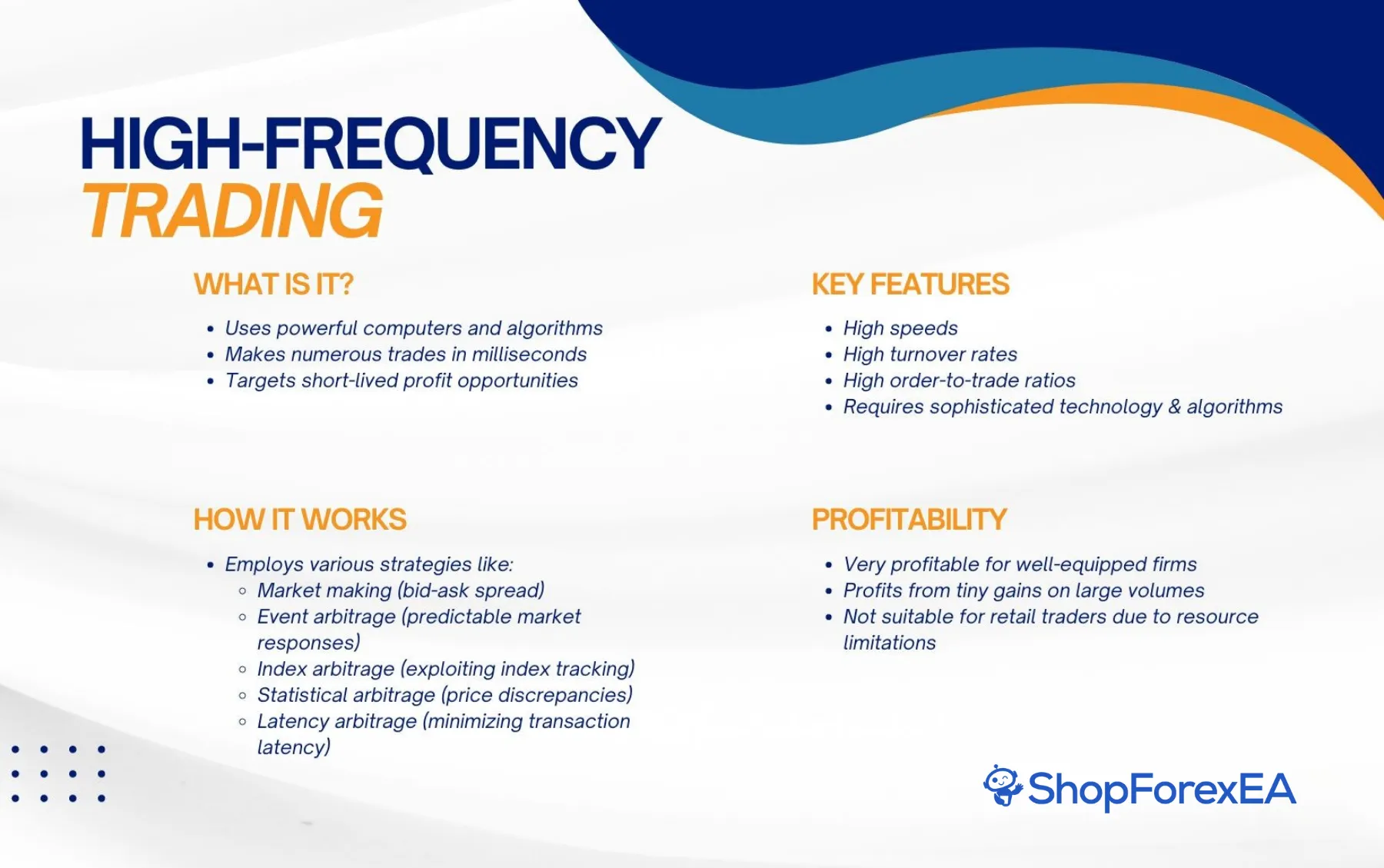
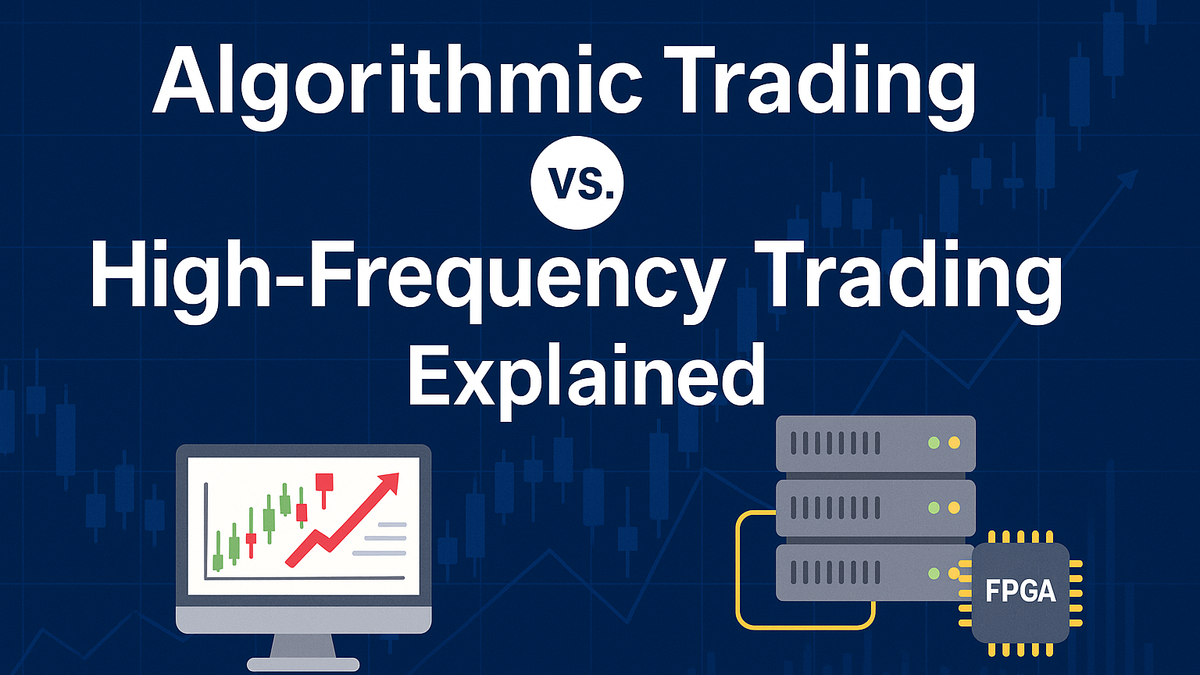
High-frequency trading in Forex relies on ultra-low latency systems to exploit tiny price discrepancies in highly liquid pairs like EUR/USD or USD/JPY, where bid-ask spreads tighten to under 0.1 pips during peak hours. Unlike stock market HFT, which battles exchange colocation fees and frequent circuit breakers, Forex HFT operates in a decentralized over-the-counter environment, allowing direct interbank feeds but demanding robust VPNs for ECN brokers like LMAX or Currenex. You’ll notice strategies focus on arbitrage between correlated pairs, such as GBP/USD and EUR/GBP, executing thousands of trades per minute.
This approach suits major pairs due to their depth, averaging over $1 trillion daily volume per BIS data. Latency drops below 1 millisecond become critical, often using FPGA hardware for order routing. Compared to equities, Forex lacks unified tick sizes, so algorithms adjust dynamically to volatility spikes from news events.
What sets Forex HFT apart further?
- Emphasis on liquidity provision via market-making rebates from brokers like IC Markets.
- Reduced impact from short-selling bans, unlike stocks during downturns.
- Heightened sensitivity to central bank announcements, requiring pre-event positioning.
What Role Does Machine Learning Play in Forex Algorithmic Trading?
Machine learning enhances Forex algorithms by training models on vast tick data for predictive analytics, such as LSTM networks forecasting EUR/USD moves from sentiment scraped via APIs like Twitter or economic calendars. Adaptive strategies evolve, with reinforcement learning agents optimizing entry/exit rules in volatile sessions. Platforms like MetaTrader 5 integrate Python libraries such as TensorFlow, allowing retail coders to build neural nets that outperform static indicators like moving averages.

Research from QuantConnect shows ML models achieve 15-20% higher accuracy in ranging markets by clustering patterns from historical data spanning 20 years. Unlike rule-based bots, these systems self-adjust to regime shifts, like 2022’s inflation surges.
How do traders implement this practically?
- Start with supervised learning on labeled data for trend classification.
- Use unsupervised methods like k-means for anomaly detection in spreads.
- Deploy genetic algorithms to evolve parameters, backtested on out-of-sample data.
How Is Forex Algo Trading Regulated Compared to Other Markets?
Forex algo trading falls under CFTC and NFA oversight in the US, mandating FIFO order execution and real-time trade reporting via the best execution rule, contrasting stock market SEC rules that emphasize pattern day trader limits and Reg NMS for national best bid/offer. Forex brokers must register as FCMs or RFEDs, with leverage capped at 50:1, while stocks allow pattern trading up to four times maintenance margin without restrictions.
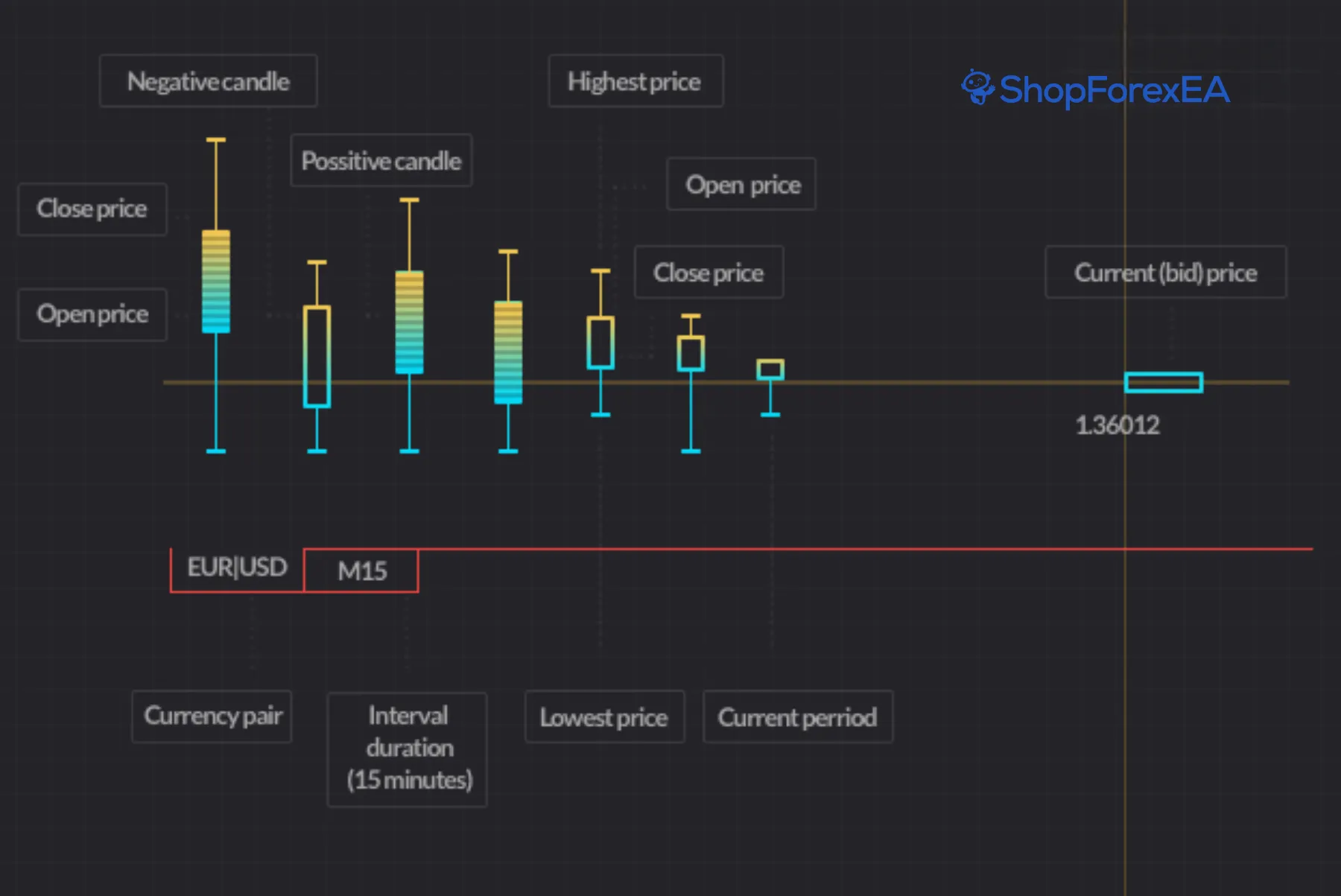
NFA’s Compliance Rule 2-43 bans latency arbitrage, a nod to HFT abuses absent in equities’ uptick rules. EU’s MiFID II adds algorithmic transparency via approved reporting, similar to stocks but with Forex-specific volume caps on retail CFDs.
Why does this matter for comparisons?
- Forex demands audited performance disclosures, unlike stock algos’ lighter Form ADV filings.
- CFTC fines for manipulative algos exceed stock penalties due to leverage risks.
- Global harmonization lags, with ASIC in Australia mirroring NFA but CySEC looser.
What Is the Difference Between Algo Trading and Copy Trading in Forex?
Algo trading automates predefined rules executed independently on platforms like cTrader, while copy trading mirrors signals from expert accounts on eToro or ZuluTrade, lacking code control. Automation in algos processes real-time data for scalping, versus signal mirroring that delays execution by seconds, exposing followers to slippage in fast markets.
You’ll see algo traders code strategies in MQL5 for precision, but copy traders select by past returns, risking herd behavior during drawdowns. A key distinction lies in customization: algos adapt via parameters, copy setups follow blindly.
How do they compare in practice?
- Algo offers backtestable logic, copy relies on provider transparency.
- Costs differ, with algos free post-development versus copy fees of 20% profits.
- Risk management stronger in algos through stops, weaker in copies without overrides.
How Do You Backtest and Optimize Forex Algorithms Effectively?
Backtest Forex algorithms on tick-level data from Dukascopy, simulating spreads and commissions to gauge realism, then optimize using walk-forward analysis that divides data into in-sample training and out-of-sample validation periods. Tools like QuantConnect apply Sharpe ratio targets above 1.5, balancing returns against volatility.
Avoid overfitting by limiting parameters to 5-10, running Monte Carlo simulations for 1,000 scenarios. Walk-forward rolls monthly, mimicking live shifts like Brexit volatility.
What steps yield best results?
- Import quality data, adjust for slippage at 0.5 pips average.
- Compute metrics: aim for profit factor over 1.5, maximum drawdown under 15%.
- Optimize genetically, then stress-test on black swan events like 2015 CHF peg snap.
What Are Performance Metrics for Evaluating Forex Algo Traders?
Key metrics for Forex algo traders include drawdown measuring peak-to-trough losses, ideally below 10% in live environments on brokers like Pepperstone; win rate above 60% for scalpers but secondary to expectancy; and profit factor exceeding 1.8, calculated as gross profits divided by losses.
In live Forex, Calmar ratio refines Sharpe by annual return over max drawdown, targeting 0.5+. Track these via Myfxbook for verified stats.
Why prioritize certain ones?
- Drawdown flags sustainability during ranging markets like AUD/USD summers.
- Win rate misleads without average win/loss ratio analysis.
- Profit factor reveals edge in high-volume pairs versus exotics.
Is Algorithmic Trading in Forex Profitable for Retail Traders?
Algorithmic trading in Forex can be profitable for retail traders, but success hinges on realistic benchmarks like 10-20% annual returns after fees, achieved by under 20% of participants per Myfxbook audits.
Factors include starting capital over $10,000 to weather drawdowns, combined with edge strategies refined over 6-12 months. Discipline trumps talent, as emotional overrides kill algos.
What determines outcomes?
- Proven backtests transitioning to live with <5% performance drop.
- Diversified pairs reduce correlation risks.
- Continuous monitoring, pausing during low-volatility like Asian sessions.