









Blog
Forex Trading for Beginners: Simple Tips to Get Started


What Is Forex Trading and Why Should You Care?
Have you ever wondered how people make money from currency fluctuations? That’s exactly what forex trading is all about. The foreign exchange market, commonly known as forex or FX, is the world’s largest financial market where currencies are traded 24 hours a day, five days a week.
Think of it this way: when you travel abroad and exchange your dollars for euros at the airport, you’re essentially participating in the forex market. Now imagine doing this from your computer or phone, with the ability to profit from even tiny price movements. That’s forex trading for beginners in a nutshell.
Understanding the Basics: Currency Pairs and How They Work
In forex trading, you’re always dealing with currency pairs. Unlike buying stocks where you purchase shares of a company, forex involves simultaneously buying one currency while selling another. Let me break this down with a simple example:
When you see EUR/USD = 1.0850, it means 1 Euro equals 1.0850 US Dollars. If you believe the Euro will strengthen against the Dollar, you “buy” this pair. If you think the Dollar will strengthen, you “sell” the pair.
Major Currency Pairs You Should Know
| Currency Pair | Nickname | What It Represents |
|---|---|---|
| EUR/USD | Fiber | Euro vs US Dollar |
| GBP/USD | Cable | British Pound vs US Dollar |
| USD/JPY | Gopher | US Dollar vs Japanese Yen |
| USD/CHF | Swissy | US Dollar vs Swiss Franc |
How Does Forex Trading Actually Work?
Let’s use a real-world comparison. Imagine you’re at a farmers market. You notice apples are selling for $2 per pound in the morning, but by afternoon, due to high demand, the price rises to $2.50. If you had bought apples in the morning and sold them in the afternoon, you’d make a 25% profit. Forex trading works similarly, except you’re trading currencies instead of apples.
Here’s a practical example:
- You analyze the market and believe the Euro will strengthen against the Dollar
- You buy EUR/USD at 1.0850 (buying €1,000 costs you $1,085)
- The price rises to 1.0950 as you predicted
- You sell your position, receiving $1,095
- Your profit: $10 (minus any trading costs)
Essential Tools Every Beginner Needs
Before you start trading, you’ll need several key tools. Think of these as your trading toolkit – just like a carpenter needs a hammer and saw, you need the right tools to trade effectively.
1. A Reliable Trading Platform
Your trading platform is where all the action happens. MetaTrader 4 (MT4) and MetaTrader 5 (MT5) are the industry standards. These platforms offer:
- Real-time price charts
- Technical analysis tools
- Order execution capabilities
- Automated trading features through Expert Advisors (EAs)
2. A Demo Account
Would you jump into a swimming pool without knowing how to swim? A demo account lets you practice trading with virtual money. Every successful trader started with a demo account – it’s your risk-free training ground.
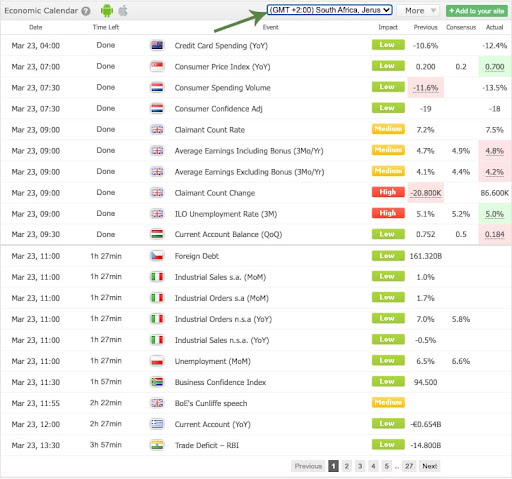
3. Economic Calendar
Major economic events can cause significant currency movements. An economic calendar helps you track important announcements like interest rate decisions, employment reports, and GDP releases.
Understanding Leverage and Risk Management
Here’s where many beginners make mistakes. Leverage is like a double-edged sword – it can multiply your profits but also your losses. Let me explain with a simple comparison:
Imagine you want to buy a $100,000 house. With leverage, you might only need a $10,000 down payment (10:1 leverage). Similarly, in forex, with 100:1 leverage, you can control $100,000 worth of currency with just $1,000.
The Golden Rules of Risk Management
- Never risk more than 1-2% of your account per trade
- Always use stop-loss orders to limit potential losses
- Set realistic profit targets
- Don’t let emotions drive your decisions
Common Forex Trading Strategies for Beginners
Just as there are different ways to cook an egg, there are various strategies to trade forex. Here are three beginner-friendly approaches:
1. Trend Following
This strategy is like surfing – you ride the wave in the direction it’s already going. When a currency pair is trending upward, you buy. When it’s trending downward, you sell. Simple, yet effective.
2. Support and Resistance Trading
Imagine a ball bouncing between the floor and ceiling. Support levels act as the floor (where prices tend to bounce up), while resistance levels act as the ceiling (where prices tend to bounce down).
3. News Trading
Major news events can cause significant price movements. By staying informed through fundamental analysis, you can position yourself to profit from these movements.
Step-by-Step Guide: Making Your First Trade
Ready to place your first trade? Here’s exactly what you need to do:
- Choose a regulated broker – Look for brokers regulated by authorities like the FCA, ASIC, or CySEC
- Open a demo account – Practice for at least 1-2 months before using real money
- Fund your account – Start small, perhaps $500-$1000
- Analyze the market – Use both technical and fundamental analysis
- Place your trade – Start with major pairs like EUR/USD
- Monitor and manage – Set stop-loss and take-profit levels
Using Automated Trading Tools Wisely
As a beginner, you might feel overwhelmed by the need to constantly monitor markets. This is where automated trading tools can help. Expert Advisors (EAs) are programs that can trade on your behalf based on predetermined rules.
Think of EAs like a thermostat in your home – you set the desired temperature (trading parameters), and it automatically adjusts to maintain those conditions. However, just as you wouldn’t leave your thermostat running without ever checking it, you shouldn’t completely rely on automation without understanding what it’s doing.
Common Mistakes Beginners Make (And How to Avoid Them)
Learning from others’ mistakes is much cheaper than making them yourself. Here are the most common pitfalls:
| Mistake | Why It Happens | How to Avoid It |
|---|---|---|
| Overtrading | Excitement and greed | Set daily trade limits |
| Ignoring stop-losses | Hope that losing trades will reverse | Always use stop-losses, no exceptions |
| Risking too much | Trying to get rich quick | Never risk more than 2% per trade |
| Lack of education | Impatience to start trading | Spend at least 3 months learning first |
Building Your Trading Plan
A trading plan is your roadmap to success. Without it, you’re like a ship without a compass. Your plan should answer these questions:
- What will you trade? Focus on 2-3 major pairs initially
- When will you trade? Choose specific trading sessions (London, New York, or Asian)
- How much will you risk? Define your position sizes and risk per trade
- What’s your strategy? Document your entry and exit rules
The Psychology of Successful Trading
Trading is 20% strategy and 80% psychology. Your mindset determines your success more than any indicator or trading system. Here’s how to develop a winning mindset:
- Accept losses as part of the game – Even professional traders have losing trades
- Stay disciplined – Follow your plan even when emotions run high
- Be patient – Good trades come to those who wait
- Keep learning – Markets evolve, and so should your knowledge
Resources for Continuous Learning
Your forex education doesn’t end here. Consider these resources for ongoing learning:
- BabyPips School of Pipsology – Free comprehensive forex course
- Forex trading strategies – Proven approaches for different market conditions
- Economic news sites like Bloomberg and Reuters
- Trading forums and communities for peer support
Your Next Steps in Forex Trading
Now that you understand the basics, it’s time to take action. But remember, successful trading is a marathon, not a sprint. Start with these concrete steps:
- Open a demo account with a reputable broker today
- Practice trading for at least 8-12 weeks
- Keep a trading journal to track your progress
- Join a trading community for support and ideas
- Consider using proven Expert Advisors to complement your manual trading
Remember, every professional trader was once a beginner. The difference between those who succeed and those who fail isn’t talent – it’s persistence, proper education, and disciplined risk management. With the right approach and realistic expectations, forex trading can become a valuable skill in your financial toolkit.
Are you ready to start your forex trading journey? The market is waiting, and with the knowledge you’ve gained here, you’re already ahead of most beginners. Take it slow, stay disciplined, and always keep learning. Your future trading success starts with the decisions you make today.