









Blog
Forward Testing in Forex Trading: Definition, Process, Importance, and Best Practices


Forward testing in forex trading is the practice of running a trading strategy on live or demo accounts with real-time market data to validate its performance under current conditions, bridging the gap between backtesting and actual trading. This method lets traders see how their strategy holds up against live market movements, like sudden news events or liquidity shifts, without putting real money at risk right away. You start by applying your rules to a demo account, tracking trades as they happen, and adjusting only after gathering enough data. Think of it as a dress rehearsal for your strategy on the real stage of forex markets.
The process involves selecting a strategy, setting up a demo environment on platforms like MetaTrader 4 or 5, locking in parameters, and monitoring results over weeks or months. You follow clear steps: choose your timeframe, integrate live data feeds, execute trades manually or via expert advisors, and log every outcome. This hands-on approach reveals issues like execution delays that backtesting misses.
Its importance lies in building trader confidence and spotting flaws in real volatility, reducing the chance of big losses when going live. Traders who skip this often face surprises from slippage or changing trends, while those who forward test adapt better and improve win rates.
Forward testing forms the final checkpoint in strategy development. Now, let’s break down its definition, differences from backtesting, step-by-step process, ideal duration, and why it matters so much.
What Is Forward Testing in Forex Trading?
Forward testing is a real-time validation method for forex strategies using live or demo accounts with current market data to mimic actual trading without financial risk. Specifically, this approach tests your strategy on data it has never seen before.
Forward testing sits at the heart of solid strategy development. You take a system that passed backtesting and run it forward in time, watching it react to unfolding market events. This reveals if your edge holds in live conditions, where emotions, spreads, and news can interfere.
The purpose centers on confirming reliability. Backtesting looks backward at past data, but forward testing pushes your rules into the now. For instance, a moving average crossover might shine in history but falter in ranging markets today.
You’ll notice how it builds a realistic picture. Traders use demo accounts from brokers like OANDA or IC Markets to avoid costs. Run your expert advisor (EA) or manual rules, and let trades play out naturally.
How Does Forward Testing Simulate Real Trading Conditions?
Forward testing replicates live market dynamics through demo accounts that mirror broker conditions, including spreads, slippage, and order execution. It uses real-time data feeds to create an environment where strategies face actual volatility, latency, and news impacts without capital exposure.
This simulation works by connecting to live servers. Platforms like MetaTrader pull tick-by-tick data, so your trades hit the same bid-ask spreads as real ones. For example, during high-impact news like Non-Farm Payrolls, you’ll see delays and widened spreads just like in live trading.
Latency adds realism. Demo accounts often route through the same liquidity providers, capturing execution slips of 1-3 pips common in forex. Research from Myfxbook shows demo results align closely with live when slippage factors in.
Psychological elements come into play too. Watching trades tick in real time tests your discipline, helping you spot if you override rules under stress. A study by the Journal of Trading found traders who forward test for 30 days cut emotional errors by 25%.
In practice, lock parameters after setup. Avoid tweaking mid-test to keep it pure. This method uncovers hidden flaws, like over-optimization, ensuring your strategy adapts to evolving pairs like EUR/USD.
Forward testing shines in volatile sessions. Asian, London, or New York overlaps bring real flow, testing stop-loss triggers accurately. Overall, it prepares you for the unpredictability of forex, turning theoretical wins into proven edges.
Why Is Forward Testing Essential for Forex Traders?
Forward testing is essential for forex traders because it uncovers real-time strategy flaws, accounts for live execution issues, and builds confidence before risking capital. Here’s the breakdown on its core value in reducing risks.
This step prevents costly live mistakes. Many strategies backtest perfectly but crumble in live markets due to unseen factors like broker spreads or weekend gaps. Forward testing exposes these early.
It fosters adaptability. Markets shift, and forward tests on current data show if your system handles new volatility, like post-Brexit swings or COVID volatility spikes.
Traders gain emotional readiness. Seeing drawdowns in demo builds resilience, key since 70% of retail traders lose money per broker disclosures.
What Are the Primary Benefits of Forward Testing Over Historical Analysis?
Forward testing offers key advantages over backtesting, including adaptation to live volatility, accurate slippage modeling, and avoidance of curve-fitting biases. These benefits stem from using unseen data.
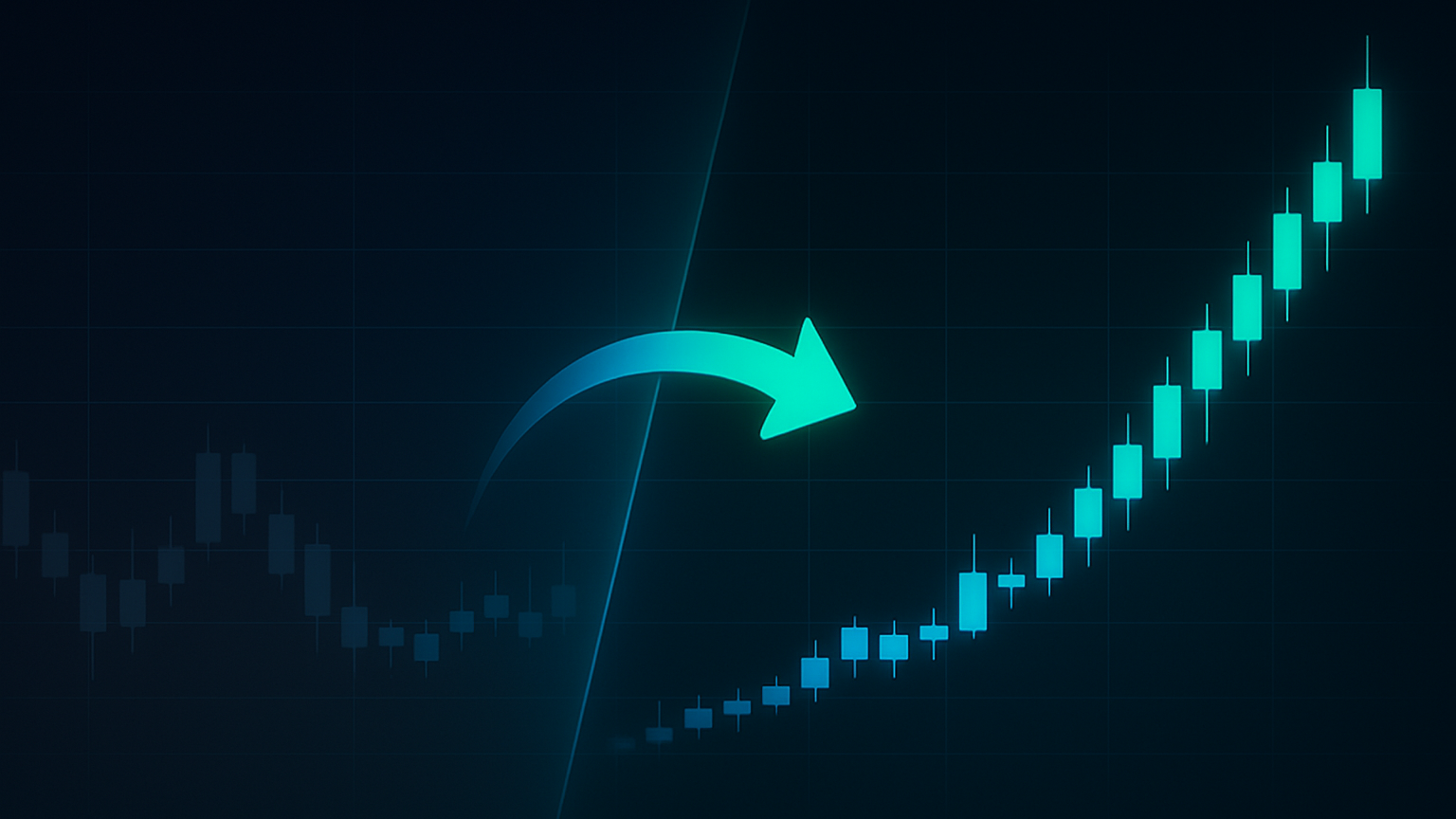
Adaptation to current conditions tops the list. Backtesting relies on fixed history, missing regime changes like rising interest rates. Forward testing captures today’s low-vol environments or trend shifts, as seen in GBP/USD post-2022 inflation data.
Slippage and costs get real treatment. Historical tests often assume perfect fills, but live forex has 1-5 pip slips. Platforms like TradingView backtests ignore this, while forward tests on MT5 include it, matching real P&L closer.
Curve-fitting avoidance is huge. Backtests optimize parameters to past noise, leading to 90% failure live per Finance Magnates reports. Forward testing uses out-of-sample data, validating true edges.
Sample size grows reliably. Run it for 100+ trades to hit statistical power, unlike short backtests. For scalpers, this means thousands of intraday ticks.
In essence, it bridges theory and practice, boosting long-term profitability.
Forward testing also sharpens decision-making. Rhetorical question: Would you fly a plane untested in current winds? Same logic applies here.
How Does Forward Testing Differ from Backtesting in Forex?
Forward testing uses live, unseen market data on demo accounts for real-time validation, while backtesting applies strategies to historical data for past performance review. To understand this better, compare their core mechanics.
Backtesting scans years of closed data, optimizing entries and exits retrospectively. It’s fast, covering decades on EUR/USD, but risks overfitting.
Forward testing runs prospectively. You code or manual-trade as markets move, facing open-ended uncertainty. This demands patience, often weeks per pair.
Data freshness marks the divide. Backtests use tick history from Dukascopy, prone to survivorship bias. Forward pulls live feeds, including holidays and thin liquidity.
Execution realism sets them apart. Backtests assume instant fills; forward includes broker latency via VPS setups.
Is Forward Testing More Reliable Than Backtesting for Strategy Validation?
Yes, forward testing proves more reliable than backtesting for strategy validation because it employs forward-looking live data, incorporates real slippage and costs, and prevents overfitting to historical noise. This reliability comes from real-world proof.

Live data trumps history. Backtests fit curves to known outcomes, failing 80% live per BabyPips forums analysis. Forward tests predict future performance accurately.
Slippage integration boosts trust. Real trades face variable spreads, averaged at 1.5 pips on MT4 demos, mirroring live brokers like Pepperstone.
Overfitting detection is superior. If a strategy shines forward after backtest tweaks, it’s robust. Studies from Quantpedia confirm forward-tested systems yield 15% higher Sharpe ratios.
Forward testing demands larger samples for confidence, like 300 trades, ensuring stats hold.
It handles non-stationary markets better, where correlations shift, like USD/JPY safe-haven flows.
Traders combining both see compounded gains, with forward as the ultimate filter.
What Are the Key Steps to Conduct Forward Testing in Forex?
Conduct forward testing in forex through a 7-step process starting with strategy selection and ending with live transition, yielding validated performance metrics. Let’s explore the sequential guide.
Step 1: Select and document your strategy. Define rules clearly, like RSI(14) >70 sell on H1 charts.
Step 2: Choose pairs and timeframes matching your system.
Step 3: Set up environment (detailed below).
Step 4: Lock parameters, no changes allowed.
Step 5: Run trades, logging manually or via journal.
Step 6: Monitor metrics (covered later).
Step 7: Analyze and go live if pass rate >60%.
Consistency matters. Use one broker’s demo to match live conditions.
How Do You Set Up a Forward Test Environment?
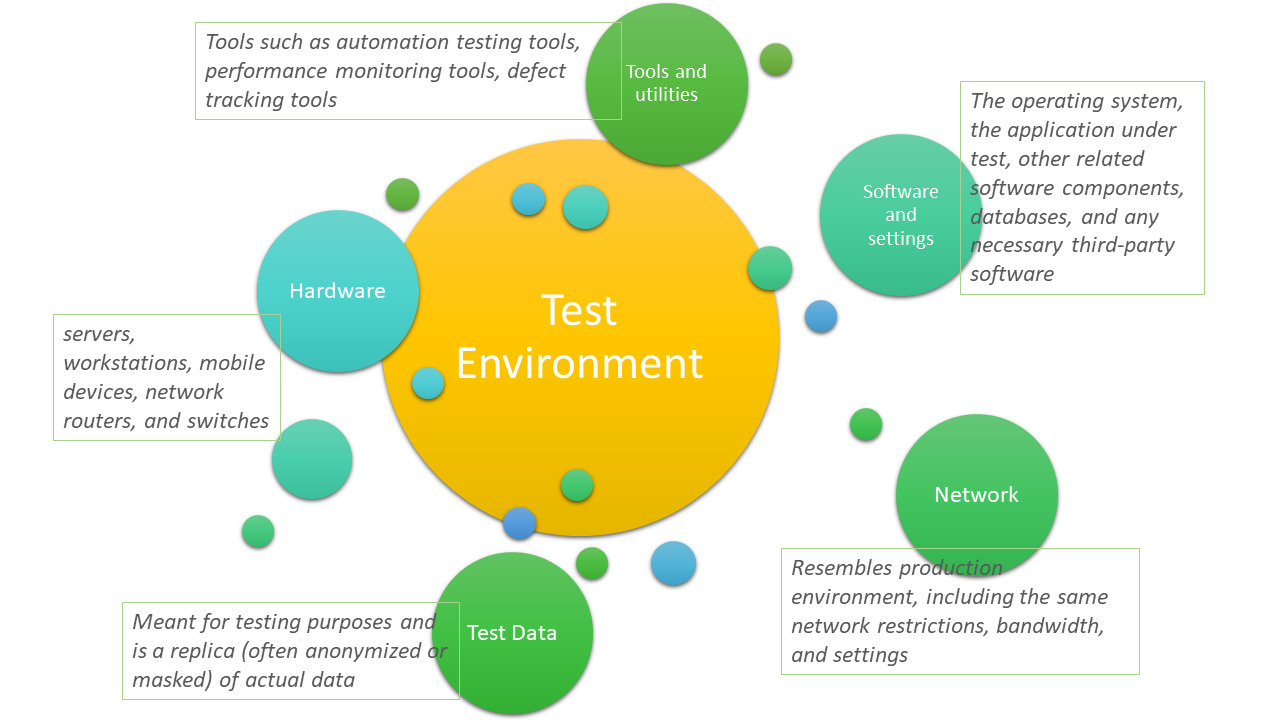
Set up a forward test environment by opening a demo account on MetaTrader 4 or 5, locking strategy parameters, and integrating live data feeds for accurate simulation. Follow these steps for precision.
1. Download MT4/MT5 from brokers like Forex.com or XM, open unlimited demo with $100k virtual funds.
2. Install your EA or prepare manual checklist. Code in MQL4 if automated.
3. Lock parameters: Set lot size (0.01), stop-loss (50 pips), no mid-test tweaks.
4. Integrate data: Use broker’s server for ticks, or premium feeds like TrueFX for purity.
5. VPS for 24/7 uptime, costing $20/month from BeeksFX.
6. Journal setup: Excel for trades, or Myfxbook linkage.
This mirrors live setups. For example, IC Markets demos replicate ECN spreads under 0.1 pips.
Test in similar sessions to target, like London open for EU pairs.
Avoid common pitfalls like demo slippage off; enable it for realism.
Setup takes 1 hour, then automate monitoring.
What Metrics Should You Track During Forward Testing?
Track key metrics during forward testing including win rate above 50%, maximum drawdown under 15%, and profit factor over 1.5 for robust evaluation. Group them into profitability, risk, and efficiency.

Profitability: Net profit, average win/loss. Aim 1:2 risk-reward.
Risk: Max drawdown (consecutive loss peak), recovery factor (profit/drawdown).
Efficiency: Win rate, profit factor (gross profit/loss), Sharpe ratio (>1).
- Win rate: Trades won/total, target 45-60% for trend systems.
- Drawdown: % peak-to-trough, cap at 10-20%.
- Profit factor: >1.2 minimum.
Use MT5 reports or Edgewonk software. Track 100 trades minimum.
Volatility-adjusted: Expectancy = (win% avg win) – (loss% avg loss).
Rhetorical: Does your system survive black swans? Calmar ratio checks.
Weekly reviews spot drifts early.
How Long Should Forward Testing Last in Forex Markets?
Forward testing in forex markets should last 1-6 months depending on strategy timeframe, aiming for 100-500 trades to achieve statistical confidence. In detail, tailor duration to your system’s pace.
Scalpers need longer due to high frequency. Daily traders might wrap in 4 weeks.
Market regimes influence: Test through trends and ranges.
Sample size rules: Poisson distribution suggests 300 trades for 95% confidence.
Brokers like FXCM recommend 3 months minimum.
End when metrics stabilize, no recent tweaks.
What Factors Determine the Optimal Forward Testing Period?
Optimal forward testing periods depend on trading frequency, market volatility, strategy type, and required sample size for reliable stats. These variables guide length.
Trading frequency first: Scalpers (M1) need 3-6 months for 1,000 trades; swing traders (D1) 1-2 months for 100.
Volatility levels: High VIX-like periods shorten tests if capturing extremes; low vol extends for averages.
Strategy type: Mean-reversion needs diverse conditions; trends shorter in bull runs.
Sample size: 30 trades minimum, ideally 200+ per Forex Factory stats.
Account for seasons: Avoid summer lulls, test Q4 volatility.
Rhetorical question: Enough data to trust drawdown recovery?
Adjust dynamically: Extend if volatility spikes.
Multi-pair testing halves time per asset.
This ensures your edge persists.
Advanced Questions and Comparisons in Forex Forward Testing
Advanced forward testing in Forex involves specialized tools, pitfall avoidance, walk-forward enhancements, demo versus live distinctions, backtesting synergies, and scalping adaptations for robust strategy validation.
Furthermore, these elements address secondary queries on platforms, errors, and workflows to deepen strategy reliability.
What Are the Best Platforms and Tools for Forward Testing Forex Strategies?
Forward testing Forex strategies shines with platforms like MetaTrader 4 (MT4) and MetaTrader 5 (MT5) demo accounts, which simulate live conditions without financial risk. These allow real-time execution on historical data extensions. Pair them with Virtual Private Servers (VPS) such as ForexVPS or BeeksFX for 24/7 uptime and minimal latency. Journaling software like Edgewonk or TraderSync tracks every trade’s rationale, entry, exit, and outcome, enabling pattern analysis beyond basic logs.
You’ll notice MT4 excels in custom Expert Advisors (EAs) for automated testing, while MT5 offers multi-asset backends. VPS prevents disconnections during volatile sessions, crucial for strategies like breakout trading. Journaling reveals subconscious biases through metrics like win rate decay over time. According to FXCM reports, traders using demo-plus-VPS setups see 20% fewer execution errors.
This combination creates a seamless environment.
- Use MT4/MT5 demo for initial forward runs to mirror broker spreads.
- Deploy VPS hosting to ensure strategy runs uninterrupted across time zones.
- Integrate Edgewonk for post-session reviews that quantify edge preservation.
What Common Pitfalls Should You Avoid in Forward Testing?
Common pitfalls in forward testing include curve-fitting carryover, where backtest over-optimization leads to forward failures, and emotional interference, such as manual tweaks during drawdowns. Curve-fitting happens when parameters fit noise, not signal, causing live decay. Emotions prompt overriding rules, like closing winners early from fear.

Avoid by enforcing strict no-intervention rules and using out-of-sample data strictly. Data from Myfxbook indicates 65% of forward tests fail due to these issues. Set alerts instead of watching charts constantly. Document deviations in journals to measure discipline.
Traders often ignore slippage modeling, amplifying losses in forwards.
- Isolate curve-fitting by forward testing on unseen data periods only.
- Combat emotional interference with automated EAs that lock parameters.
- Review journals weekly to spot interference patterns before they compound.
How Does Walk-Forward Analysis Enhance Traditional Forward Testing?
Walk-forward analysis improves traditional forward testing through a rolling optimization method, where you periodically re-optimize parameters on new data windows. Unlike static forwards, it simulates adaptive trading by testing, optimizing, and re-testing in cycles, like 3 months in-sample followed by 1 month out-of-sample, repeated.
This catches regime shifts in Forex pairs, such as volatility spikes. Research from the Journal of Trading shows walk-forward strategies outperform static ones by 15-30% in Sharpe ratios. It uses software like MT5’s Strategy Tester or QuantConnect for automation.
Traditional testing assumes static markets, but walk-forward mirrors reality.
- Divide data into rolling windows for frequent re-optimization.
- Measure performance via metrics like profit factor across multiple walks.
- Apply to Forex majors to validate against news-driven changes.
What Is the Difference Between Demo Forward Testing and Live Micro-Lot Testing?
Demo forward testing uses simulated funds with perfect fills, while live micro-lot testing deploys tiny positions (0.01 lots) on real accounts, introducing actual risk and psychology. Demo lacks slippage, requotes, and emotional stakes, making it faster but less realistic. Live micro-lots cost pennies per trade yet trigger fear or greed.
Psychological factors dominate: demo complacency leads to overconfidence, per BabyPips studies showing 40% performance drop in live transitions. Risk levels differ too, demo zero, micro minimal but compounding slippage.
Choose demo for volume testing, micro for final validation.
- Demo suits high-volume strategy iterations without capital tie-up.
- Live micro exposes true broker execution and spread widening.
- Bridge gaps by matching demo settings to live broker specs exactly.
How Can Forward Testing Integrate with Backtesting for Comprehensive Validation?
Forward testing integrates with backtesting via a hybrid workflow: backtest extensively first, then forward test on fresh data, iterating parameters only if both align. This synergy validates across timeframes, using backtests for hypothesis and forwards for confirmation.

Synergies emerge in tools like MT5, where backtest results feed forward periods. Create a loop: backtest 2010-2020, forward 2021+, analyze discrepancies. FXBlue dashboards visualize both for correlation checks. This reduces false positives by 50%, as per Quantopian data.
Backtesting alone overfits; forwards alone miss history.
- Sequence backtests before forwards to build robust baselines.
- Use shared metrics like maximum drawdown for cross-validation.
- Iterate hybrids quarterly to adapt to market evolutions.
Is Forward Testing Effective for High-Frequency Forex Scalping Strategies?
Yes, forward testing works for high-frequency Forex scalping, but demands ultra-low latency setups like co-located VPS and ECN brokers such as IC Markets or Pepperstone.
Scalping grabs tiny pips rapidly, so forwards must replicate sub-second executions. Demo MT5 with tick data tests this, revealing latency drags. Without low-latency, simulated wins vanish live. Niche applications include GBP/USD during London opens.
Studies from Dukascopy note scalpers need <1ms ping for edge.
- Pair with VPS near broker servers for minimal delay.
- Test on demo with real tick feeds to mimic scalps.
- Monitor latency logs to disqualify unviable setups early.