









Blog
How Does Forex Trading Work? Explained for Newbies

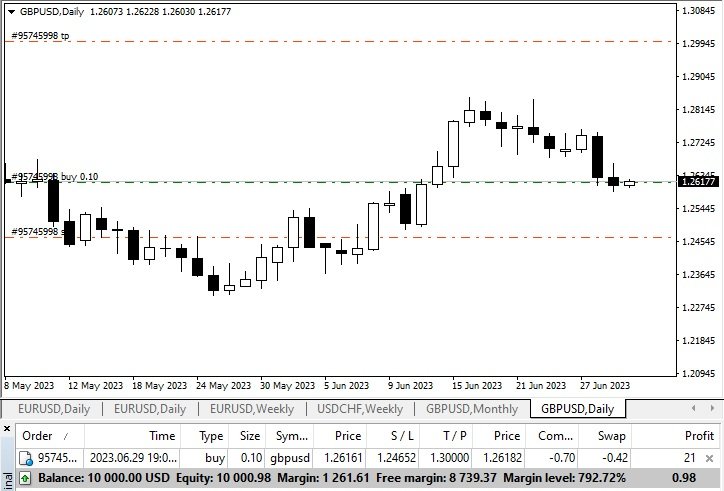
What is Forex Trading and Why Should You Care?
Have you ever wondered how people make money trading currencies? Or why your vacation money is worth more (or less) when you exchange it? That’s forex trading in action, and it’s simpler than you might think.
Forex trading is the buying and selling of different currencies to make a profit from their changing values. Think of it like trading baseball cards, but instead of cards, you’re trading money from different countries. The forex market is the world’s largest financial market, with over $7 trillion traded daily – that’s more than the GDP of most countries!

Before diving deeper, if you’re interested in automating your trading journey, check out our AIM EA – a powerful tool that helps beginners start with confidence.
Understanding Currency Pairs: The Building Blocks
In forex trading, you always trade currencies in pairs. Why? Because when you buy one currency, you’re simultaneously selling another. It’s like exchanging your dollars for euros at the airport, but with the goal of making money from the exchange.
Major currency pairs you’ll encounter:
- EUR/USD (Euro/US Dollar) – The most traded pair
- GBP/USD (British Pound/US Dollar) – Known as “Cable”
- USD/JPY (US Dollar/Japanese Yen) – Popular in Asian markets
- USD/CHF (US Dollar/Swiss Franc) – The “Swissie”
The first currency in the pair is the base currency, and the second is the quote currency. When EUR/USD = 1.1000, it means 1 euro equals 1.10 US dollars.
How Do You Actually Make Money in Forex?
Making money in forex is straightforward in concept: buy low, sell high. But how does this work with currencies?
Let’s use a simple example:
Imagine EUR/USD is at 1.1000. You believe the euro will strengthen against the dollar, so you buy €1,000. If EUR/USD rises to 1.1100, your €1,000 is now worth $1,110 instead of $1,100. You’ve made $10 profit!
Of course, if the rate falls to 1.0900, you’d lose $10. This is why understanding risk management is crucial in forex trading.
Two ways to profit:
- Going Long: Buying a currency pair expecting it to rise
- Going Short: Selling a currency pair expecting it to fall
The Mechanics: How Forex Trading Actually Works
Unlike stock markets with central exchanges, forex operates through a global network of banks, brokers, and traders. This decentralized nature means you can trade 24 hours a day, five days a week.
Key players in the forex market:
| Player | Role | Impact on You |
|---|---|---|
| Central Banks | Control monetary policy | Their decisions move markets significantly |
| Commercial Banks | Facilitate large transactions | Create market liquidity |
| Retail Brokers | Connect you to the market | Your gateway to trading |
| Individual Traders | Buy and sell for profit | That’s you! |
According to Investopedia, retail traders like you and me make up about 5.5% of the global forex market.
Essential Terms Every Forex Trader Must Know
Before you start trading, you need to understand the language. Here are the must-know terms:
- Pip (Point in Percentage): The smallest price move in a currency pair. For most pairs, it’s 0.0001
- Spread: The difference between buying and selling prices
- Leverage: Borrowed money that amplifies your trading power
- Margin: The deposit required to open a leveraged position
- Lot: The standard unit size of a transaction (usually 100,000 units)
What’s a pip worth?
If EUR/USD moves from 1.1000 to 1.1001, that’s a 1 pip movement. In a standard lot, each pip is worth about $10. This might seem small, but with multiple pips and leverage, profits (and losses) can add up quickly.
Step-by-Step: Your First Forex Trade
Ready to see how a trade works from start to finish? Let’s walk through it together:
- Choose a reliable broker: Look for regulation, good spreads, and user-friendly platforms
- Open a demo account: Practice without risking real money
- Select your currency pair: Start with major pairs like EUR/USD
- Analyze the market: Use technical or fundamental analysis
- Decide your position size: Never risk more than 1-2% per trade
- Place your trade: Set your entry, stop loss, and take profit levels
- Monitor and manage: Watch your trade and adjust if needed
- Close your position: Take your profit or loss

Common Trading Strategies for Beginners
Different strategies suit different personalities and schedules. Here are three beginner-friendly approaches:
1. Trend Following
This strategy involves identifying the market direction and trading with it. As traders say, “The trend is your friend.” You buy in uptrends and sell in downtrends.
2. Range Trading
When markets move sideways between support and resistance levels, range traders buy at support and sell at resistance. It’s like playing ping-pong with price levels.
3. Breakout Trading
This involves entering trades when price breaks through important levels. Think of it as catching a wave just as it starts to form.
Pro tip: Whatever strategy you choose, always use a stop loss to protect your capital. According to BabyPips, proper risk management is what separates successful traders from those who blow their accounts.
The Power of Automated Trading: Why Consider Expert Advisors?
What if you could trade without staring at charts all day? That’s where Expert Advisors (EAs) come in. These automated trading robots execute trades based on predetermined rules, removing emotion from the equation.
Benefits of using EAs:
- Trade 24/5 without being glued to your screen
- Eliminate emotional decision-making
- Backtest strategies before risking real money
- Execute trades faster than manual trading
- Follow your strategy consistently
Avoiding Common Forex Trading Mistakes
Every beginner makes mistakes, but learning from others can save you money and frustration:
Mistake #1: Trading without a plan
Solution: Create a trading plan outlining your strategy, risk tolerance, and goals. Stick to it!
Mistake #2: Overleveraging
Solution: Start with lower leverage (10:1 or less) until you gain experience.
Mistake #3: Ignoring risk management
Solution: Never risk more than 1-2% of your account on a single trade.
Mistake #4: Chasing losses
Solution: Accept losses as part of trading. Don’t revenge trade or double down.
Mistake #5: Not continuing education
Solution: Keep learning through courses, books, and practice.
Choosing the Right Trading Platform
Your trading platform is your window to the forex market. The most popular platforms are:
- MetaTrader 4 (MT4): User-friendly, extensive EA support, perfect for beginners
- MetaTrader 5 (MT5): Advanced features, more timeframes, better for stocks too
- cTrader: Modern interface, advanced charting, ECN trading
Most traders start with MT4 due to its simplicity and vast library of trading tools and EAs.
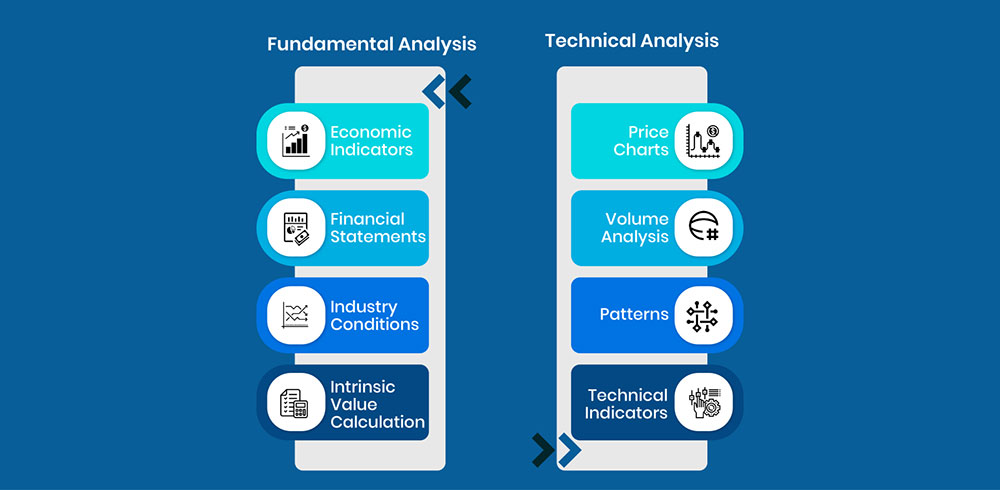
Understanding Market Analysis: Technical vs Fundamental
Successful forex trading requires analyzing the market. There are two main approaches:
Technical Analysis
This involves studying price charts and patterns. Technical traders use:
- Chart patterns (triangles, head and shoulders)
- Indicators (Moving Averages, RSI, MACD)
- Support and resistance levels
- Trend lines and channels
Fundamental Analysis
This focuses on economic factors that affect currency values:
- Interest rates and central bank policies
- Economic indicators (GDP, inflation, employment)
- Political events and stability
- Market sentiment
Risk Management: Protecting Your Trading Capital
Here’s a truth many won’t tell you: risk management is more important than finding winning trades. You can be right only 40% of the time and still be profitable with proper risk management.
Essential risk management rules:
- Position Sizing: Calculate your lot size based on account risk
- Stop Loss Orders: Always know your exit point before entering
- Risk-Reward Ratio: Aim for at least 1:2 (risk $1 to make $2)
- Diversification: Don’t put all eggs in one currency pair
- Maximum Daily Loss: Stop trading if you hit your daily limit
When Should You Start Trading Real Money?
Transitioning from demo to real trading is a big step. You’re ready when:
- You’ve been profitable on demo for at least 3 months
- You have a tested trading plan
- You understand risk management
- You can control your emotions
- You have capital you can afford to lose
Start small with a micro account, trading 0.01 lots until you build confidence and consistency.
The Psychology of Forex Trading
Your mindset can make or break your trading career. Common psychological challenges include:
“The market can remain irrational longer than you can remain solvent.” – John Maynard Keynes
Managing emotions like fear, greed, and hope is crucial. This is why many traders turn to automated solutions – they remove the emotional element entirely.
Getting Started: Your Action Plan
Ready to begin your forex trading journey? Here’s your roadmap:
- Education First: Read books, take courses, watch tutorials
- Choose a Broker: Research regulated brokers with good reputations
- Open a Demo Account: Practice for at least 1-3 months
- Develop Your Strategy: Find what works for your personality
- Start Small: Begin with micro lots when going live
- Keep a Trading Journal: Track your trades and learn from them
- Consider Automation: Explore EAs to enhance your trading
Conclusion: Your Forex Trading Journey Starts Now
Forex trading offers incredible opportunities, but success requires education, practice, and discipline. Whether you choose manual trading or automated solutions, remember that consistency beats complexity every time.
The forex market isn’t going anywhere – it’s been around for centuries and will continue long after we’re gone. Take your time to learn, start small, and always prioritize protecting your capital over making quick profits.
Want to explore automated trading? Check out our carefully selected Expert Advisors designed to help traders at every level succeed in the forex market.
Remember: every professional trader was once a beginner. Your success depends on your commitment to learning and improving. The forex market rewards patience, discipline, and continuous education. Start your journey today, but start it right.