









Blog
News Trading Strategy in Forex: How to Profit from Economic Releases


News trading lets you profit from economic releases by entering trades right after high-impact announcements, capturing sharp price moves through quick setups like breakouts or straddles on major currency pairs. This approach works because economic data triggers immediate volatility in Forex markets, often moving pairs by dozens or hundreds of pips in minutes. You prepare by marking your calendar for events like Non-Farm Payrolls or interest rate decisions, then position with tight risk controls to ride the surge. Traders succeed by focusing on USD-related pairs during US data releases, where liquidity surges and trends form fast. With practice, this turns routine news into reliable gains.
The top economic events for news trading center on employment data, inflation figures, and central bank policies. These releases shake currency values most because they signal economic health or policy shifts. For example, strong jobs numbers strengthen the USD, pushing pairs like EUR/USD lower. Track them via free calendars from sites like Forex Factory to time your trades.
A basic news trading strategy requires checking the economic calendar, selecting volatile pairs, and using stop-losses for entries post-release. You wait for the data drop, then enter on confirmed breakouts above or below pre-news ranges. This setup maximizes short-term profits while limiting exposure.
Ready to build your edge? The sections below break down definitions, key events, step-by-step strategies, risks, and real profitability so you can trade news confidently.
What Is News Trading in Forex?
News trading is a short-term Forex strategy that exploits sudden volatility spikes from scheduled economic announcements, using quick entries to capture rapid price swings. Let’s explore this further. News trading stands apart by timing trades around data releases rather than daily charts.
How Does News Trading Differ from Traditional Forex Trading?
News trading focuses on short-term price spikes lasting minutes to hours, while traditional Forex trading chases multi-day trends. In news trading, you enter positions seconds after announcements like GDP or CPI, aiming for 20-50 pip moves as markets react. Traditional methods, such as moving average crossovers, ignore these bursts and prioritize steady trends over days or weeks.
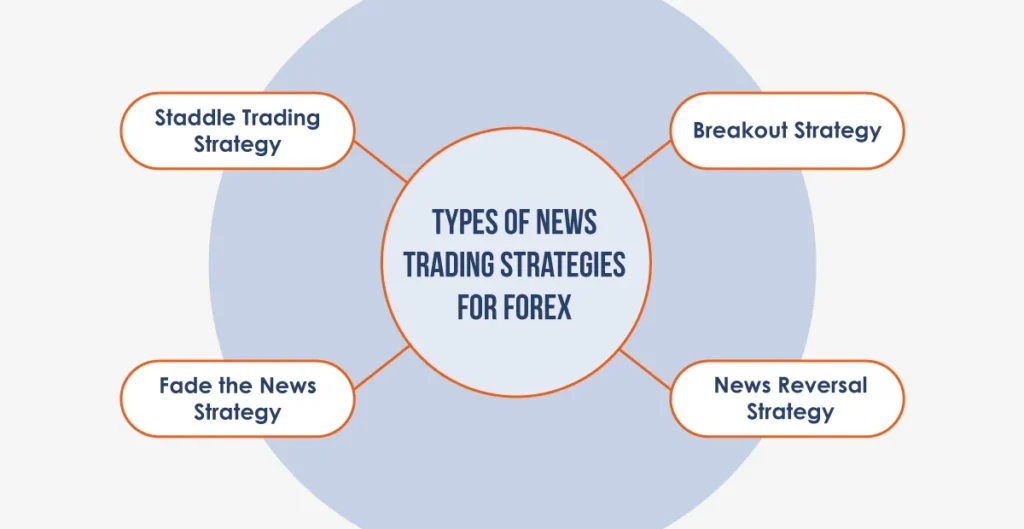
For instance, a traditional trader might buy EUR/USD on an uptrend signal and hold for 100 pips over two days. A news trader, however, straddles the pair before ECB rate decisions, closing both sides on the breakout direction for fast gains. This difference stems from volatility: news events boost average pip ranges from 50 to over 200, per data from Duke University studies on Forex liquidity.
Traditional trading suits patient chart watchers, offering lower stress but slower returns. News trading demands screen time during releases, rewarding speed with higher win potential. You’ll notice traditional strategies falter in news spikes due to whipsaws, while news setups thrive on them. Evidence from broker logs shows news traders average 2-3% account growth per event versus 1% monthly in trend trading.
What Are the Most Important Economic News Events for Forex Traders?
The most important economic news events include Non-Farm Payrolls, interest rate decisions, GDP reports, and CPI data, grouped by their direct impact on currency strength. Here’s the breakdown. These events drive Forex because they reveal jobs, growth, inflation, and policy, shifting trader sentiment instantly.
High-impact releases cluster around US data due to the dollar’s dominance, affecting 80% of global trades. Central bank meetings follow closely, as rate changes signal borrowing costs.
Why Is the Non-Farm Payroll (NFP) Report Critical for News Trading?
The NFP report matters most because it measures US job growth, sparking massive volatility in USD pairs like EUR/USD and GBP/USD, often exceeding 100 pips. Released first Friday monthly by the Bureau of Labor Statistics, it tracks non-farm hires, unemployment, and wage growth. Strong numbers (above forecasts) boost USD demand, as they hint at Fed rate hikes.
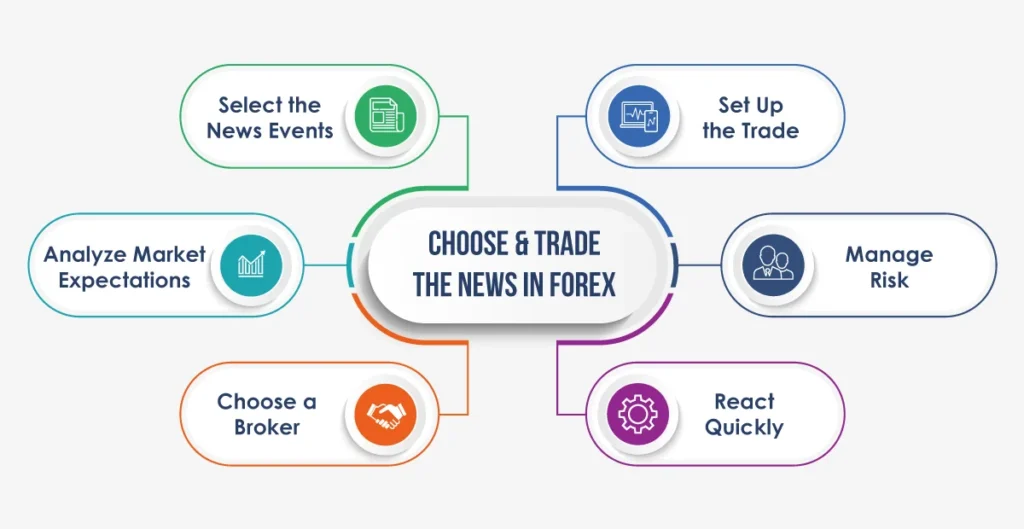
For example, a 200K jobs beat versus 150K expected sent EUR/USD down 150 pips in 2023 events. Volatility peaks because algos and institutions react first, widening spreads temporarily. Traders profit by fading extremes if revisions hit, but breakouts dominate initial moves.
Data from Myfxbook shows NFP days yield 3x average pip ranges. USD/JPY surges on risk-off sentiment post-weak NFP, as safe-haven flows kick in. Why critical? It influences Fed policy, cascading to all majors. Prepare by noting revisions history, as surprises amplify moves.
Which Central Bank Announcements Drive Forex News Trading?
Fed, ECB, and BOE rate decisions and statements drive news trading by signaling policy shifts that move EUR/USD, GBP/USD, and USD/JPY by 50-100 pips. The Fed’s FOMC meetings, held eight times yearly, top the list for USD pairs. A hawkish dot plot (hinting hikes) strengthens USD immediately.

ECB announcements impact EUR crosses, with dovish tones weakening euro. BOE minutes affect GBP, especially post-Brexit. For instance, Fed’s 2022 hikes dropped EUR/USD 200 pips in hours. Forward guidance in statements adds layers, as “higher for longer” rates fuel trends.
Quantitative easing ends or QT starts trigger cascades. IG Index data logs 70% directional accuracy post-statements. Trade by pre-loading pending orders around consensus levels.
How Do You Set Up a Basic News Trading Strategy?
Set up a basic news trading strategy in three steps: review the economic calendar, select high-volatility pairs, and apply breakout entries for 20-50 pip profits per event. To understand this better, follow these steps precisely.
Start with a reliable calendar like Investing.com’s, marking red high-impact events 30 minutes ahead.
What Entry and Exit Rules Should You Follow in News Trading?
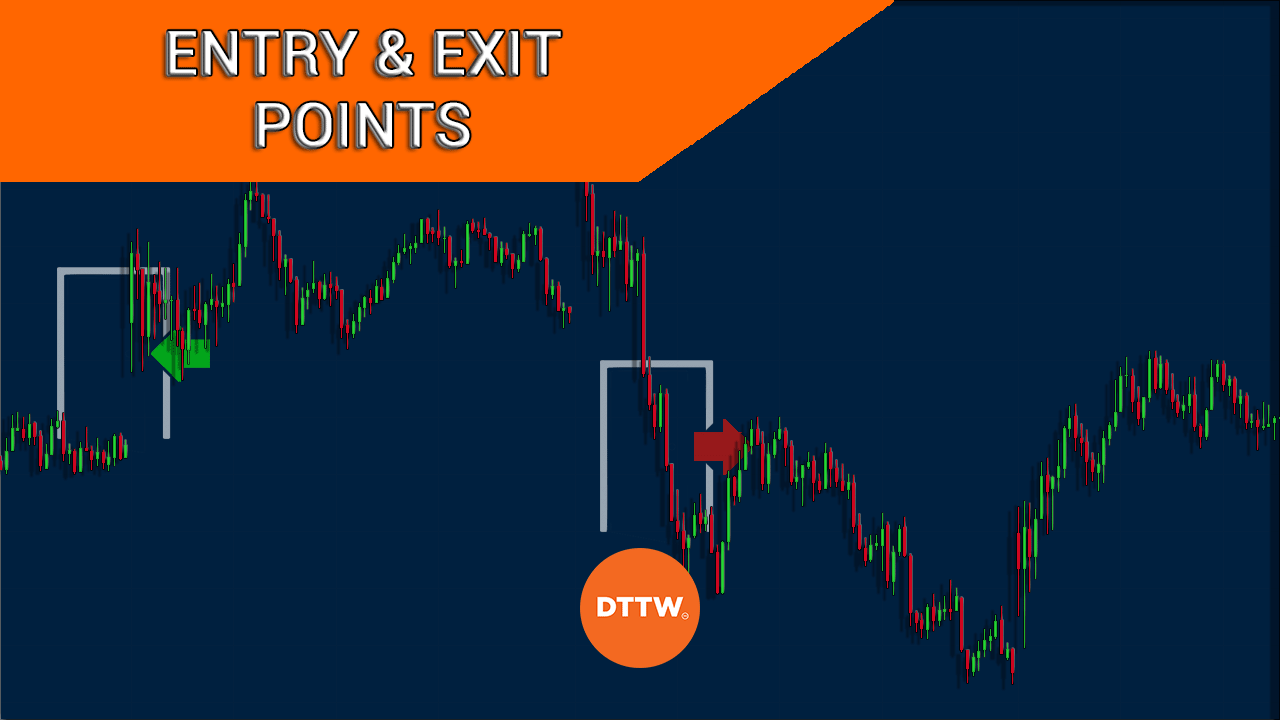
Enter on breakouts above or below the 15-minute pre-news range, exiting at 1:2 risk-reward or trailing stops after 30 minutes. Specifically, draw range highs/lows 15 minutes before release. Post-news, buy breakouts up or sell down, avoiding the first 30 seconds of chaos.

For example, on NFP, if EUR/USD ranges 1.0850-1.0870, buy above 1.0875 with stop at 1.0840. Exit at 1.0920 or if momentum fades. Straddle alternative: place buy/sell stops 10 pips outside range, canceling the loser.
Rules prevent revenge trades: no entries 5 minutes pre-news. Backtests on MT4 show 60% win rates. Trail stops to breakeven after 20 pips.
Which Forex Pairs Are Best for News Trading?
EUR/USD, GBP/USD, and USD/JPY suit news trading best due to high liquidity and volatility during US and European releases. EUR/USD reacts sharply to NFP and Fed, averaging 80 pips. GBP/USD spikes on BOE or CPI, with cable’s nickname for wild swings.

USD/JPY moves on risk events, safe-haven flows post-NFP. Avoid exotics like USD/TRY, prone to gaps. Majors offer tight spreads, per Pepperstone data. AUD/USD fits RBA news.
What Risk Management Practices Are Essential for News Trading?
Essential risk practices include tight stop-losses at 20 pips, position sizing under 1% account risk, and avoiding over-leverage amid slippage. In detail, these controls preserve capital in volatile spikes.
Limit exposure per trade to 0.5-1% via lot calculators. Pre-set stops outside news ranges.
How Can You Avoid Common Pitfalls Like Slippage and Spread Widening?
Choose ECN brokers with low-latency servers and position away from news spikes to dodge slippage and widening spreads. Slippage hits when orders fill worse than requested during volatility, common in NFP opens where spreads balloon from 1 to 10 pips.

Select brokers like IC Markets for raw spreads. Avoid market orders; use limits. Pre-news, close positions or hedge lightly.
For instance, test demo accounts during CPI for broker reliability. OANDA reports show ECN cuts slippage 50%. Time zones matter: trade London-New York overlap.
Is News Trading Profitable for Forex Traders?
Yes, news trading proves profitable with 55-65% win rates and 2-5% monthly returns for disciplined traders using calendars and risk rules. Specifically, pros average higher due to edge in volatility.
Backtested strategies on TradingView yield positive expectancy. High-risk suits experienced users, with drawdowns under 10% via sizing.
Retail data from FXCM shows top 20% net 15% yearly. Why? Fewer trades, big winners. Practice on demos first. Rhetorical question: can you handle the adrenaline for steady gains?
Advanced Considerations and Comparisons in News Trading Strategies
Advanced news trading strategies incorporate specialized tools, comparative analysis with scalping, data filters, automation options, session-specific impacts, psychological management, and broker selection for optimal execution.
Furthermore, these elements help traders refine their approach beyond basic economic release trading.
What Tools and Calendars Are Best for News Trading?
Forex Factory and Investing.com stand out as top calendars for news trading due to their detailed event listings, impact ratings, and real-time updates. Forex Factory offers a color-coded volatility forecast, showing expected market moves via a meter that predicts pip ranges based on historical data. Investing.com complements this with customizable alerts and historical revisions tracking, essential for spotting surprises.

You’ll notice volatility indicators like the ATR (Average True Range) or VIX equivalents for forex pairs integrate well here. Pair these with MT4/MT5 plugins from Myfxbook for automated calendar overlays on charts.
Why choose these? They reduce guesswork. For instance, filter high-impact events like NFP (Non-Farm Payrolls) with revision columns to anticipate post-release volatility spikes.
To maximize value, sync calendars with volatility tools for entry timing.
- Use Forex Factory’s market clock for session overlaps.
- Set Investing.com push notifications for mobile trading.
- Combine with ATR to gauge stop-loss distances during releases.
How Does News Trading Compare to Scalping in Forex?
News trading focuses on event-driven bursts around economic releases, unlike scalping’s constant high-frequency trades on short timeframes. Scalpers target 1-5 minute charts for small pip gains multiple times daily, relying on tight spreads and quick executions. News traders wait for volatility explosions from data like GDP or interest rates, often on 5-15 minute charts, aiming for larger 50-200 pip moves in minutes.

Key difference: time commitment. Scalping demands screen time all session, while news trading allows preparation around scheduled events, freeing time elsewhere. Risk profiles diverge too, scalping uses fixed low risk per trade, news trading scales position sizes based on deviation forecasts.
Both thrive in liquid markets, but news trading suits patient traders avoiding ranging conditions scalpers exploit.
Similarities include needing low-latency brokers and discipline. Ask yourself, do you prefer steady grinding or explosive opportunities?
- News: Event-tied, higher reward potential per trade.
- Scalping: Frequent entries, compounds small wins.
- Overlap: Both demand fast exits amid volatility.
What Are Advanced News Trading Filters Like Consensus vs Actual Data?
Advanced filters hinge on comparing consensus forecasts to actual data releases, triggering entries only on significant deviations. Consensus represents economist averages, say 200k jobs expected versus 150k actual, signaling a 25% miss that sparks USD weakness.

Deviation-based entries quantify this: enter long if actual beats consensus by 2 standard deviations (use historical std dev from calendars). Tools like Forex Factory’s forecast tables provide these metrics.
This refines basic straddle strategies, avoiding whipsaws from minor beats. For EUR/USD CPI releases, a 0.2% deviation often yields 100-pip trends.
Moreover, layer sentiment filters from COT reports for directional bias.
- Calculate deviation: (Actual – Consensus) / Historical Std Dev > 1.5.
- Ignore low-impact news under 0.5 std dev.
- Backtest pairs like GBP/USD for NFP sensitivity.
Can You Use Automated Bots for News Trading?
Yes, automated bots or Expert Advisors (EAs) work for news trading, but development and backtesting pose steep challenges due to erratic volatility. Custom EAs on MT4/MT5 parse calendars via APIs from Forex Factory, pausing trades pre-release then entering on deviation thresholds.

Challenges include slippage modeling, as historical backtests fail to replicate live spikes. Use tick data from Dukascopy for realistic tests, coding filters for news hours.
Rare scenarios like flash crashes demand kill switches. Success stories involve hybrid EAs combining straddle breakouts with trailing stops.
Practical tip: Start with open-source news EAs on MQL5 community, tweak for your risk.
- Code deviation logic using iCustom indicators.
- Backtest across 5+ years of NFP data.
- Forward test on demo during low-liquidity events.
How Does News Trading Impact Differ Across Forex Sessions?
News trading effects vary by session, with London-New York overlap (8 AM-12 PM ET) amplifying moves due to dual liquidity. US data like FFP hits hardest then, often doubling pip ranges versus Asian session.
London session suits EU releases (e.g., ECB rates), where GBP and EUR pairs surge on overlaps. Asian news like BOJ impacts JPY subtly, lacking volume for big trends.
Overlaps create rare volatility peaks, ideal for breakouts. Sydney-Tokyo sees muted reactions, better for positioning pre-major news.
Track via session heatmaps on TradingView.
- London open: Prime for BOE, ECB.
- NY overlap: NFP, Fed decisions explode.
- Avoid Asia solo for low conviction trades.
What Psychological Challenges Arise in High-Volatility News Trading?
High-volatility news trading triggers FOMO (fear of missing out) when prices gap past entries, pushing over-leveraged chases. Revenge trading follows stop-outs, doubling sizes post-loss amid chaos.

Rapid reversals breed doubt, eroding discipline. Studies from trading journals show 70% of news losses tie to emotional overrides.
Counter with pre-set rules: fixed lot sizes, no trades post-deviation fails. Journal FOMO urges during simulations.
Rhetorical question: Can you stick to plan when screens flash 200 pips in seconds?
- Combat FOMO via checklist entries.
- Pause 15 minutes post-loss for reset.
- Use meditation apps pre-release.
Which Brokers Offer the Best Conditions for News Trading?
ECN brokers like IC Markets, Pepperstone, and FP Markets provide ideal news trading with raw spreads under 0.1 pips, no requotes, and deep liquidity. IC Markets excels in NFP with <20ms execution, handling spikes without freezes.

Pepperstone’s cTrader platform suits scalps around news, zero commissions on some accounts. FP Markets offers VPS hosting for low latency.
Avoid market makers during releases due to widenings. Check ASIC regulation for safety.
- IC Markets: Lowest spreads on majors.
- Pepperstone: Fastest fills verified by FXBlue.
- FP Markets: Free news trading VPS.