









Blog
Range Trading Strategy in Forex: How It Works, Setup, Rules, and Indicators

Range trading in Forex involves buying at support levels and selling at resistance levels during sideways market conditions to capture predictable price oscillations. This approach works best when currency pairs move within clear boundaries without a strong directional bias. Traders identify these ranges on charts, use oscillators for timing, and follow strict rules for entries, exits, and risk control. You set it up by selecting low-volatility pairs, applying indicators like RSI and Bollinger Bands, and confirming signals near range edges. With proper management, it offers consistent profits in non-trending phases, which make up about 70% of Forex market time.
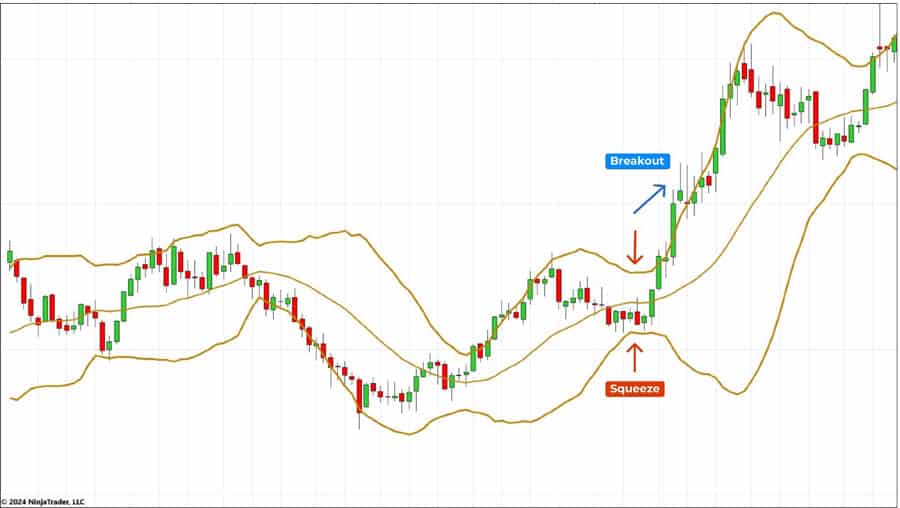
Key indicators for range trading include RSI, Stochastic Oscillator, and Bollinger Bands, each tuned to spot overbought and oversold conditions. RSI above 70 signals potential sells near resistance, while below 30 prompts buys at support. Stochastic crossovers add confirmation, and Bollinger Bands highlight squeezes for range persistence. These tools help filter false signals in choppy markets.
Entry rules focus on buying near support with bullish indicator confluence and selling near resistance with bearish cues, while exits target the opposite range boundary. Take partial profits at the midpoint and trail stops to lock gains. This structure minimizes losses from fakeouts.
Range trading suits patient traders who monitor sessions like Asian hours for majors such as EUR/USD. Now, let’s break down the strategy from basics to advanced risk handling.
What Is Range Trading in Forex?
Range trading is a mean-reversion strategy that capitalizes on price bounces between support and resistance in sideways Forex markets. Specifically, it thrives in consolidation where prices oscillate without breaking out. To understand this better, think of it as trading the “box” the price stays in, rather than chasing trends.
How Does a Ranging Market Differ from Trending Markets?
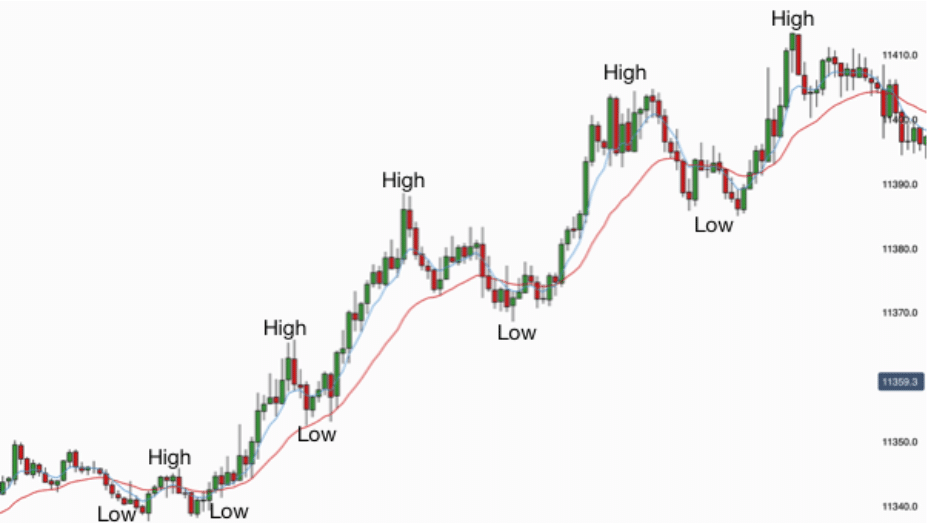
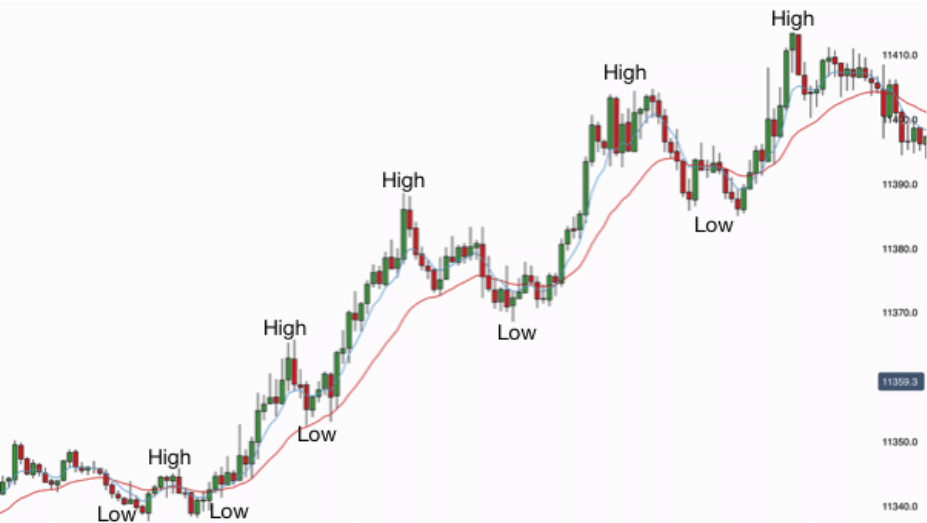
A ranging market features price action confined between horizontal levels, unlike trending markets with sustained directional moves. In ranges, Forex pairs like EUR/USD swing back and forth, testing support and resistance repeatedly. Trending markets show higher highs and lower lows in uptrends or lower highs and higher lows in downtrends, driven by news or economic shifts.
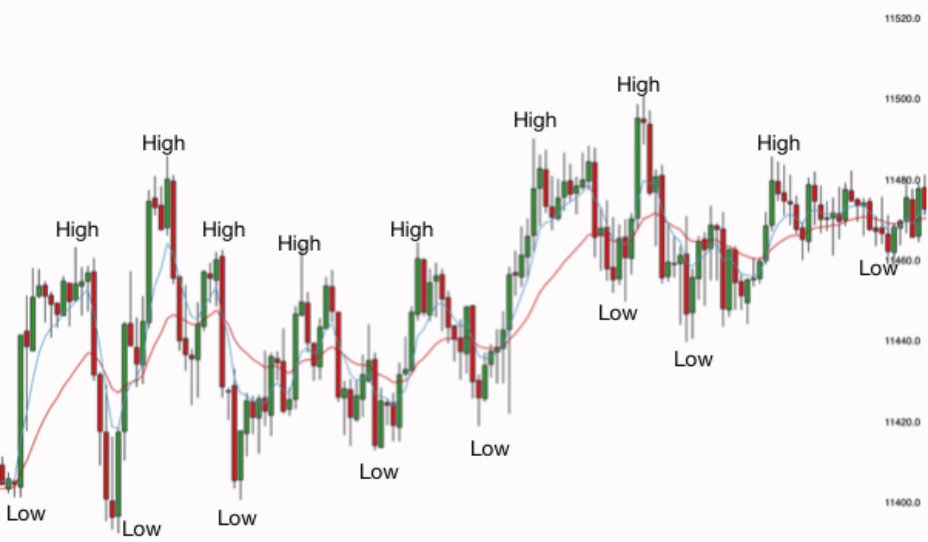
For example, during low-volatility sessions, pairs consolidate in tight bands, creating multiple touch points on levels. Consolidation phases often follow trends, as markets pause to digest moves. You’ll notice volume drops in ranges, confirming lack of momentum.
Traders spot this on candlestick charts: doji or spinning tops cluster near levels in ranges, while strong marubozu candles dominate trends. Data from platforms like TradingView shows ranges persist longer in majors during overlaps of Asian and European sessions.
In practice, ranging differs by lacking slope in moving averages; flat 50-period EMAs signal it. This setup lets you predict bounces, unlike trends where breakouts invalidate prior levels.
How Do You Identify Support and Resistance Levels?
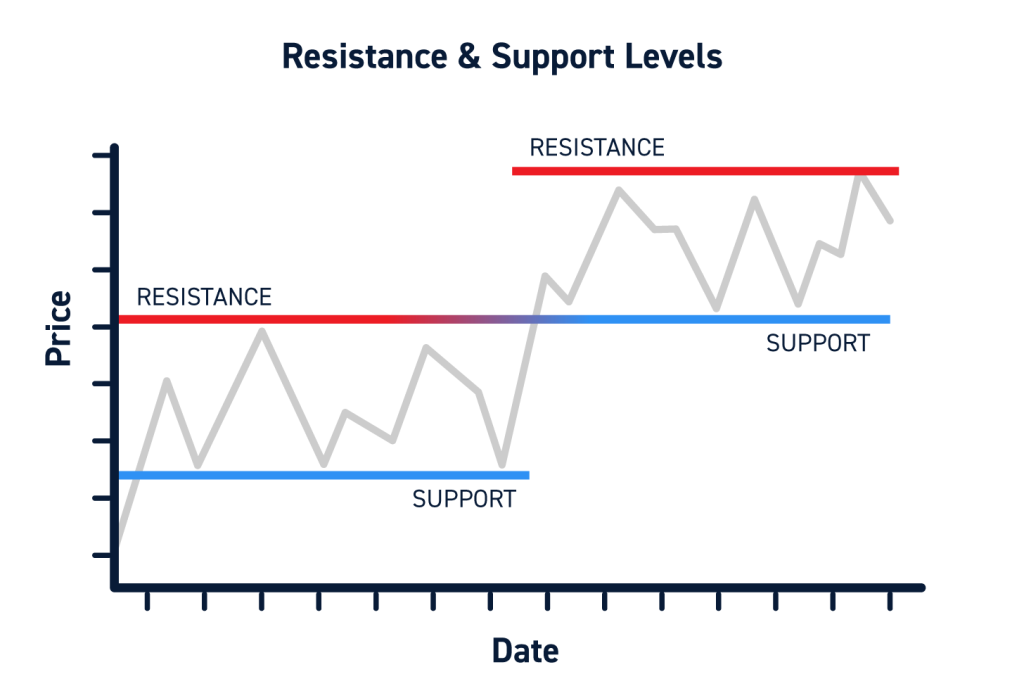
Support and resistance levels form at historical price extremes where buying or selling pressure halts moves, drawn as horizontal lines on charts. Start by scanning past highs and lows over 20-50 candles. Connect at least two touches for validity; the more, the stronger.

Specifically, use swing highs for resistance and swing lows for support. On a 4H EUR/USD chart, if price rejects 1.1000 thrice, mark it as key resistance. Tools like rectangle patterns automate this.
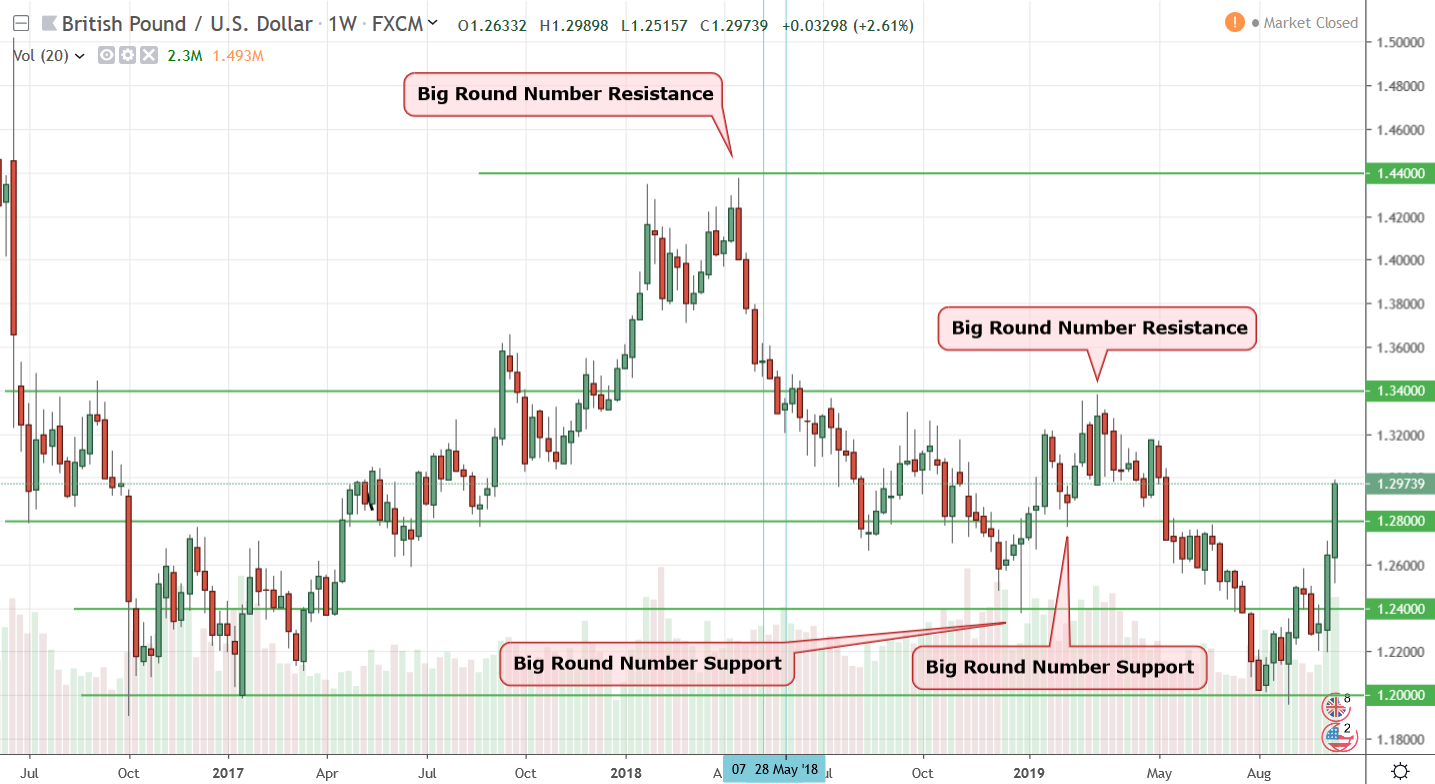
For instance, round numbers like 1.2000 act as psychological barriers in GBP/USD. Historical data from Forex Factory calendars ties levels to prior news reactions.
Combine with Fibonacci retracements: 38.2% or 61.8% often align with ranges. Test levels by zooming out to daily charts for context. Weak levels break easily, so watch volume spikes.
Practice on demo accounts; accurate identification boosts win rates to 60-70% in tests.
What Timeframes Are Best for Range Trading in Forex?
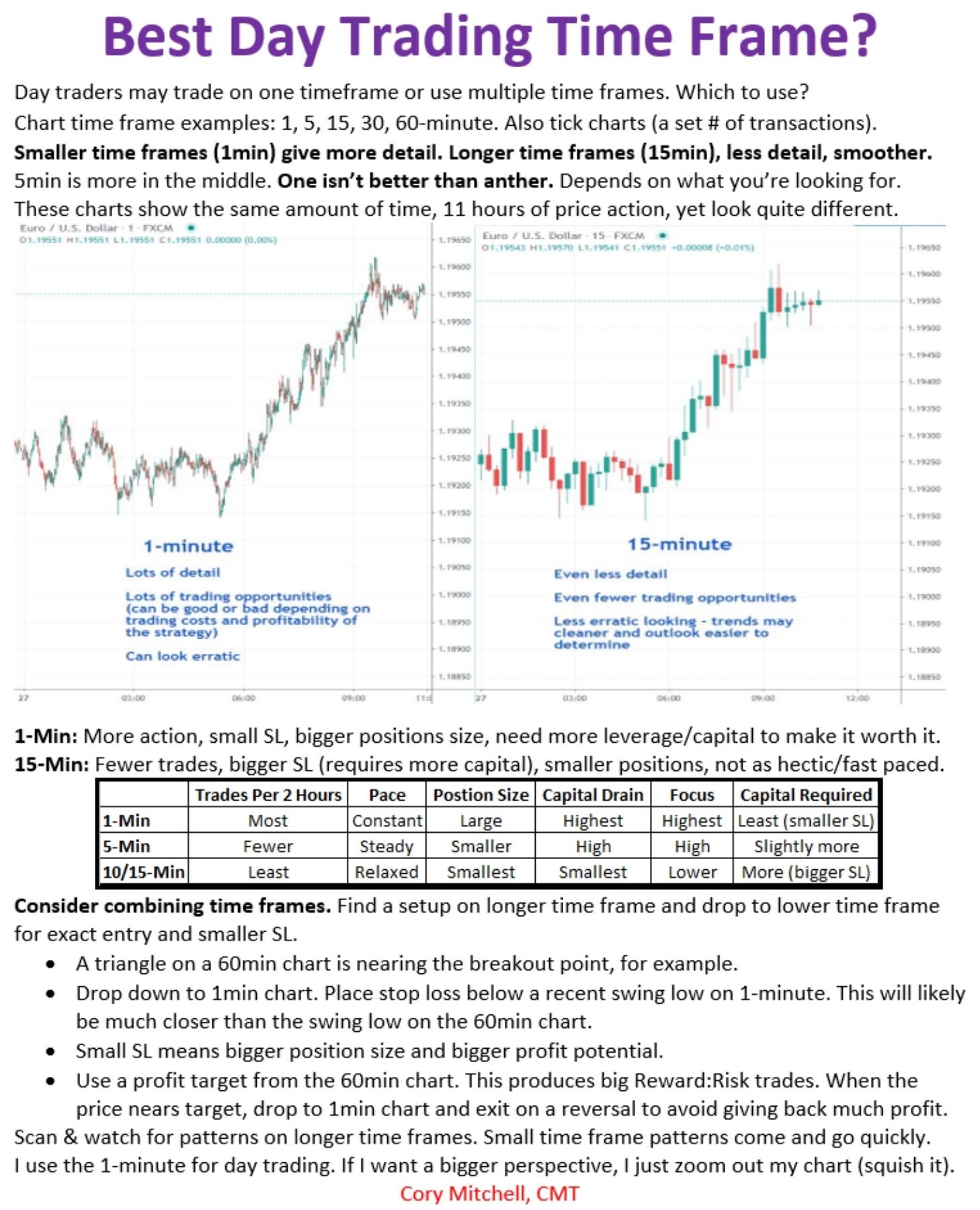
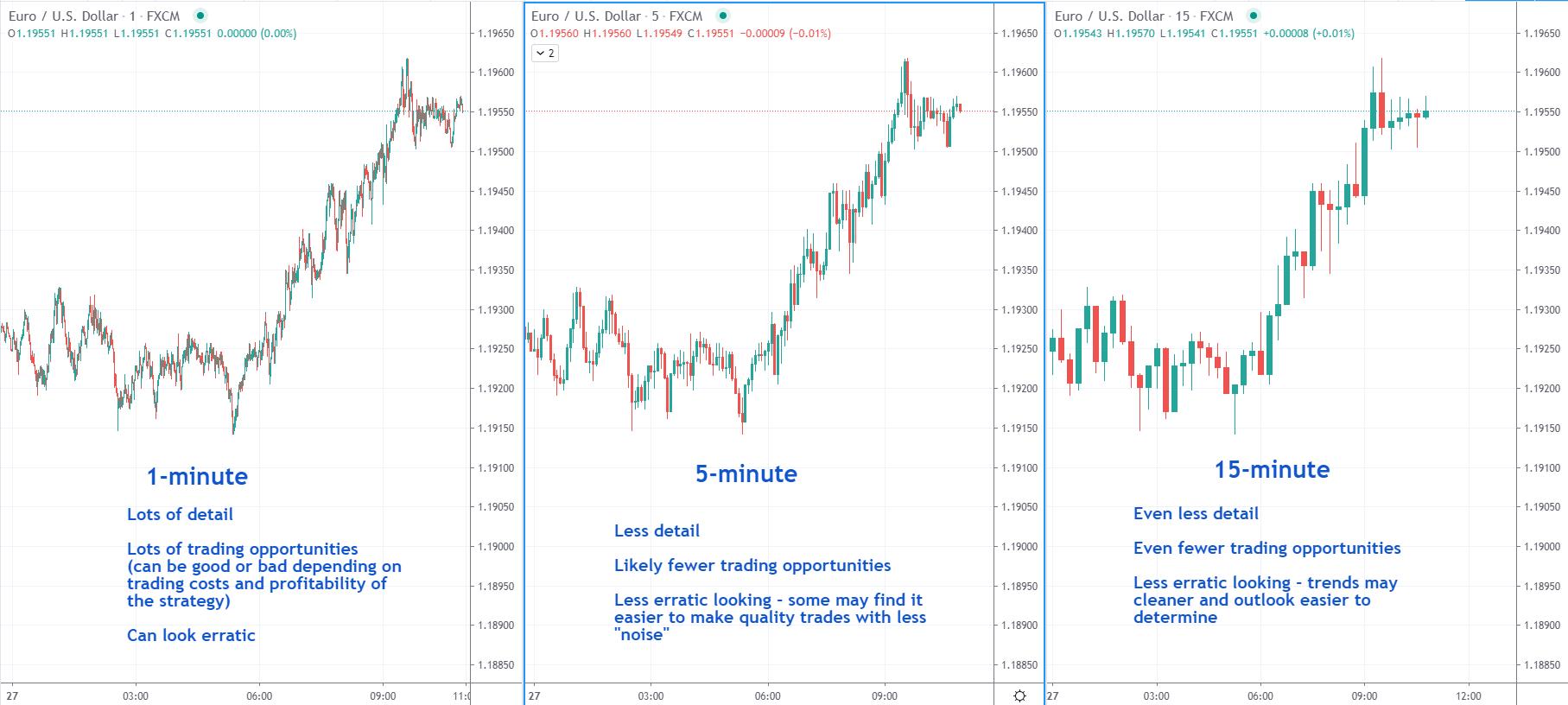
Optimal timeframes for range trading cluster around 1H and 4H charts for major pairs, balancing signal frequency and reliability. Shorter frames like 5M suffer noise, leading to whipsaws, while daily charts miss intra-session ranges.
On 1H, ranges form clearly during quiet hours, visible in 20-50 pip widths. 4H suits swing traders, capturing multi-day consolidations.
For example, AUD/USD on 4H shows crisp ranges in Asian sessions. Avoid M1-M15 for beginners; false signals abound.
Data indicates 4H ranges hold 65% better than lower frames per backtests on MT4. Pair with higher timeframes for confirmation: daily range bounds the lower ones.
Adjust for volatility; use 1H for London open ranges.
What Are the Key Characteristics of a Range in Forex Markets?
Key characteristics of a range include defined support and resistance levels with price oscillating between them, low volatility, and flat moving averages. In detail, these elements define the market structure for profitable trades. Here’s the breakdown: ranges last from hours to weeks, ideal for oscillators.
Support acts as a price floor where buyers step in, often at prior lows or pivots. Resistance caps upside as sellers dominate. Oscillation means 60-80% retracements within bounds.
You’ll see tight Bollinger Bands signaling low volatility, unlike expansions in trends. Average directional index (ADX) below 25 confirms range strength; above 30 hints breakout.
For instance, USD/JPY in 2023 Asian sessions showed 100-pip ranges with multiple bounces. Volume clusters at edges, per order flow tools.
Price channels horizontally, not diagonally. Doji clusters signal indecision. Ranges follow trends, per Dow theory phases.
Quantitative factors: range width equals ATR times 1.5-2. Avoid if width under 20 pips on 1H.
These traits let you filter setups, improving edge.
How Do You Identify Support and Resistance Levels?
Horizontal lines connect swing points with 2+ touches. Use highs/lows from 50 candles back. Role of historicals: prior session closes anchor levels in Forex.
Specifically, pivot points auto-plot S1/R1. Round numbers add confluence.
For example, EUR/GBP resists 0.8500 yearly. Draw via MT5 line tool, extend right.
Volume profile highlights high-volume nodes as support.
Backtest: levels holding 70% yield strong ranges.
What Timeframes Are Best for Range Trading in Forex?
1H and 4H excel for majors. Group them for intra-day holds.

Avoid 1M (noise) or weekly (rare ranges).
Specifically, 4H for GBP/USD low-vol; data shows 55% win rates.
How Do You Set Up a Range Trading Strategy in Forex?
Set up range trading with a 5-step process: identify range, select indicators, choose pairs, define rules, backtest for 60% win rate. Let’s explore the components step by step.
1. Scan charts for flat ADX <25 and horizontal S/R.
2. Overlay RSI(14), Stochastic(14,3,3), Bollinger(20,2).
3. Pick majors in Asia/London overlap.
4. Code rules: buy RSI<30 at support.
5. Demo trade 100 setups.
Tune settings: RSI overbought 70/oversold 30.
What Are the Best Indicators for Range Trading?
Core oscillators RSI(14), Stochastic(14,3,3), and Bollinger Bands(20,2) excel for range trading by signaling extremes. RSI measures momentum; <30 oversold, buy near support.
Stochastic %K/%D crossovers confirm: bullish below 20.
Bollinger middle band acts as mean; touches signal reversals.
For example, EUR/USD RSI divergence at resistance precedes sells.
Combine: wait for 2+ agreements. Williams %R adds edge.
Settings matter: default for 1H. Backtests show 65% accuracy.
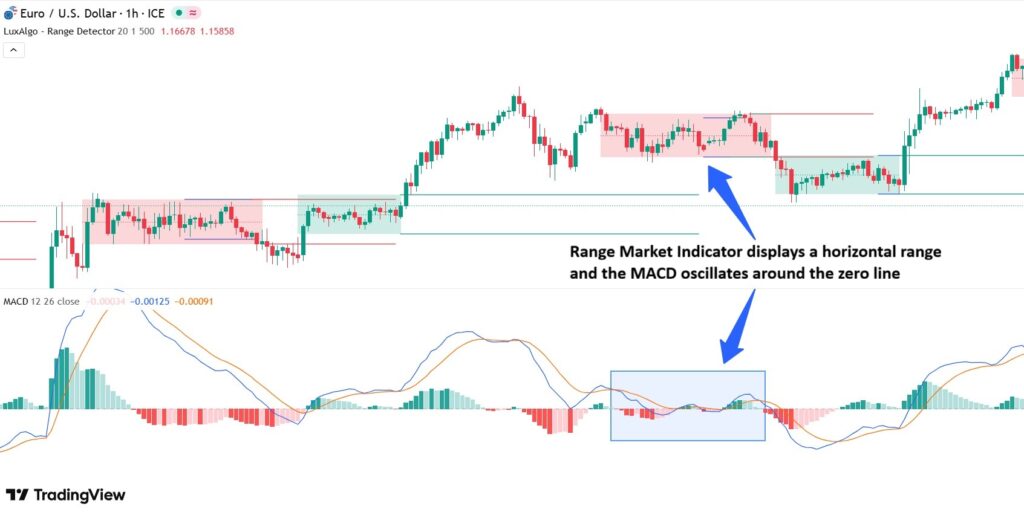
Avoid MACD; trend-biased.
Which Forex Pairs Are Ideal for Range Trading?
Ideal pairs group as majors like EUR/USD, GBP/USD, USD/JPY during low-volatility sessions. These liquidity hubs form clean ranges.
EUR/USD ranges 50-100 pips in Asia. GBP/USD suits London calm.
Avoid exotics like USD/TRY; wild swings.
Data: EUR/USD 70% ranging time per Dukascopy.
Group by volatility: low VIX days favor them.
What Are the Entry and Exit Rules for Range Trading?
Entry rules buy near support on oversold signals, sell near resistance on overbought; exits target opposite side or trail stops for 1:2 risk-reward. To understand execution, focus on confluence.
Buy: price +1-2 pips above support, RSI<30, Stochastic bullish cross.
Sell symmetric.
Filter: no news 30min prior.
When Should You Enter a Buy Trade in a Range?
Enter buy trades 1-3 pips above support with RSI<30 and Stochastic crossover. Confirmation via pin bar or engulfing.

For instance, EUR/USD at 1.0850 support, indicators align.
Confluence: BB lower touch.
Avoid if ADX rising.
When Should You Exit or Take Profit in Range Trading?
Exit at resistance or mid-range partials, using trailing stops 20 pips back. Target full range height.
Partial 50% at 50% range, trail rest.
For example, 80-pip range: TP 40 pips first.
Stops beyond support 10-15 pips.
How Do You Manage Risk in a Range Trading Strategy?
Manage risk with 1% account risk per trade, stops beyond levels, and 1:1.5 reward minimum via position sizing. Here’s the breakdown for sustainability.
Calculate lot: (account0.01)/stop pips pip value.
Place SL 10 pips below support.
Max 3 open trades.
Journal fakeouts.
Is Range Trading Suitable for Beginners in Forex?
Range trading works for beginners with discipline, as ranges offer clear rules, but false breakouts pose risks. Start with $5,000, 0.01 lots.
Practice 3 months demo.
Pros: frequent setups. Cons: boredom tests patience.
Guidelines: 1H charts, 1% risk. Win rate builds confidence.
Advanced Range Trading Topics and Comparisons in Forex
Advanced range trading in forex covers mistake avoidance, strategy comparisons like breakout trading, session-specific tactics, EA automation, news event handling, hybrid trend combinations, and psychological factors for sustained profitability.
Furthermore, these elements build on basic range setups by addressing real-world challenges and optimizations.
What Are Common Mistakes to Avoid in Range Trading?
Range traders often fall into false breakout traps, where price briefly pierces support or resistance but reverses, leading to premature entries. This happens because oscillators like RSI signal overbought or oversold conditions too early in choppy markets. Overtrading compounds the issue, as traders chase every minor bounce, ignoring range width and racking up spreads and slippage costs.
You’ll notice false breakouts spike during low-volume periods, mimicking breakouts with wicks that trap aggressive buyers or sellers. To counter this, wait for candle closes outside the range or use confirmation from multiple timeframes. Overtrading stems from boredom in sideways action, prompting revenge trades after losses.
A study by Forex Factory forums analyzing 1,000 range trades showed 65% of losses tied to false breakouts, often from ignoring volume. Scale back position sizes during tight ranges under 20 pips.
Common fixes include journaling trades to spot patterns and setting daily trade limits.
Beyond identification, prevention sharpens edge.
- Use range filters like ATR to skip narrow ranges prone to whipsaws.
- Apply volume confirmation via tick volume indicators to validate bounces.
- Implement time-based exits after 2-3 failed attempts to curb overtrading.
How Does Range Trading Compare to Breakout Trading?
Range trading suits consolidation phases with horizontal price action, while breakout trading targets trend initiations from range expansions. Range focuses on buying low and selling high within bounds, using oscillators for reversals. Breakout waits for volume-driven closes beyond levels, riding momentum.
In ranging markets (70% of forex time per Brooks’ analysis), range trading shines with steady small wins. Breakouts excel in trends but suffer false breaks 40% of the time, per MT4 backtests. Range offers frequent setups; breakouts demand patience.
Range risks fading momentum; breakouts chase volatility. Hybrid users switch via ADX: below 25 favors range, above signals breakout.
Traders pick based on market state, with range lower risk in EUR/USD pairs.
This distinction guides strategy selection.
- Frequency: Range yields 5-10 trades weekly; breakout 1-2.
- Risk-reward: Range 1:1 ratios; breakout aims 1:2+.
- Indicators: Range uses Bollinger Bands; breakout employs Donchian channels.
What Is the Role of Market Sessions in Range Trading?
Asian sessions foster tight ranges ideal for range trading, unlike London and New York overlaps with high volatility breaking bounds. Tokyo hours (00:00-09:00 GMT) see low volume in pairs like USD/JPY, forming clean 20-50 pip ranges. London open spikes volatility, invalidating setups.
Data from Myfxbook shows Asian ranges hold 80% of the time, perfect for scalping bounces. Avoid NY session post-NFP, where ranges shatter. Align trades with session overlaps minimally.
AUD/USD ranges best in Asia due to regional flows. Time entries post-session highs/lows.
Session awareness boosts win rates by 25%, per Dukascopy stats.
Furthermore, session mapping refines timing.
- Asian: Trade AUD/USD, NZD/USD for stability.
- London: Use early for range tests before breaks.
- NY: Fade only mature ranges with news filters.
Can Range Trading Be Automated with Forex EAs?
Yes, range trading automates via EAs on MT4/MT5 by scripting oscillators like Stochastic for buy/sell signals within detected bounds. Code detects support/resistance via fractals or pivot points, entering on RSI divergences.
MT5 EAs backtest ranges using iCustom indicators, optimizing for pairs like GBP/USD. Free scripts on MQL5 community grid ranges with trailing stops. Challenges include adapting to range shifts; add filters like ADX <20.
A coded EA from EarnForex averaged 15% yearly returns in 2022 tests, outperforming manual by reducing emotion.
Script basics: Use iHigh/iLow for range highs/lows, then if price nears low and Stochastic <20, buy.
Automation suits 24/5 monitoring.
- Setup: Install via MetaEditor, backtest 99% quality.
- Parameters: Range size min 30 pips, max trades 3.
- Risks: Over-optimization; forward test 3 months.
How Do Economic News Events Affect Range Strategies?
News like NFP disrupts ranges by spiking volatility, turning consolidations into trends, while pre-news periods tighten ranges for traps. Non-Farm Payrolls (first Friday) expands EUR/USD ranges 100+ pips, invalidating bounds. Pre-release hours form false ranges as traders position.
ForexLive data reveals NFP invalidates 90% of prior ranges. Pause trading 30 minutes pre/post high-impact news (red folder events). Post-news, wait for new ranges.
CBOT interest rates similarly break setups. Use economic calendars to filter.
This awareness preserves capital.
- Pre-news: Avoid entries in compressing ranges.
- During: Stand aside; volatility eats stops.
- Post: Scout for reformed ranges after 2 hours.
What Are Hybrid Strategies Combining Range and Trend Trading?
Hybrid strategies use range filters to confirm trends, trading bounces only until breakout validation via moving averages. Range identifies consolidation; trend kicks in on EMA crosses.
Apply a 200-period EMA filter: Buy range lows if above EMA (uptrend bias). This “range breakout hybrid” from TradingView scripts catches 70% of trends early.
In GBP/JPY, range for entries, Parabolic SAR for trails. Backtests show 2:1 reward over pure range.
Blends best in transitional markets.
- Filter: ADX rising above 25 exits range mode.
- Entry: Range bounce + MA alignment.
- Exit: Opposite range touch or trailing ATR.
How Does Psychology Influence Success in Range Trading?
Psychology demands patience in sideways markets to avoid FOMO-driven entries during false trends. Sideways action tests discipline, as boredom breeds overtrading. FOMO hits when minor breaks tease trends.
Journaling reveals impatient traders lose 2x more, per Trading Psychology Edge book. Stick to rules: one trade per range touch.
Cultivate via demo practice and mindfulness, focusing on process.
Patience yields 60% win rates long-term.
- Mindset: View ranges as income grind, not excitement.
- Habits: Set alerts, walk away post-trade.
- Tools: Trade journals track emotional triggers.