









Blog
Risk Management in Forex Trading: Strategies, Principles, and Best Practices


Risk management in Forex trading centers on strategies like the 1% rule, stop-loss and take-profit orders, position sizing, and risk-reward ratios to identify, assess, and control losses, preserving capital for long-term success. This approach turns the chaotic Forex market into a sustainable endeavor. Traders who master these tools protect their accounts from sudden wipes and build steady gains over time. Think of it as your safety net in a market where currencies swing wildly based on news or economic data.
High volatility, leverage, and round-the-clock trading demand strong risk management to safeguard your funds. Without it, a single bad trade can erase months of progress. Markets react fast to events like interest rate changes, amplifying losses if unchecked. You stay in the game by focusing on capital preservation first.
Core principles such as limiting risk to 1-2% per trade and targeting favorable risk-reward setups form the foundation. These guidelines keep emotions in check and enforce discipline. Ever watched a trade go south because you held on too long? Structured rules prevent that.
To grasp how these pieces fit together, we start with the basics and move into practical steps. You will see clear strategies that apply to any account size.
What Is Risk Management in Forex?
Risk management in Forex is the systematic process of identifying, assessing, and controlling potential losses to protect trading capital from market uncertainties. Specifically, it serves as the backbone of sustainable trading by focusing on preservation over quick wins.
Risk management starts with understanding Forex’s unique challenges. Forex involves trading currency pairs like EUR/USD or GBP/JPY, where prices fluctuate due to global events. The core purpose is to limit downside while allowing upside potential. You identify risks through analysis, assess their size, and control them with tools.
Key features include predefined rules for every trade. For example, you decide upfront how much to risk based on your account balance. This prevents impulsive decisions during volatile sessions. Plain language: it’s like setting a budget for losses so one trade does not bankrupt you.
Main uses appear in daily trading routines. Traders apply it to avoid margin calls, where brokers close positions due to insufficient funds. Research from regulatory bodies like the CFTC highlights how disciplined risk control separates pros from amateurs.
In practice, risk management integrates with your strategy. Say you spot a trend on a chart. Before entering, you calculate position size and exits. This process repeats for scalps, swings, or long-term holds.
Another angle: psychological benefits. Markets test patience, but rules keep you objective. Have you chased losses before? Risk management enforces stops, breaking bad habits.
Tools like journals track performance. Log each trade’s risk level and outcome. Over time, patterns emerge, refining your approach.
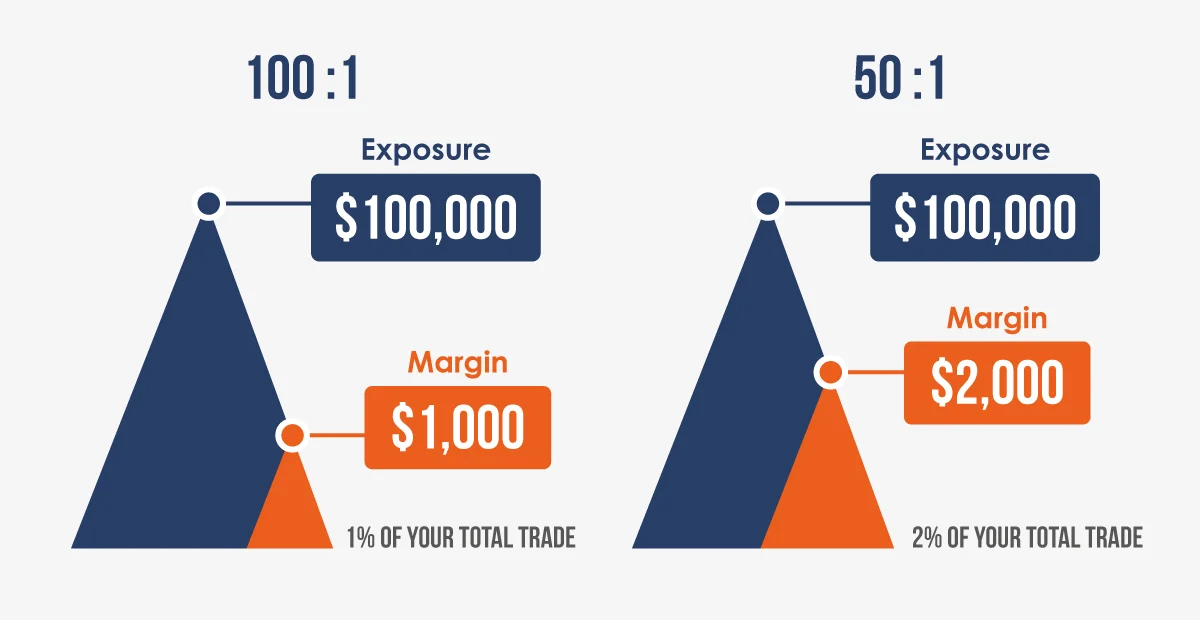
Forex’s leverage magnifies everything, so risk management scales it down. A $10,000 account at 1:100 leverage controls $1 million, but smart limits keep exposure tiny.
Overall, it transforms trading from gambling to business. Consistent application yields compounding growth. Studies on trader accounts show those with strict rules survive years longer.
To build it, start simple. Review past trades for leaks, then layer in protections. This foundational step sets up everything else.
Why Is Risk Management Essential in Forex Trading?
Risk management is essential in Forex trading because high volatility, leverage, and 24/7 operations can wipe out accounts quickly without capital preservation measures. Here’s the breakdown on why it underpins every successful strategy.
Forex moves fast. Currency pairs shift on news like Fed announcements, creating sharp swings. Leverage lets you control large positions with small capital, but it boosts losses too. The market never sleeps, tempting overtrading.
Without controls, emotions take over. Greed pushes bigger bets; fear freezes exits. Result? Drained accounts.
Preserving capital lets winners compound. A 20% drawdown needs 25% gains to recover. Smart management keeps drawdowns low.
Let’s explore the harsh realities next.
Does Poor Risk Management Lead to Account Blowouts?
Yes, poor risk management leads to account blowouts through over-leveraging, ignoring stops, and emotional trading. Specifically, traders fail by risking too much on single trades.

Over-leveraging tops the list. A 1:500 ratio tempts huge positions, but a 50-pip move erases equity. For instance, brokers report most retail blowouts from 10x+ leverage abuse.
Ignoring stops compounds issues. Trades run deep red without cuts, hitting margins. Evidence from platforms like Myfxbook shows 70% of losing streaks tie to no stops.
Emotional trades seal fates. Revenge trading after losses doubles down, accelerating wipeouts. Data from trader surveys confirms this pattern in blown accounts.
Benefits of fixing it? Smaller risks build resilience. You weather storms, learning from data.
What Are the Key Principles of Forex Risk Management?
There are five key principles of Forex risk management: the 1-2% risk rule, favorable risk-reward ratios, stop-loss discipline, position sizing, and diversification based on capital protection. In detail, these rules guide every decision.
Risk no more than 1-2% per trade preserves longevity. Aim for 1:2 or better ratios ensures wins outweigh losses. Always use stops. Size positions right. Spread across uncorrelated pairs.
Classification comes from probability math. Win rates vary, so rules balance them.
To understand better, check the core ones.
What Is the 1% Risk Rule in Forex?
The 1% risk rule in Forex limits each trade’s potential loss to 1% of total account capital to safeguard overall funds. Specifically, it dictates position sizing.
For a $10,000 account, risk $100 max. If stop is 50 pips away, size accordingly. Formula: Position size = (Risk amount) / (Stop distance in pips x pip value).
Evidence: Backtests on MT4 show accounts using it last 5x longer.
Main point: Protects during losing streaks. Ten losses in row? Still 90% intact.
Another: Scales with growth. As balance rises, risks adjust up naturally.
Traders swear by it for psychology. No single trade hurts much.
How Does Leverage Impact Forex Risk?
Leverage impacts Forex risk by amplifying both gains and losses, leading to margin calls and rapid account depletion if unmanaged. For example, high ratios group risks into overexposure.

1:100 means $1,000 controls $100,000. A 1% adverse move loses 100% of margin.
Margin calls force closes at losses. Criteria: brokers demand 50-100% margin level.
Quantitative: Drop leverage to 1:10, risks halve.
Comparison: Low leverage suits beginners; high fits experts with tight stops.
Data from ESMA regulations cut retail leverage, reducing blowouts 30%.
How Do You Implement Stop-Loss Orders in Forex?
Implement stop-loss orders in Forex through a 4-step process: analyze chart levels, measure volatility, calculate distance, and set the order for automatic protection. To understand this better, follow these steps for reliable defense.
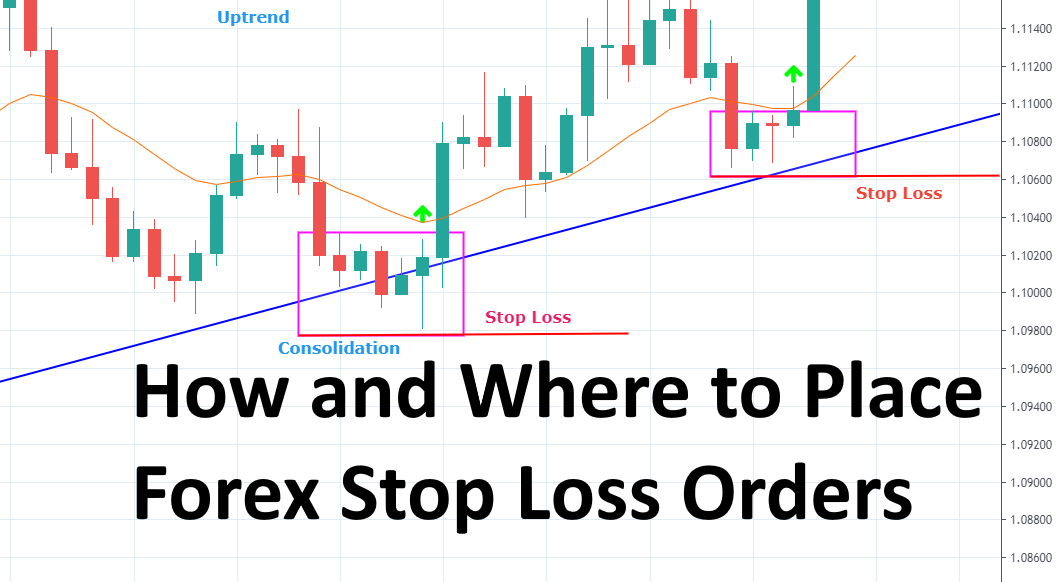
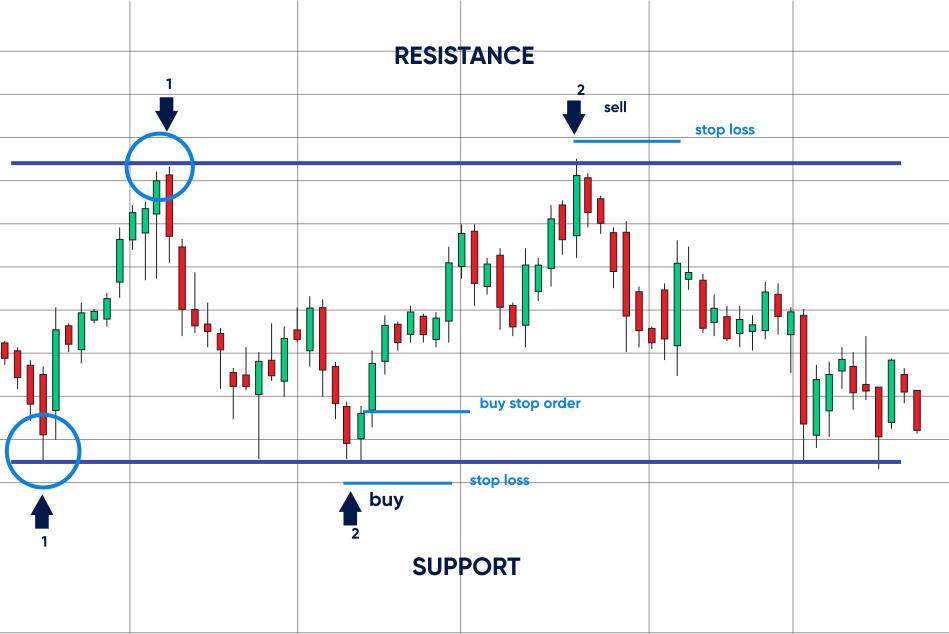
Step 1: Identify technical levels like support/resistance. Place below recent lows.
Step 2: Use ATR for buffer. ATR measures average range, say 20 pips, add 10% padding.
Step 3: Align with risk rule. Ensure loss fits 1%.
Step 4: Confirm on platform like MT5.
Notes: Avoid tight stops in news. Test on demo.
Now, precise placement.
Where Should You Place a Stop-Loss in Forex Trades?
Place stop-loss orders in Forex trades at support/resistance levels, beyond ATR multiples, or time-based stops, avoiding arbitrary points. Specifically, use chart structure.

Support/resistance: Below swing lows for longs. For instance, EUR/USD bounce at 1.0800, stop at 1.0780.
ATR method: Current ATR 30 pips, place 1.5x away. Adapts to volatility.
Avoid obvious spots. Whipsaws hunt them.
Evidence: Journal reviews show structured stops cut losses 40%.
Benefits: Frees mental space.
How Can Take-Profit Orders Complement Risk Management?
Take-profit orders complement risk management by locking in gains at predefined levels, balancing risk-reward for positive expectancy. Let’s explore how they pair with stops.
Set targets based on resistance or ratios. Automates exits, removes greed.
In volatile pairs, trail them. Pairs with stops for full cycle.
Psych edge: Secures wins early.
Details on ratios next.
What Is an Ideal Risk-Reward Ratio for Forex?
An ideal risk-reward ratio for Forex is 1:2 or 1:3, where potential profit doubles or triples the risked amount. Calculate as (Take-profit distance) / (Stop-loss distance).

For 50-pip stop, target 100-150 pips.
Common: 1:2 for 50% win rate.
Evidence: Even 40% wins profit long-term.
Adjust per style: Scalps 1:1.5, swings 1:3.
What Role Does Position Sizing Play in Forex Risk Control?
Position sizing plays a central role in Forex risk control by adjusting trade volume to match account size and risk limits, preventing overexposure. Here’s the breakdown.
Formula: Size = (Account % risk x Balance) / (Stop pips x Pip value).
Example: $20,000 account, 1% risk ($200), 40-pip stop, $10/pip lot. Size = 0.5 lots.
Tools: Calculators on TradingView.
Benefits: Uniform risk across trades.
Rhetorical: Wonder why pros stay calm? Fixed sizing.
Diversify: Max 5% total open risk.
Backtest variations. Fixed fractional beats fixed dollar.
In leverage, it tempers power. High leverage? Tinier sizes.
Track via equity curve. Smooth growth signals good sizing.
Integrate with rules. 1% + sizing = powerhouse.
For growth accounts, compound by rebasing monthly.
Common mistake: Same size always. Leads to relative over-risk.
Practice on sim. See drawdowns shrink.
Ultimately, sizing makes strategies viable. Pairs with stops for ironclad control.
What Advanced and Related Concepts Expand Forex Risk Management?
Advanced concepts such as hedging, Value at Risk (VaR), correlations, psychological factors, economic events, and common mistakes broaden forex risk management by introducing specialized techniques for precise exposure control and behavioral awareness.
Furthermore, these ideas build on core principles by addressing market complexities traders often overlook.
How Does Hedging Reduce Forex Risks?
Hedging in forex involves opening offsetting positions to counter potential losses from adverse price movements. Traders might buy a currency pair while simultaneously selling a correlated one, creating a buffer against directional exposure. This technique shines during volatile periods, like geopolitical tensions, where a long EUR/USD position could pair with a short USD/CHF to neutralize swings.

You’ll notice hedging lowers overall portfolio volatility without fully eliminating trades. For instance, options contracts serve as hedges; purchasing a put option on a held position caps downside risk at the strike price premium cost. Banks and institutions rely on this for large exposures, maintaining liquidity while protecting capital.
Moreover, perfect hedges are rare due to basis risk, where the hedge instrument moves differently from the exposure. Traders adjust by monitoring correlation coefficients above 0.8 for effectiveness.
What happens if costs outweigh benefits? Over-hedging ties up capital unnecessarily.
- Calculate hedge ratios using regression analysis to match exposure precisely.
- Use forward contracts for longer-term offsets in carry trades.
- Review hedges weekly to adapt to shifting market dynamics.
What Is Value at Risk (VaR) in Forex Trading?
Value at Risk (VaR) quantifies the maximum potential loss in a forex portfolio over a set period at a given confidence level, such as 95% chance of not exceeding $10,000 loss in one day. This statistical tool aggregates risks across positions using historical data, Monte Carlo simulations, or variance-covariance methods. Forex traders apply it to gauge tail risks from leverage-amplified moves.

In practice, a 1% daily VaR of $5,000 means losses exceed that figure only 1% of the time. Regulators mandate VaR for banks, but retail platforms like MetaTrader integrate it via plugins. Limitations include assuming normal distributions, ignoring extreme “black swan” events like the 2015 Swiss franc unpeg.
How reliable is it for high-leverage forex? Backtests show VaR underperforms during crises, prompting stress testing supplements.
Besides that, parametric VaR suits liquid pairs with formulas: VaR = Portfolio Value × Z-score × Volatility × sqrt(Time).
- Historic VaR ranks past losses for non-parametric views.
- Monte Carlo runs thousands of scenarios for forward projections.
- Set position sizes to keep VaR under 2% of account equity.
What Are the Differences Between Forex Risk Management and Stock Trading Risks?
Forex risk management diverges from stock trading due to 24/7 liquidity versus session-based exchanges, and leverage up to 500:1 amplifying tiny moves compared to stock ownership’s limited downside. Stocks offer dividends and voting rights, tying risk to company fundamentals, while forex pivots on macro factors like interest rates.
In forex, slippage hits harder from news spikes absent in pre-market stock gaps. Stop-losses trigger reliably in stocks but slip in forex’s decentralized flow. Diversification spans fewer stocks for sector bets, yet forex’s 28 majors enable instant global spreads.
Why does this matter for strategies? Forex demands tighter stops given overnight gaps, unlike stocks’ after-hours calm.
Additionally, margin calls strike faster in forex from correlated pair crashes, stocks buffer via cash reserves.
- Forex uses pips for micro-risks, stocks percentages for broader views.
- Currency risks bidirectional, stocks mostly long-term holds.
- Backtest forex on tick data, stocks daily charts for accuracy.
How Do Correlations Affect Diversification in Forex?
Correlations measure how currency pairs move together, impacting diversification by revealing if “spreading risk” truly reduces exposure. High positive correlations, like EUR/USD and GBP/USD at 0.9, mean both rise or fall similarly, undermining naive diversification. Negative ones, such as USD/JPY and AUD/USD around -0.7, offset losses effectively.

Traders track rolling 20-day correlations via tools like TradingView. During risk-off events, safe-havens like USD correlate positively across pairs, clustering portfolios. Yen carry trades show how unwinds spike correlations suddenly.
Does this make diversification futile? No, selecting low-correlation exotics like USD/TRY with majors spreads risk, but liquidity trade-offs apply.
What’s more, dynamic correlations require monthly reviews.
- Plot heatmaps to spot clusters like commodity currencies (AUD, CAD).
- Aim for portfolio correlation under 0.5 for true hedging.
- Adjust weights inversely to volatility-adjusted correlations.
What Is the Impact of Psychological Factors on Forex Risk?
Psychological factors distort forex risk decisions through biases like fear-driven early exits or greed-fueled overleveraging. Revenge trading after losses prompts larger bets to recover, eroding accounts rapidly. Fear-greed cycles amplify volatility chasing, ignoring stop-losses.
Studies from behavioral finance, such as those by Kahneman, show overconfidence leads 70% of retail traders to losses. Demo accounts mask this, but live trading triggers cortisol responses narrowing focus.
How do you counter it? Journaling trades reveals patterns, like FOMO entries during rallies.
In particular, tilt from consecutive losses doubles risk-taking per research.
- Use checklists before entries to bypass impulses.
- Set daily loss limits at 1% to halt revenge spirals.
- Practice mindfulness to recognize greed signals early.
How Do Economic Events Influence Forex Risk Strategies?
Economic events like Non-Farm Payrolls spike forex volatility, forcing risk strategy adaptations such as widening stops or reducing sizes pre-release. Central bank announcements shift rate expectations, invalidating technical setups instantly.
Traders front-run by scaling out longs ahead of hawkish Fed speeches. Post-event, correlations tighten, diversification falters temporarily. Volatility indexes like CVIX forecast impacts.
What if you trade through them? High win rates demand news filters, skipping pairs involved.
Moreover, calendars from Forex Factory guide event-based position sizing.
- Halve leverage 30 minutes before tier-1 releases.
- Trail stops post-event to capture breakouts safely.
- Backtest event windows for pair-specific behaviors.
What Are Common Mistakes in Forex Risk Management?
Common mistakes include ignoring slippage in backtests, assuming fills at exact stops during liquidity droughts, and overtrading from boredom, both inflating perceived edge. Neglecting correlations leads to concentrated exposures, while sizing positions on balances not equity ignores drawdowns.
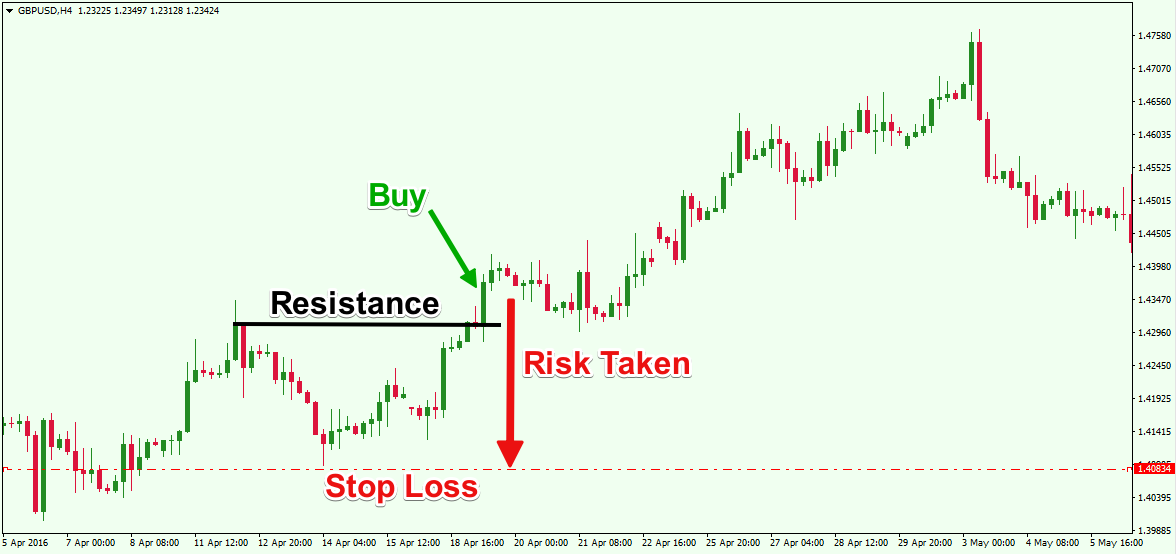
Retail data shows 80% blow accounts from no stops or chasing losses. Over-optimizing curve-fits future fails.
Why repeat them? Lack of routines fosters inconsistency.
Besides that, skipping broker spread costs distorts metrics.
- Test strategies on demo with real spreads first.
- Cap trades at 3 open positions to curb overtrading.
- Audit monthly for slippage deviations over 2 pips.