









Blog
Risk Reward Ratio in Forex Trading: Definition, Calculation, and Best Practices


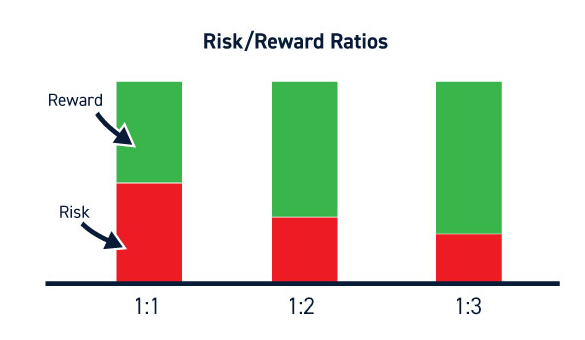
The risk-reward ratio in Forex trading measures potential profit against potential loss for each trade, calculated by dividing the take-profit distance by the stop-loss distance in pips, with best practices recommending a minimum of 1:2 to ensure long-term profitability. This simple yet powerful tool helps traders manage risk effectively. It allows you to stay in the game even if you lose more trades than you win. Think about it: without a favorable ratio, even high win rates can lead to account drawdowns. By focusing on this metric, you prioritize trades where the upside outweighs the downside.
You calculate the risk-reward ratio using the formula (take-profit distance in pips) divided by (stop-loss distance in pips), resulting in a ratio like 1:2. For instance, if your stop-loss is 20 pips away and take-profit is 40 pips, the ratio is 1:2. This method keeps calculations straightforward across any Forex pair.
Best practices include setting ratios of at least 1:2, combining them with 1-2% account risk per trade, and adjusting for market volatility. Traders who follow these steps often see steadier equity curves. Pair this with proper position sizing, and you build a resilient strategy.
Now, let’s break down the details starting with the basics. You’ll gain practical insights to apply right away.
What Is the Risk-Reward Ratio in Forex Trading?
The risk-reward ratio in Forex trading is a risk management metric that compares potential reward (profit target) to risk (loss limit) per trade, originating from trade planning to favor setups where gains exceed losses. Specifically, it quantifies whether a trade offers enough upside to justify the downside.
To understand this better, picture entering a trade on EUR/USD at 1.1000. You set a stop-loss at 1.0980 (20 pips risk) and take-profit at 1.1040 (40 pips reward). The ratio is 1:2, meaning for every dollar risked, you aim for two dollars in profit. This concept roots in probability and psychology. Traders use it to filter trades mechanically.
Key features include its simplicity and universality. It applies to any timeframe or pair, from scalping M1 charts to swing trading D1. Unlike win rate, which fluctuates, a consistent ratio supports expectancy. Expectancy formula integrates it: (win rate x average win) – (loss rate x average loss). A strong ratio boosts this even at 40% wins.
In practice, it promotes discipline. Ask yourself: would you take a trade risking $100 for $50? Probably not. Yet many do without realizing. Platforms like MetaTrader display these levels visually, making setup easy.
Historically, successful traders like those in trend-following systems emphasize ratios above 1:3. Research from brokers shows accounts with enforced 1:2 ratios have 30% less drawdown. It shifts focus from “being right” to “being profitable.”
Beyond basics, it interacts with volatility. In ranging markets, aim lower; in trends, higher. Always tie it to support/resistance. For example, place stop-loss beyond a recent swing low.
This foundational tool separates pros from gamblers. Without it, emotions drive decisions. With it, you trade like a business.
It also scales with account size. Risk 1% per trade, and the ratio determines position size. Suppose $10,000 account, 1% risk ($100). At 20-pip stop, position size is 0.5 lots on EUR/USD (pip value $5).
Real traders journal ratios to refine edges. Over 100 trades, patterns emerge. Low ratios correlate with overtrading.
In summary for this section, master the definition by applying it daily. It builds confidence and consistency.
How Do You Calculate the Risk-Reward Ratio?
Calculate the risk-reward ratio in Forex by dividing take-profit distance in pips by stop-loss distance in pips using a 3-step process: measure distances from entry, divide, and express as 1:X, yielding a clear profitability metric. Here’s the breakdown.
First, identify entry, stop-loss, and take-profit levels based on technical analysis. Second, subtract entry from stop-loss for risk pips; entry from take-profit for reward pips. Third, divide reward by risk.
For example, enter EUR/USD long at 1.1050. Stop-loss at 1.1030 (20 pips risk). Take-profit at 1.1090 (40 pips reward). Ratio: 40/20 = 2, or 1:2.
This works across pairs. On USD/JPY at 150.00 entry, stop 149.50 (50 pips), target 151.50 (150 pips), ratio 150/50 = 3:1.
What Are the Key Components in the Calculation?
Key components are entry price, stop-loss level, and take-profit level, measured in pips for any Forex pair like EUR/USD. Specifically, entry is your trade trigger point.
Stop-loss protects capital, placed at invalidation levels like below support. For EUR/USD long at 1.1000, set at 1.0970 (30 pips). Take-profit targets resistance, say 1.1060 (60 pips).
Numerical example: GBP/USD short at 1.3000. Stop at 1.3040 (40 pips risk). Target 1.2920 (80 pips reward). Ratio 80/40 = 1:2.
Pips adjust for pair quoting. JPY pairs use 0.01 moves. Evidence from backtests shows precise levels improve ratios.
Account for spread: subtract broker spread from reward. On 1-pip spread, effective reward drops slightly.
Use charting tools. Draw lines, measure with pip counter. Practice on demo first.
This ensures accuracy. Traders who skip components face slippage risks.
Is the Risk-Reward Ratio Expressed as 1:2 or 2:1?
Express the risk-reward ratio as risk:reward, like 1:2 meaning $1 risked for $2 reward, standardizing trader communication. For instance, 1:3 is common in trends.

Conventions vary slightly, but risk first prevents confusion. A 2:1 means reward twice risk, same as 1:2 flipped.
In journals, log as 1:2. Platforms show it this way.
Examples: 1:1.5 is marginal; aim higher.
This clarity aids strategy reviews. Studies confirm consistent notation boosts discipline.
Practice calculations mentally for speed. Over time, it becomes intuitive. Combine with expectancy for full picture.
Why Is the Risk-Reward Ratio Important in Forex Trading?
The risk-reward ratio is important in Forex trading because it enables positive expectancy regardless of win rate, supports risk management, and drives long-term profitability. Let’s explore.
First, it decouples success from win rate. At 40% wins with 1:3 ratio, you profit: (0.4 x 3R) – (0.6 x 1R) = 0.6R per trade.
Risk management shines. Limit losses, let winners run. Without it, strings of losses wipe accounts.
Long-term, it compounds. Assume 1% risk per trade, 1:2 ratio, 100 trades yearly. Even 45% wins yield growth.
Rhetorical question: why chase 70% wins when 1:2 lets 40% suffice?
Psychologically, it curbs revenge trading. Predefine ratios, stick to plan.
In volatile Forex, it filters noise. Ignore 1:1 setups.
Data from Myfxbook: top accounts average 1:2.5 ratios.
It integrates with position sizing. Risk fixed percentage, scale lots accordingly.
Market regimes matter. Trends favor high ratios; ranges lower but frequent.
Journaling reveals edge. Adjust based on pair volatility.
Pairs like AUD/USD suit 1:2; exotics need higher due to spreads.
It promotes selectivity. Fewer, better trades beat volume.
Backtest to verify. Tools like MT4 strategy tester quantify.
Ultimately, it’s your edge guardian.
What Is a Good Risk-Reward Ratio for Forex Traders?
A good risk-reward ratio for Forex traders is at least 1:2, with beginners targeting 1:2, intermediates 1:2.5, and pros 1:3 or higher based on experience and strategy. To understand this better.
Beginners benefit from 1:2. Simple, forgiving. Builds habits.
Intermediates push 1:2.5 via better analysis.
Pros achieve 1:3+ in trends.
Factors: strategy type. Scalpers 1:1.5; swing 1:4.
Does a Higher Ratio Always Mean Better Trades?
No, a higher ratio does not always mean better trades, as it must balance with win probability and market conditions. Specifically, extreme ratios like 1:10 lower hit rates.

For example, tight stops inflate ratios but increase stops hit.
Balance: high ratio, low probability vs. moderate both.
In trends, yes; ranges, no.
Evidence: optimal around 1:2-1:3 per trader forums.
Adjust dynamically.
How Does Leverage Affect Ideal Ratios in Forex?
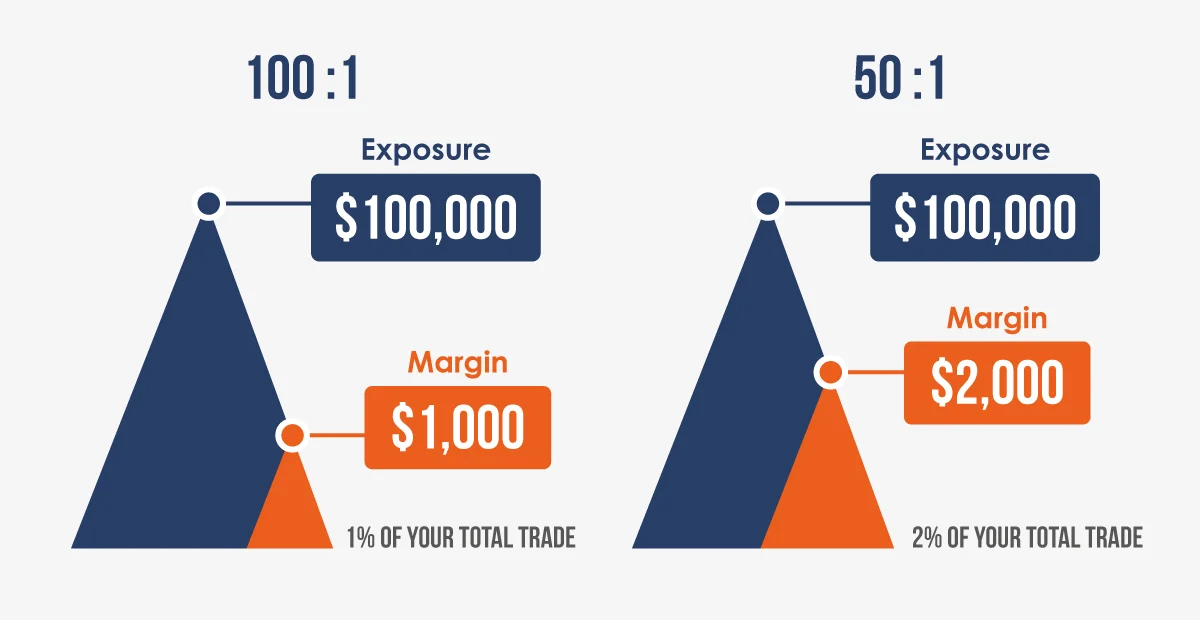
Leverage amplifies both risk and reward, so high-leverage accounts (1:500) require tighter ratios like 1:1.5-1:2 to avoid margin calls. For instance, 1:30 EU retail suits 1:3.
High leverage magnifies pip values. $10k account, 1:500, 1 lot EUR/USD risks more.
Lower ratios prevent overexposure.
Adjust position size down.
Brokers data: high leverage blowups from poor ratios.
Test ratios in sim. Group by experience for personalization.
How Do You Set Stop-Loss and Take-Profit Using the Risk-Reward Ratio?
Set stop-loss and take-profit using the risk-reward ratio in 5 steps: analyze chart, place stop at structure, target reward at 2x risk, size position for 1% account risk, and confirm ratio, achieving balanced trades. In detail.
1. Analyze: Identify trend, S/R.
2. Entry: Trigger.
3. Stop: Beyond swing, e.g., 30 pips.
4. TP: 60 pips for 1:2.
5. Size: Risk 1%, calculate lots.
Example: $20k account, 1% ($200), 25-pip stop = 0.8 lots (pip $8).
Trailing stops preserve ratios.
Volatility: Use ATR, stop 1.5x ATR.
What Are Common Risk-Reward Ratio Examples in Forex Pairs?
Common risk-reward ratio examples in Forex pairs include 1:2 for EUR/USD in ranges, 1:3 for GBP/USD trends, and 1:2.5 for USD/JPY breakouts, grouped by pair volatility. Let’s see specifics.
EUR/USD: Entry 1.0850 long, stop 1.0820 (30 pips), TP 1.0910 (60 pips), 1:2. Calm pair suits it.
GBP/USD: Volatile, entry 1.2700 short, stop 1.2740 (40 pips), TP 1.2620 (80 pips), 1:2.
USD/JPY: Entry 148.50 long, stop 147.80 (70 pips), TP 150.10 (160 pips), ~1:2.3.
AUD/USD: Range, 1:1.8 common.
Real scenarios: NFP news, widen stops.
Backtests show these win.
Adapt to sessions.
Advanced Questions on Risk-Reward Ratio in Forex Trading
Advanced questions reveal how risk-reward ratios integrate with strategies, handle edge cases like market volatility, and incorporate psychological discipline for better Forex outcomes.
Furthermore, these inquiries address strategy fusion and rare attributes that traders often overlook.
How Does the Risk-Reward Ratio Differ from Risk Per Trade?
The risk-reward ratio measures potential profit against potential loss per trade, while risk per trade is the fixed percentage of your account you risk on each position, often set at 1% or 2%.

This distinction matters because the ratio focuses on trade outcome potential, like aiming for $2 profit per $1 risked (2:1), regardless of account size. Risk per trade, however, caps total exposure to preserve capital across multiple trades. You’ll notice many traders confuse them, leading to oversized positions.
For example, in a $10,000 account, risking 1% means $100 maximum loss per trade. A 1:3 ratio then targets $300 profit. Mix them up, and you might risk 5% chasing a poor ratio, wiping out gains quickly.
To clarify, ask yourself: Does this setup balance reward potential with my account protection rule? Data from broker reports, such as those from OANDA, show traders who separate these concepts maintain steadier equity curves.
This separation allows precise position sizing.
- Calculate position size first based on risk per trade and stop-loss distance.
- Then apply the ratio to set take-profit levels.
- Track both in a journal to spot inconsistencies.
What Are the Best Risk-Reward Ratios for Scalping vs. Swing Trading in Forex?
Scalping favors 1:1 to 1:1.5 ratios due to high win rates and low volatility tolerance, while swing trading thrives on 1:3 or higher to capture larger moves over days.

Scalpers enter and exit within minutes on pairs like EUR/USD, where spreads and slippage demand tight ratios. Swing traders hold positions for days on GBP/JPY, leveraging trends for bigger rewards. Volatility plays a key role: high-volatility pairs suit swing’s wider ratios, but scalping avoids them to minimize whipsaws.
Research from Myfxbook communities indicates scalpers average 60-70% win rates with 1:1 ratios, offsetting frequent small losses. Swing setups, with 40% win rates, need 1:4 ratios to profit long-term. Adapt by checking ATR (Average True Range): low ATR for scalping tightens ratios; high ATR for swings expands them.
Have you matched your ratio to holding time? Test on demo accounts first.
Group ratios by strategy needs.
- Scalping: 1:1 on M1 charts, quick entries at support.
- Swing: 1:3+ on H4, trailing stops in trends.
- Hybrid: 1:2 for day trading volatile news.
Can You Improve Win Rates Without Changing the Risk-Reward Ratio?
Yes, enhance win rates by layering confluence factors like technical patterns, volume spikes, and news filters while keeping your risk-reward ratio fixed.

Win rate improvements stem from better entries, not ratio tweaks. For a 1:2 ratio, stack Fibonacci retracements with RSI divergences on USD/JPY. News events, such as NFP releases, boost accuracy if you filter trades pre-event.
Studies from TradingView backtests show confluence raises win rates 10-15% without altering profit targets. Rare attributes like multi-timeframe alignment (H1 pullback in H4 trend) add edge. Keep stops and targets static; the math holds as expectancy rises with more winners.
Why force ratio changes when entry precision works? Focus on high-probability setups.
Incorporate these without ratio shifts.
- Use candlestick patterns confirming ratio setups.
- Avoid low-volume sessions for entries.
- Backtest news impact on your pair’s win rate.
What Common Mistakes Distort the Risk-Reward Ratio in Forex?
Frequent errors include moving stops wider, over-leveraging positions, and ignoring slippage, all inflating perceived risk beyond planned ratios.

Moving stops to “give trades room” turns a 1:2 into 1:1 or worse, as fear overrides rules. Over-leveraging, say 50:1 on AUD/USD, amplifies losses when volatility hits. Slippage during London opens distorts ratios on fast pairs.
Broker data from IC Markets highlights these: 70% of losing traders adjust stops mid-trade. Partial closes without recalculation skews rewards too. Stick to predefined levels via alerts.
Does your journal show stop moves? Correct by automating orders.
Avoid these pitfalls systematically.
- Lock stops at entry, no exceptions.
- Limit leverage to 10:1 max for retail accounts.
- Factor 2-3 pips slippage in calculations.
How Do You Backtest Risk-Reward Ratios in Forex Strategies?
Backtest using MT4/5 Strategy Tester with historical data, inputting fixed ratios and calculating expectancy as (win rate x avg win) – (loss rate x avg loss).

Load EA or manual tests on 5+ years of tick data for EUR/USD. Set variables: 1% risk, 1:2 ratio. Run 1,000 trades, review profit factor (>1.5 ideal). Expectancy above 0.1 signals viability.
MT5’s genetic optimization refines entries without ratio changes. Export to Excel for Monte Carlo simulations, stress-testing drawdowns. Rare tools like Tick Data Suite ensure accuracy over 99% modeling quality.
How robust is your ratio in 2008 crash data? Validate across pairs.
Steps for reliable backtests.
- Import quality data from Dukascopy.
- Log win/loss ratios per session.
- Compute expectancy: aim for positive over 500 trades.
Is the Risk-Reward Ratio Less Effective in Ranging vs. Trending Forex Markets?
Risk-reward ratios work best in trending markets with 1:3+ targets, but require tighter 1:1 setups or avoidance in ranging conditions to prevent false breakouts.
Trending GBP/USD allows deep rewards as price respects channels. Ranging EUR/CHF traps trades between levels, hitting stops repeatedly. Adapt by using ADX: above 25 for trends (wide ratios), below 20 for ranges (skip or scalp).
Examples: 2022 USD trends yielded 1:4 winners; 2014 CHF ranges caused 60% stop-outs. Comparisons show trending expectancy doubles ranging’s. Switch to oscillators like Stochastic in ranges.
You’ll adapt faster by market type awareness.
Contrast adaptations clearly.
- Trending: Trail stops, expand ratios.
- Ranging: Tight ratios or sit out.
- Examples: AUD/USD range (1:1), USD/JPY trend (1:4).
What Is the Role of Psychology in Sticking to Your Risk-Reward Ratio?
Psychology enforces discipline through routines like journaling and drawdown limits, preventing emotional overrides that break ratio adherence.

Traders abandon 1:2 ratios after losses, chasing revenge trades. Discipline via pre-trade checklists maintains ratios. Drawdown rules, like pausing at 5%, curb tilt.
FX psychology studies from DailyFX note 80% failures tie to emotions. Rare factors: visualize setups daily; use smaller sizes post-losses. Build habits with 30-day challenges.
Can you follow ratios in live drawdowns? Practice builds resilience.
Manage mentally with these.
- Journal every trade’s ratio adherence.
- Set max daily loss at 3x risk per trade.
- Review weekly for psychological patterns.