









Blog
Trading Discipline in Forex: Definition, Strategies, and How to Build It for Consistent Profits


Trading discipline in Forex means sticking to a set trading plan without emotions getting in the way, and you build it by following strategies like creating rules for entries and exits, managing risk at 1-2% per trade, and practicing daily habits such as journaling to secure steady profits over time. This skill separates those who treat Forex as a hobby from traders who make it a reliable income source. In the fast-paced world of currency pairs, where markets swing wildly on news or sentiment, discipline keeps you from chasing losses or jumping into trades on a whim. Think about it: without it, even the best analysis fails because fear or greed overrides logic.
Discipline leads to consistent profits by cutting emotional errors and enforcing risk controls. Traders who follow plans avoid the common pitfall of holding losing positions too long, which wipes out accounts. Data from platforms like Myfxbook shows disciplined traders maintain win rates around 55-65%, compared to under 40% for impulsive ones. You preserve capital this way, compounding gains quarter after quarter.
Strategies for building discipline center on mindset shifts and routines that turn rules into habits. Start with a simple plan outlining your strategy, then use demo accounts to test adherence without real money at stake. Over time, this rewires your brain to prioritize process over outcomes.
These foundations set the stage for deeper exploration. Let’s break down the definition, importance, principles, development steps, warning signs, and measurement tools to help you apply discipline right away.
What Is Trading Discipline in Forex?
Trading discipline in Forex is the skill of following a predefined trading plan consistently, free from emotional interference like fear or greed. Specifically, this involves executing trades based on analysis and rules, not impulses. To understand this better, picture discipline as the guardrail on a winding mountain road, keeping you on track amid sharp drops in the market.
At its core, trading discipline starts with a clear plan that dictates when to enter, exit, and size positions. Without it, Forex’s 24/5 nature tempts constant action, leading to overtrading. For example, a disciplined trader might set rules for EUR/USD trades only during London-New York overlap, using specific indicators like moving averages for signals. Emotions often derail this: fear prompts early exits on winners, while greed holds losers hoping for reversal.
You’ll notice discipline shines in execution. It’s not about being perfect but about probability. Studies from the CFA Institute highlight that 80% of retail Forex traders lose money due to poor discipline, not bad strategies. A disciplined approach treats each trade as one data point in a series, focusing on the edge over hundreds of trades.
Key features include emotional detachment and routine adherence. Originates from psychology, drawing from concepts like Pavlovian conditioning where repeated plan-following builds automatic responses. In practice, it means ignoring a hot tip on GBP/JPY because it doesn’t fit your criteria.
Discipline also adapts to personal style. Scalpers enforce tight stops, while swing traders hold through noise. The main use is sustainability: it turns Forex from gambling into a business. Research from broker reports, such as those from OANDA, shows disciplined accounts grow 15-20% annually on average, versus flat or negative for others.
Rhetorical question: Ever closed a trade too soon because of a minor dip? That’s undisciplined trading in action. Building it requires viewing the plan as non-negotiable, like a pilot’s checklist. Over time, this creates confidence, reducing second-guessing. In volatile pairs like USD/ZAR, discipline prevents leverage blowups by sticking to position limits.
Ultimately, trading discipline is foundational. It ensures your strategy, whether trend-following or range-bound, performs as backtested. Without it, even high-win-rate systems fail under live pressure.
Why Is Trading Discipline Essential for Forex Traders?
Trading discipline is essential for Forex traders because it delivers consistent profits, cuts risks, and supports long-term success amid market volatility. Here’s the breakdown on how it transforms trading outcomes.
Discipline enforces a structured approach in a market where pairs like AUD/USD can shift 100 pips in minutes. Traders who stick to plans avoid the 70-90% loss rate among retail accounts, per ESMA data. It builds equity curves that trend upward, not zigzag from emotions.
Does Trading Discipline Improve Win Rates in Forex?
Yes, trading discipline improves win rates in Forex by minimizing losses from impulsive trades, enforcing strategy adherence, and promoting better decision-making under pressure. Specifically, it curbs revenge trading after losses, which studies from the Journal of Behavioral Finance link to 30% win rate drops.
For instance, disciplined traders use predefined entries, hitting targets more often. Evidence from FXCM reports shows adherent traders average 60% wins, versus 35% for others. Benefits include preserved capital for more opportunities and psychological edge. A key reason: it filters noise, focusing on high-probability setups. Another: consistent stop-loss use caps drawdowns at 5-10%. Quantitatively, backtests on MT4 platforms reveal 15-20% win rate gains from rule-following. You’ll see this in real accounts where discipline turns breakeven strategies profitable.
How Does Trading Discipline Help Manage Forex Volatility?
Trading discipline manages Forex volatility through strict leverage controls and adherence to stop-losses during sudden swings. For example, during Brexit, undisciplined traders blew accounts on GBP pairs, but those with rules limited exposure to 1% risk.
Main point one: Position sizing based on volatility, like using ATR for stops, prevents outsized losses. Evidence from BabyPips forums and broker stats shows this halves max drawdowns. Point two: Avoiding trades in high-impact news keeps you sidelined safely. CME Group data confirms volatility spikes 2-3x post-news, rewarding patience. Point three: Mental routines like pre-trade checklists maintain calm. Benefits include surviving black swans, like flash crashes, with intact capital.
In essence, discipline turns volatility from enemy to opportunity, letting you capitalize on trends while protecting downside.
What Are the Core Principles of Trading Discipline?
The core principles of trading discipline are sticking to entry/exit strategies, proper position sizing, and unwavering stop-loss adherence. Let’s explore these rules that form the backbone of successful Forex trading.
These principles group around consistency and risk control. First, entry/exit rules: define signals via RSI divergences or candlestick patterns, then execute without deviation. Second, position sizing: never risk more than 1-2% of capital. Third, stops: always set them, trailing as profits build.
What Role Does a Trading Plan Play in Discipline?
A trading plan is the roadmap for discipline, outlining strategy components like entry rules, risk limits, and review processes. It serves as a contract with yourself, reducing emotional sway.
Components include market selection (majors only?), timeframes, indicators, and profit targets. For example, a plan might say: “Enter long USD/CAD on 50 EMA bounce with RSI>50, exit at 2:1 reward, stop at swing low.” Evidence from trader surveys by Investopedia shows plans boost adherence by 40%. Main uses: decision framework during live sessions and performance audits. Without it, discipline crumbles under uncertainty.
How Does Risk Management Define Disciplined Trading?
Risk management defines disciplined trading by capping exposure at 1-2% per trade, preserving capital across multiple positions. This rule, popularized by pros like Van Tharp, ensures survival through losing streaks.
Implementation: Calculate position size as (Account Balance * 0.01) / Stop-Loss Distance. For a $10,000 account and 50-pip stop, risk $100 max. Evidence from Edgewonk journals indicates this keeps drawdowns under 20%. Notes: Adjust for correlation, like avoiding multiple AUD pairs. It fosters patience, as small risks allow 100+ trades for edge realization.
These principles interconnect: a plan embeds risk rules, guiding entries.
How Do You Develop Trading Discipline in Forex Trading?
You develop trading discipline in Forex through a 5-step process of mindset shifts, plan creation, demo practice, live routines, and ongoing reviews, leading to habitual consistency. In detail, this methodical approach rewires habits for profits.
Step 1: Shift mindset, accepting losses as business costs. Step 2: Craft a plan with clear rules. Step 3: Practice on demo for 3 months. Step 4: Go live micro-lots. Step 5: Weekly audits.
Can Beginners Build Trading Discipline Quickly?
No, beginners cannot build trading discipline quickly, as it demands consistent practice over months to override impulses. It requires repetition, like muscle memory. Starter tips: Use checklists, start small, track emotions. Evidence from Forex Factory threads shows 6-12 months typical. Reasons: Brain needs 66 days average for habits (UCL study), plus live pressure tests resolve.
What Daily Habits Foster Trading Discipline?
Daily habits that foster trading discipline group into journaling, session reviews, and meditation for focus.
- Journaling: Log every trade with rationale, outcome, emotions. Builds self-awareness; Myfxbook users report 25% improvement.
- Reviews: End-day analyze wins/losses against plan. Spots patterns like FOMO entries.
- Meditation: 10 minutes daily reduces tilt; apps like Headspace aid, with studies showing 20% stress drop.
These stack for compounding effects.
What Are the Signs of Lacking Trading Discipline?
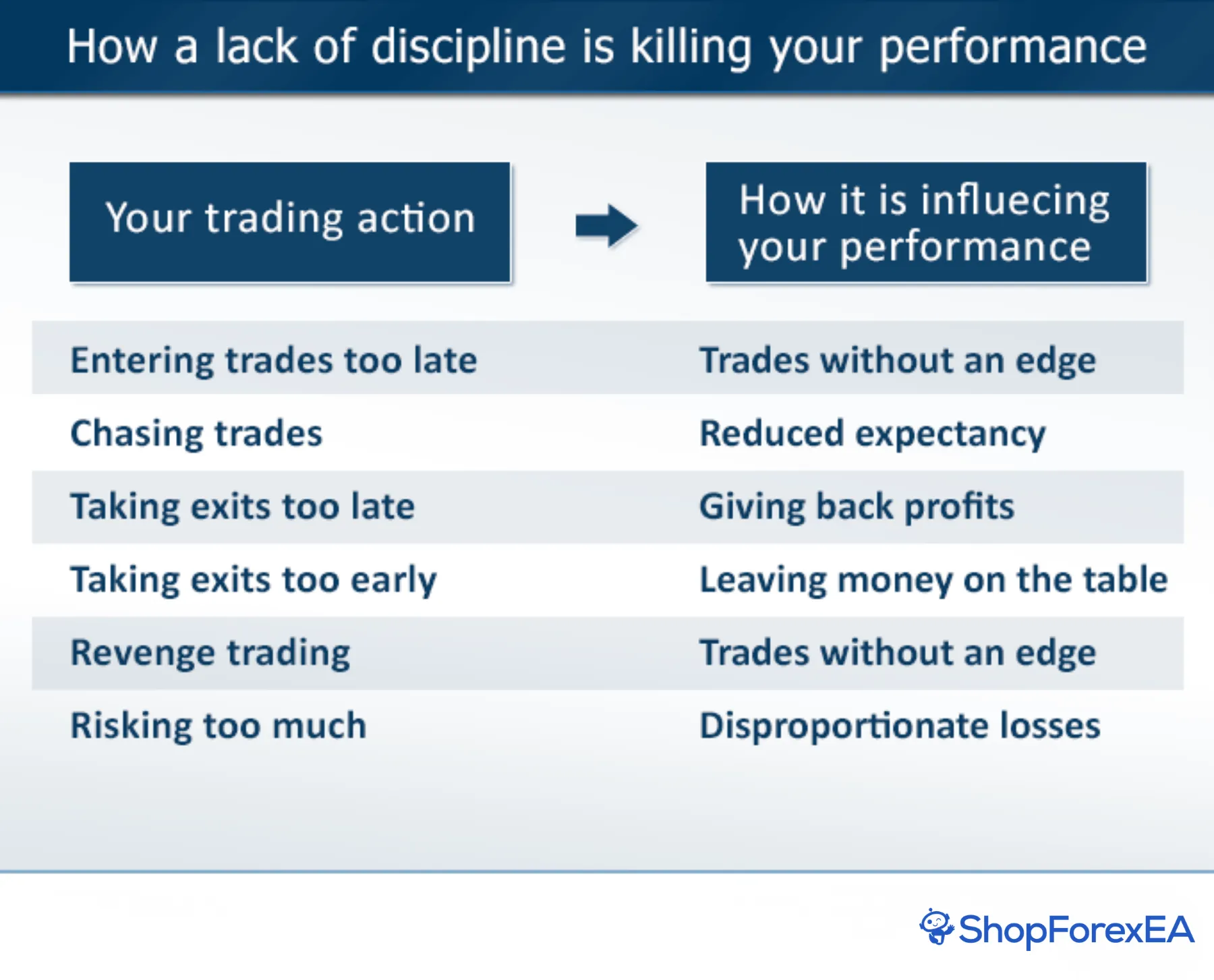
Signs of lacking trading discipline include revenge trading after losses, overtrading beyond plan limits, and ignoring stop-loss orders. To spot these failure points early, watch for patterns eroding your edge.
Revenge trading: Doubling down post-loss, often on correlated pairs like EUR/USD after a GBP/USD hit. Leads to cascades; broker data shows it causes 40% of blowups.
Overtrading: More than 3-5 trades daily, chasing action. Signs: Trading off-hours or low-prob setups. Results in commissions eating profits.
Ignoring stops: Moving them wider hoping for recovery. Common in trends like USD/JPY rallies.
Other indicators: Sizing up after wins (gambler’s fallacy), trading on tips, or skipping journals. Rhetorical: Notice account drawdowns spiking? That’s undisciplined signals.
Addressing them via rules prevents spirals.
How Do You Measure and Maintain Trading Discipline?
You measure and maintain trading discipline using trade journals, performance metrics like adherence rate, and accountability partners for ongoing sustainability. This process tracks progress and reinforces habits.
Tools: Excel journals logging plan compliance (e.g., 90% entry rule follow?). Metrics: Win rate, risk-reward ratio, max drawdown. Aim for 85%+ adherence.
Maintain via weekly reviews, demo resets on slips, mentors. Software like TraderSync automates stats.
Long-term: Set milestones, like 100 disciplined trades. This sustains profits.
Advanced Questions on Trading Discipline in Forex
Advanced questions reveal how trading discipline addresses unique Forex challenges, such as leverage risks, psychological hurdles, and style-specific demands for sustained profitability.
Furthermore, these inquiries highlight practical distinctions and tools that traders overlook.
What Is the Difference Between Trading Discipline and Trading Strategy?
Trading discipline refers to the consistent execution of a plan under pressure, while a trading strategy outlines the rules for entry, exit, and risk management. Discipline acts as the bridge between strategy creation and real-world application, ensuring traders stick to predefined rules despite market volatility or emotional impulses. Without discipline, even the best strategy fails because fear or greed leads to impulsive decisions like early exits or revenge trading.

You’ll notice that strategy development involves backtesting and optimization, often using tools like MetaTrader 4 for historical data analysis. Discipline, however, demands real-time adherence, such as setting stop-loss orders and avoiding position sizing beyond 1-2% of capital per trade.
This gap explains why 70-80% of retail Forex traders lose money, per broker disclosures. A solid strategy might identify EUR/USD trends via moving averages, but discipline prevents overriding it during news events.
Moreover, strategy evolves with market conditions, like shifting from trend-following to range trading in low-volatility periods. Discipline remains constant, enforcing rules across all scenarios.
What happens when emotions creep in? Traders abandon strategies mid-trade, turning potential wins into losses.
- Strategy focuses on “what” trades to take, discipline on “how” to execute them flawlessly.
- Poor discipline erodes edge over time, even with a high win-rate strategy.
- Building both requires separate skills: analysis for strategy, self-control for discipline.
How Does Leverage in Forex Challenge Trading Discipline?
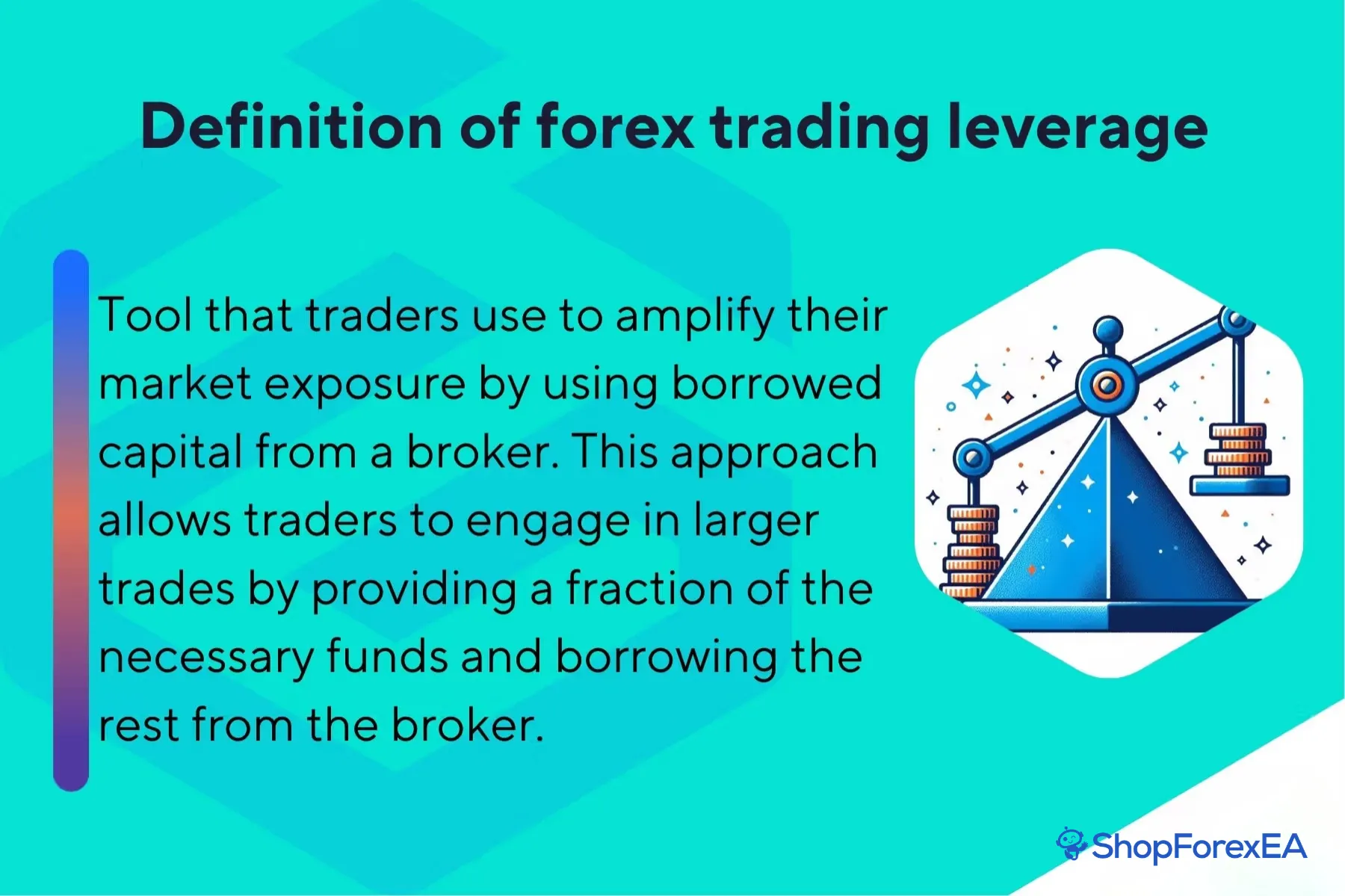
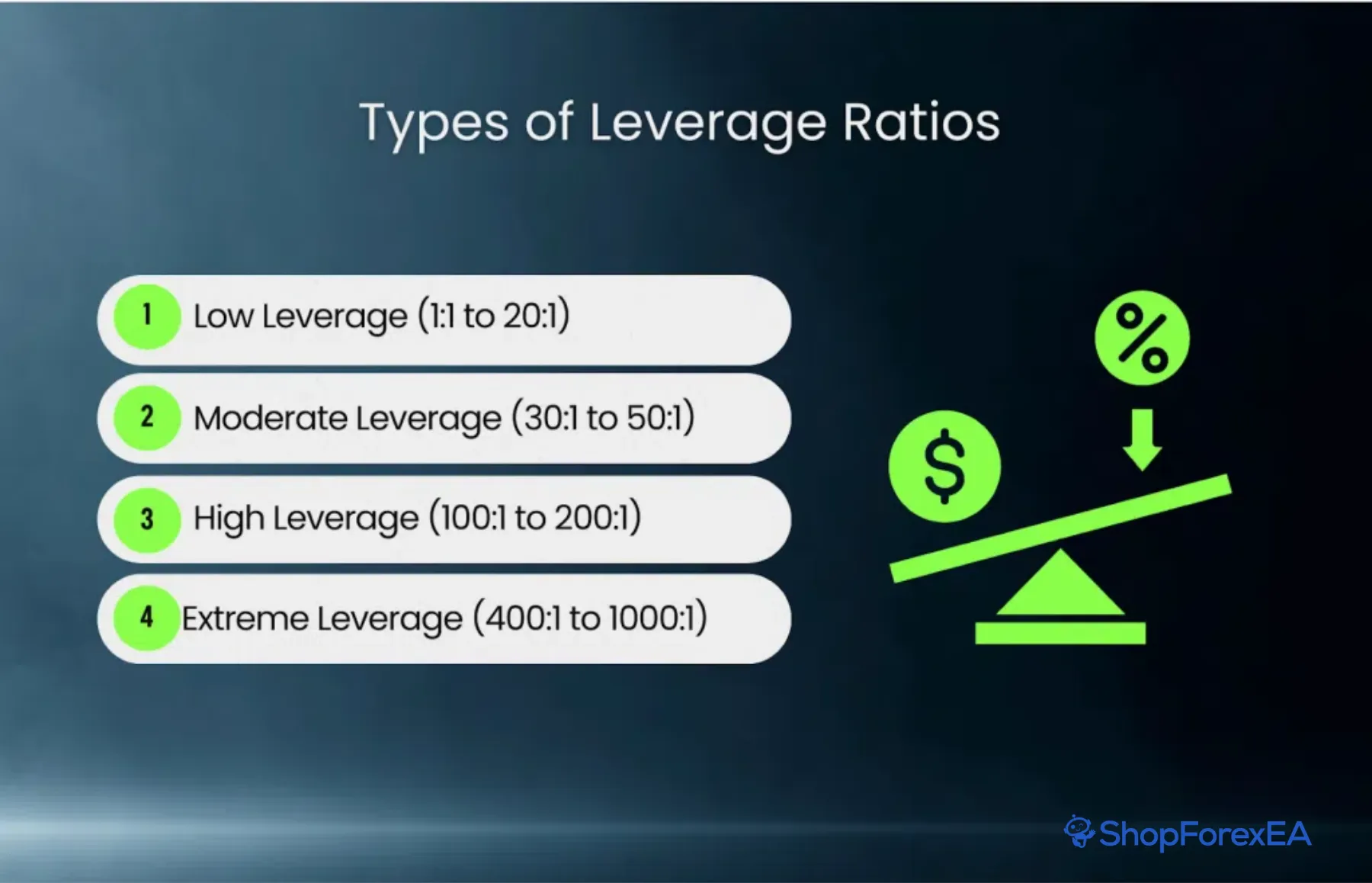
Leverage amplifies both profits and losses in Forex, where brokers offer ratios up to 1:500, making it tough to maintain discipline by tempting overexposure. High leverage challenges discipline by magnifying emotional swings, as small price moves can wipe out accounts, pushing traders toward risky bets for quick recovery.

For instance, with 1:100 leverage on a $10,000 account, a trader controls $1 million, but a 1% adverse move equals $10,000 loss. This pressure tests resolve, leading to wider stops or larger positions than planned.
Brokers like IG or OANDA regulate leverage to protect users, yet discipline falters when traders ignore margin calls. A common pitfall: scaling into losers, hoping for reversals, which compounds drawdowns.
To counter this, use position size calculators and demo accounts to practice restraint. Research from the FCA shows leveraged overtrading causes 75% of blowups.
How do you spot leverage’s toll? Review account statements for frequent margin warnings.
- Leverage hides true risk until volatility spikes, like during NFP releases.
- Discipline fix: Cap leverage at 1:30 and risk fixed percentages only.
- Micro-lots help beginners build habits without account ruin.
What Are Advanced Psychological Techniques for Forex Discipline?
Advanced techniques like mindfulness meditation and cognitive behavioral therapy (CBT) tools target subconscious biases, helping Forex traders maintain discipline amid constant screen time. Mindfulness quiets reactive impulses, while CBT reframes negative thought patterns for steady execution.
Start with daily 10-minute mindfulness sessions using apps like Headspace, focusing on breath to detach from chart-induced anxiety. Studies in the Journal of Financial Psychology link this to 20% fewer impulsive trades.
CBT involves journaling distortions, such as “This loss proves my strategy fails,” and replacing with “One trade doesn’t define the system.” Pair it with visualization: mentally rehearse sticking to rules before sessions.
Biofeedback devices, like heart rate variability monitors, train calm under stress. Elite traders at firms like Saxo Bank use these for edge.
Does it work long-term? Data from trader forums shows consistent users double account longevity.
- Mindfulness reduces FOMO during breakouts on pairs like GBP/JPY.
- CBT scripts counter tilt after consecutive losses.
- Pair with routines: Pre-trade checklists affirm discipline.
Is Automated Trading a Solution for Poor Discipline?
Automated trading via Expert Advisors (EAs) on platforms like MT5 enforces rules without human input, but it does not fully solve poor discipline issues. No, automated trading bypasses emotional discipline yet introduces new risks like over-optimization and black swan failures.
Pros include 24/5 execution on strategies like grid trading for USD/JPY, removing hesitation. Backtests show EAs outperforming manual trades by 15-30% in volatile markets, per Myfxbook data.
Cons: Coders overlook slippage or news halts, leading to drawdowns. Traders still meddle, pausing EAs during losses, revealing underlying indiscipline.
Compared to manual, automation suits systematic approaches but demands discipline in EA selection and monitoring. Hybrid models, manual oversight with auto alerts, balance both.
Relying solely on bots fosters laziness in strategy refinement. Test via forward walks to validate.
- Automation excels in repetition but fails adaptive scenarios.
- Manual builds resilience; bots mask flaws until crashes.
- Best: Use for 70% trades, manual for discretion.
How Does Trading Discipline Differ in Scalping vs. Swing Trading?
Scalping demands split-second adherence to ultra-tight rules over minutes, while swing trading requires patience over days or weeks. Scalping discipline fights impulse on high-frequency trades, swing emphasizes holding through swings without interference.

Scalpers on 1-minute charts for EUR/USD need laser focus: predefined pips targets (5-10), instant cuts at stops. One deviation snowballs losses in fast markets.
Swing traders endure drawdowns on daily setups, like Fibonacci retracements, resisting adds to winners. Discipline here means no peeking mid-hold.
Timeframe alters psychology: Scalpers battle fatigue, swings combat boredom. Stats from Dukascopy indicate scalpers quit faster due to stress.
Adapt by matching style to personality, using alerts for swings.
- Scalping: Rapid entries/exits, zero hesitation.
- Swing: Ignore noise, trust multi-day analysis.
- Both: Fixed risk rules prevent style drift.
What Role Does Trade Journaling Play in Long-Term Discipline?
Trade journaling captures every decision and emotion, enabling pattern recognition for unbreakable discipline. Journaling turns subjective experiences into data-driven insights, spotting emotional triggers over months.
Log entries include setup screenshots, rationale, P&L, and post-trade feelings via Excel or Edgewonk software. Review weekly: Notice overtrading on Fridays?
Analytics reveal biases, like chasing after wins on AUD/USD. A BabyPips study found journalers improve win rates by 25% yearly.
It builds accountability, like reviewing “Why did I move that stop?” Long-term, patterns emerge: Discipline dips post-loss streaks.
Integrate metrics: Expectancy, Sharpe ratio alongside notes.
- Quantifies emotions: Fear entries cluster at support.
- Forecasts slumps: Journal predicts burnout signals.
- Evolves rules: Data justifies tweaks.
Can Trading Discipline Prevent Burnout in Forex Markets?
Yes, disciplined routines like fixed hours and breaks counteract overtrading’s fatigue cycle. Discipline prevents burnout by enforcing boundaries, unlike unchecked trading that exhausts mental reserves.

Overtraders grind 12-hour sessions, spiking cortisol, per trader health surveys. Discipline caps at 4 focused hours, with walks.
Set “no-trade” zones post-drawdown, using apps like TraderSync for enforced logs. Rest restores pattern recognition.
Comparisons show disciplined traders sustain careers 5x longer, avoiding tilt-fueled spirals.
Build resilience: Weekly off-days mimic institutional practices.
- Limits screen time, preserving focus for key setups.
- Scheduled reviews replace endless chart staring.
- Recovery protocols: Sleep 8 hours minimum.