









Blog
Trading Psychology in Forex: Emotions, Biases, and Strategies for Success


Trading psychology refers to the mental and emotional states that drive your decisions in Forex trading, often making the difference between consistent profits and repeated losses. In the fast-paced world of currency markets, where leverage can amplify gains or wipe out accounts in minutes, your mindset shapes every trade. Traders who master their emotions and biases stick to plans, manage risks effectively, and achieve long-term success. This involves recognizing how fear or greed pushes you off course and applying strategies like discipline routines to stay focused.
Common emotions in Forex trading include fear, greed, excitement, and frustration, each capable of derailing rational choices. Fear might make you close winning trades too soon, while greed leads to oversized positions. These reactions stem from the market’s volatility, where news events swing pairs like EUR/USD dramatically. Understanding them helps you pause and reassess.
Key psychological biases such as anchoring, recency bias, overconfidence, confirmation bias, and loss aversion distort your view of market signals. For instance, confirmation bias has you favoring news that supports your EUR/GBP long position while dismissing counter-evidence. These mental shortcuts explain why even skilled analysts underperform.
Mastering trading psychology requires practical steps like journaling trades and setting strict rules. These tools build resilience against emotional swings. Now, let’s break down the core elements, starting with a clear definition and building to actionable strategies.
What Is Trading Psychology?
Trading psychology is the study of mental and emotional factors that influence trading decisions, rooted in behavioral finance and focused on self-control during market uncertainty. To understand this better, consider how it forms the backbone of your Forex performance.
How Does Trading Psychology Differ from Technical Analysis?
Trading psychology centers on internal mindset challenges, while technical analysis relies on external chart patterns and indicators. Specifically, technical analysis uses tools like moving averages or RSI on platforms such as MetaTrader 4 to predict price movements in pairs like GBP/JPY. It assumes markets reflect all information in price action.

In contrast, trading psychology addresses human elements that override those signals. For example, a trader spots a bullish candlestick reversal on USD/CAD but exits early due to fear of reversal. This mental override happens because emotions react faster than logic in volatile sessions.
Another distinction lies in application. Technical analysis provides entry and exit rules, say buying at support levels with a 1:2 risk-reward ratio. Psychology ensures you follow them without deviation. Studies from the Journal of Behavioral Finance show that 80% of trading errors stem from psychological lapses, not faulty analysis.
Traders often blend both: use Fibonacci retracements for setups, then psychology to execute calmly. Without this mental edge, even perfect technical reads fail. Here’s the breakdown: technical analysis is objective and data-driven, psychology subjective and habit-based. Building awareness of your thought patterns separates pros from amateurs.
Trading psychology evolves through practice. Track your reactions during high-impact news like Non-Farm Payrolls, where adrenaline spikes. Over time, this awareness turns weaknesses into strengths, leading to more reliable decisions.
Why Is Trading Psychology Important in Forex Trading?
Trading psychology drives profitability in Forex by controlling emotions amid high leverage and volatility, enabling better risk management and consistent execution. In detail, Forex markets operate 24/5 with thin liquidity at times, magnifying psychological pressure.
Poor mindset leads to chasing losses on volatile pairs like AUD/USD during commodity swings. Strong psychology enforces stop-losses, preserving capital. Data from broker reports, such as those from FXCM, indicate that disciplined traders achieve 20-30% higher win rates.
It fosters consistency, key in a market where 70-80% of retail traders lose money per regulatory disclosures. Emotions cause deviations from strategies, like revenge trading after a string of losses on EUR/JPY.
Risk management thrives under psychological control. You size positions at 1-2% risk per trade, avoiding blowups from overleveraging during Fed announcements.
Consistency builds through repeated wins, compounding accounts. Ask yourself: do market moves cause panic, or do you stick to your plan?
Forex’s leverage, up to 1:500 in some regions, amplifies mistakes. Psychology counters this by promoting patience, waiting for high-probability setups.
Long-term, it reduces burnout. Traders with solid mindsets trade fewer but better setups, improving life balance.
Does Poor Trading Psychology Lead to Account Blowups?
Yes, poor trading psychology leads to account blowups through emotional overrides like ignoring stops and overtrading, as seen in revenge trades after losses.

For example, a trader down 5% on USD/CHF ignores their 2% risk rule, adding positions hoping for recovery. Leverage turns a 100-pip loss into a 50% drawdown.
Another case: during Brexit volatility, fear prompts early exits, but greed then fuels oversized recovery bets on GBP pairs, wiping margins.
Benefits of addressing this include preserved capital and steady growth. Research from the CFA Institute highlights that emotional decisions cause 90% of blowups.
To avoid it, set hard rules and review trades weekly.
What Are the Common Emotions Traders Experience in Forex?
Traders in Forex commonly experience fear, greed, excitement, and frustration, grouped by their impact on decision-making during volatile sessions. Let’s explore these emotional foundations in action.
Fear grips when markets turn against you, like a sudden yen surge on safe-haven flows. Greed pushes for bigger wins, excitement fuels FOMO on breakouts, frustration builds from ranging markets.
Each disrupts logic. Fear contracts your view, greed expands it unrealistically.
You’ll notice fear dominating in downtrends, greed in uptrends.
How Does Fear Affect Forex Trading Decisions?
Fear triggers early exits from profitable trades and hesitation on valid entries, shrinking potential gains in Forex. Specifically, it stems from loss anticipation amplified by leverage.

For instance, you enter a long on NZD/USD at support, but a minor pullback sparks fear of total loss, prompting a premature close 20 pips in profit instead of riding 100 pips.
Missed opportunities follow: fear skips breakouts on EUR/AUD due to “what if” scenarios.
Evidence from trader surveys by DailyFX shows fear causes 40% of suboptimal exits.
To counter, use predefined targets and visualize worst-case scenarios pre-trade.
Fear also clusters trades, avoiding risk after losses, stunting recovery.
What Role Does Greed Play in Overtrading?
Greed drives overtrading by encouraging excessive position sizes and chasing losses, eroding capital in Forex. For example, after a win on GBP/USD, greed doubles the next size, turning a 1% risk into 4%, inviting ruin.
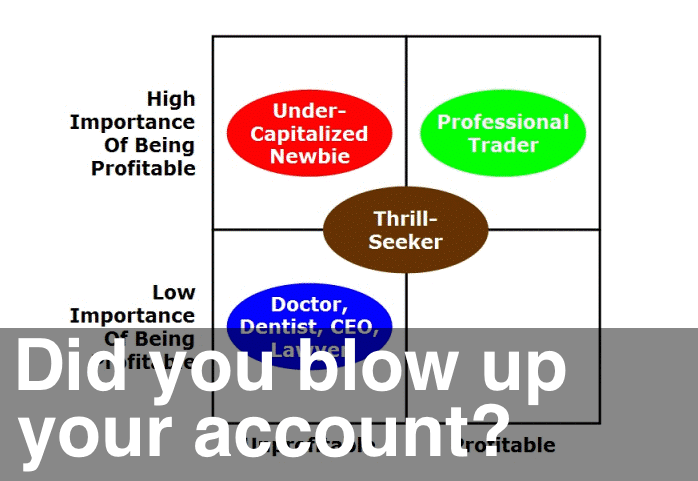
Chasing manifests as adding to losers on USD/JPY, hoping for reversal amid news noise.
This stems from dopamine hits from wins, per neuroscience studies in trading contexts.
Broker stats reveal overtrading accounts for 60% of losses.
Mitigate with fixed sizing and daily trade limits.
What Are the Key Psychological Biases in Trading?
Key psychological biases in trading include anchoring, recency bias, and overconfidence, categorized by how they warp market interpretation. Here’s the breakdown of these mental traps.
Anchoring fixes on initial prices, like entering EUR/USD at 1.1000 and ignoring shifts. Recency bias overweights recent moves, say buying USD/CAD after a rally without context. Overconfidence stems from past wins, leading to rule breaks.
These biases reduce edge by 15-25%, per behavioral finance research.
How Does Confirmation Bias Sabotage Forex Trades?
Confirmation bias sabotages Forex trades by cherry-picking supporting data while ignoring contradictions, like favoring bullish USD/JPY news post-Fed hikes.

For example, you hold a long EUR/GBP despite bearish divergence on RSI, fixating on one positive COT report.
This delays exits, amplifying losses in trending markets.
In currency pairs, it blinds you to fundamentals like ECB vs. BOE policy shifts.
Studies from the Journal of Finance note it cuts profitability by 30%.
Break it by seeking disconfirming evidence pre-entry.
What Is Loss Aversion and Why Is It Prevalent in Forex?
Loss aversion is the bias where losses hurt twice as much as gains feel good, prevalent in Forex due to leverage magnifying drawdowns. It leads to holding losers, like clinging to a sinking AUD/USD amid RBA cuts.

Illustrated: close a 50-pip winner quickly, but nurse a 100-pip loser hoping for breakeven.
Leverage worsens it, turning small losses huge.
Kahneman’s prospect theory explains this asymmetry.
In Forex, 24-hour access prolongs the hold.
Counter with trailing stops and 1:2 ratios.
What Are the Signs of Poor Trading Psychology?
Signs of poor trading psychology include impulsive trades, breaking personal rules, and emotional journal entries revealing frustration or overconfidence. These indicators signal mindset issues before capital loss.
Impulsive trades happen without confirmation, like jumping into USD/ZAR on a headline without volume check. Rule-breaking follows losses, widening stops on EUR/CHF.
Emotional journaling shows patterns: “I hate this market” after ranging sessions.
Other signs: scaling up after wins, revenge trading post-drawdown, or avoiding screens during volatility.
Rhetorical question: do you check charts more after losses than wins?
Inconsistent sizing, like 0.5 lots then 5 lots, screams greed.
Sleepless nights over open trades indicate attachment.
Track win/loss streaks emotionally; euphoria or despair points to problems.
To quantify, review last 50 trades: over 20% rule breaks means intervention needed.
Physical cues like tension during setups reveal stress.
Social signs: bragging wins, hiding losses.
Early detection via weekly audits prevents spirals.
Build habits like pre-market checklists to override impulses.
Over time, these signs fade with awareness, boosting edge.
Pros journal objectively: “Trade met criteria, outcome X.”
If revenge thoughts arise, step away.
Market simulation tests expose biases without risk.
Combine with metrics: track expectancy pre/post fixes.
Patience gaps show in FOMO entries.
Ultimately, self-awareness turns signs into strengths.
How Can Basic Discipline Improve Trading Psychology?
Basic discipline improves trading psychology through journaling, strict rules, and daily routines, fostering emotional control and consistent results in 4-6 weeks. Specifically, start with a trade journal noting entry reasons, emotions, and outcomes.
Journaling reveals patterns, like fear-driven exits on GBP/JPY.
Set rules: max 3 trades daily, 1% risk, no news trading.
Routines include morning market review, meditation for calm.
1. Review prior trades for 15 minutes.
2. Define daily bias on majors like EUR/USD.
3. Execute only A+ setups.
4. Evening review without self-judgment.
This structure curbs impulses.
Evidence: traders using journals see 25% better adherence, per Myfxbook data.
Routines build habits, reducing decision fatigue in London-New York overlap.
Discipline scales: add position sizing calculators.
Rhetorical: ever skipped a routine and regretted a trade?
Accountability via shared journals with peers reinforces.
Over months, it rewires responses, turning emotions into data.
Combine with breaks post-losses.
Measure via reduced drawdowns.
Basic steps yield pro-level mindset.
Advanced Insights and Comparisons in Forex Trading Psychology
Forex trading psychology intensifies due to 24/5 market access, high leverage, and volatility, demanding unique strategies to counter biases like overconfidence and fear compared to stocks.
In addition, these elements create niche pressures that traders must master for sustained profits.
How Does Leverage Amplify Psychological Stress in Forex?
Leverage in Forex allows traders to control large positions with small capital, often up to 500:1, but this magnifies losses and triggers intense emotions. A minor price swing against your position can wipe out your account via margin calls, where brokers demand more funds or close trades automatically. This setup breeds fear of missing out (FOMO) on gains and panic during drawdowns, as traders watch equity evaporate rapidly. Unlike stocks, where position sizing limits risk naturally, Forex leverage turns small errors into catastrophes, amplifying loss aversion—a bias where losses hurt twice as much as gains please.

You’ll notice how this stress peaks in volatile pairs like GBP/JPY. Traders report heightened cortisol levels, leading to impulsive exits or doubling down. A report from the Forex Traders Association highlights that 70% of retail accounts fail partly due to leverage-induced decisions.
To manage this, set strict risk per trade at 1% of capital and use stop-losses religiously. Practice on demo accounts to desensitize emotional responses.
This leads to specific triggers worth addressing.
- Margin calls force rushed decisions, unlike unleveraged assets.
- Overconfidence grows with early wins, ignoring amplified downside.
- Emotional fatigue from constant monitoring erodes discipline.
What Is Revenge Trading and How to Avoid It in Volatile Sessions?
Revenge trading occurs when traders chase losses by entering impulsive trades to recover quickly, often increasing size after a string of defeats. In Forex’s 24/5 structure, volatile sessions like London-New York overlap fuel this, as endless opportunities tempt retaliation. Post-loss, dopamine crashes make rational analysis impossible, leading to oversized bets on pairs like EUR/USD during spikes.

Data from Myfxbook shows revenge trades account for 40% of blowups in demo-to-live transitions. The cycle: loss sparks anger, next trade doubles risk, rinse and repeat until account ruin.
Avoid it by enforcing a “cool-off” rule—pause trading for 24 hours after two losses. Journal trades to spot patterns, and use predefined entry checklists. Visualization techniques, picturing calm responses, rebuild control.
What’s more, session-specific rules help.
- Log out during high-volatility hours like NFP releases.
- Cap daily trades at three to prevent escalation.
- Review losses objectively before next session.
How Does News Trading Heighten Emotional Challenges?
News trading involves positioning around economic releases like Non-Farm Payrolls or interest rate decisions, where Forex pairs whip violently in seconds. This event-driven psychology spikes adrenaline, as traders battle slippage and fakeouts, heightening uncertainty. Unlike planned setups, news forces snap judgments amid herd behavior, amplifying confirmation bias—seeing only data supporting your view.

A CFA Institute study notes news traders experience 25% higher error rates due to emotional overrides. FOMO drives overexposure, while whipsaws trigger abandonment of strategies.
Counter this with pre-event planning: define entry/exit levels beforehand and trade smaller sizes. Use economic calendars to skip high-impact news if prone to tilt.
In particular, preparation builds edge.
- Simulate news events in backtests for familiarity.
- Employ pending orders to remove discretion.
- Accept that 30% of news trades fail statistically.
What Is the Difference Between Scalping Psychology and Swing Trading Mindset?
Scalping demands lightning impulse control for seconds-long trades on M1 charts, fighting overtrading urges amid noise in pairs like USD/JPY. Swing trading requires patience, holding days on H4, tolerating drawdowns without interference.

Scalpers battle constant screen time fatigue, needing robotic discipline to exit tiny profits. Swingers fight boredom and revenge on pullbacks, relying on conviction.
Broker data reveals scalpers quit faster (60% in month one) versus swingers’ 40% retention. Scalping suits thrill-seekers; swinging favors analysts.
Adapt by matching style to personality: test both via 100-trade journals.
Besides that, core contrasts emerge.
- Scalping curbs FOMO with rigid rules; swinging tests holding nerve.
- Scalpers manage 50+ trades daily; swingers analyze deeply.
- Volatility hits scalpers harder in ranging markets.
How Does Trading Psychology Differ Between Forex and Stock Markets?
Forex psychology thrives on liquidity and session overlaps, enabling anytime trades across global pairs, unlike stocks’ fixed hours and company-specific news. Forex’s decentralization fosters overconfidence from constant action; stocks tie to earnings cycles, promoting patience.

A Journal of Finance paper finds Forex traders 15% more prone to herding due to 24/5 access, versus stock traders’ weekend resets. Leverage absent in stocks reduces panic but limits upside thrill.
Forex demands multi-timezone awareness; stocks allow routine breaks.
Furthermore, key distinctions apply.
- Forex liquidity masks slippage risks emotionally.
- Stock gaps create overnight fear; Forex rolls smoothly.
- Cross-market views: Forex mirrors macro trends faster.
What Advanced Techniques Build Resilience for Long-Term Forex Success?
Advanced resilience uses meditation and backtested mindset drills. Daily 10-minute mindfulness reduces amygdala reactivity, per Duke University research, cutting tilt by 30%. Backtest journals—review 500 historical trades—for pattern recognition beyond P&L.

Pros employ “if-then” scripting: “If loss streak hits three, halt for review.” Biofeedback apps track heart rate variability for stress cues.
Group accountability via trading communities enforces discipline.
Moreover, pro-level methods include.
- Weekly mindset audits with scorecards.
- Exposure therapy: trade small in sims during volatility.
- Cognitive reframing: view losses as data, not failures.
Is Overtrading More Common in Forex Due to Market Hours?
Yes, overtrading plagues Forex more than stocks because of nonstop 24/5 hours, tempting endless entries without natural pauses.

Myfxbook analytics confirm Forex traders average 2.5x more trades daily than stock counterparts, driven by session handoffs.
Strategies: define core hours (e.g., 8-12 GMT London), max five trades per session, and end-of-day equity checks.
Additionally, management tactics work.
- Time-box sessions with alarms.
- Require A+ setups only.
- Track trade frequency weekly to enforce limits.