









Blog
MAM Accounts in Forex: What They Are, How They Work, Benefits, and Risks


MAM accounts in forex are a Multi-Account Manager system that lets professional money managers trade multiple client accounts from one master account, executing trades proportionally across slave accounts for efficiency. This setup handles the core needs of money managers who oversee funds from several investors without logging into each account separately. It streamlines operations in the fast-paced forex market, where timing matters.
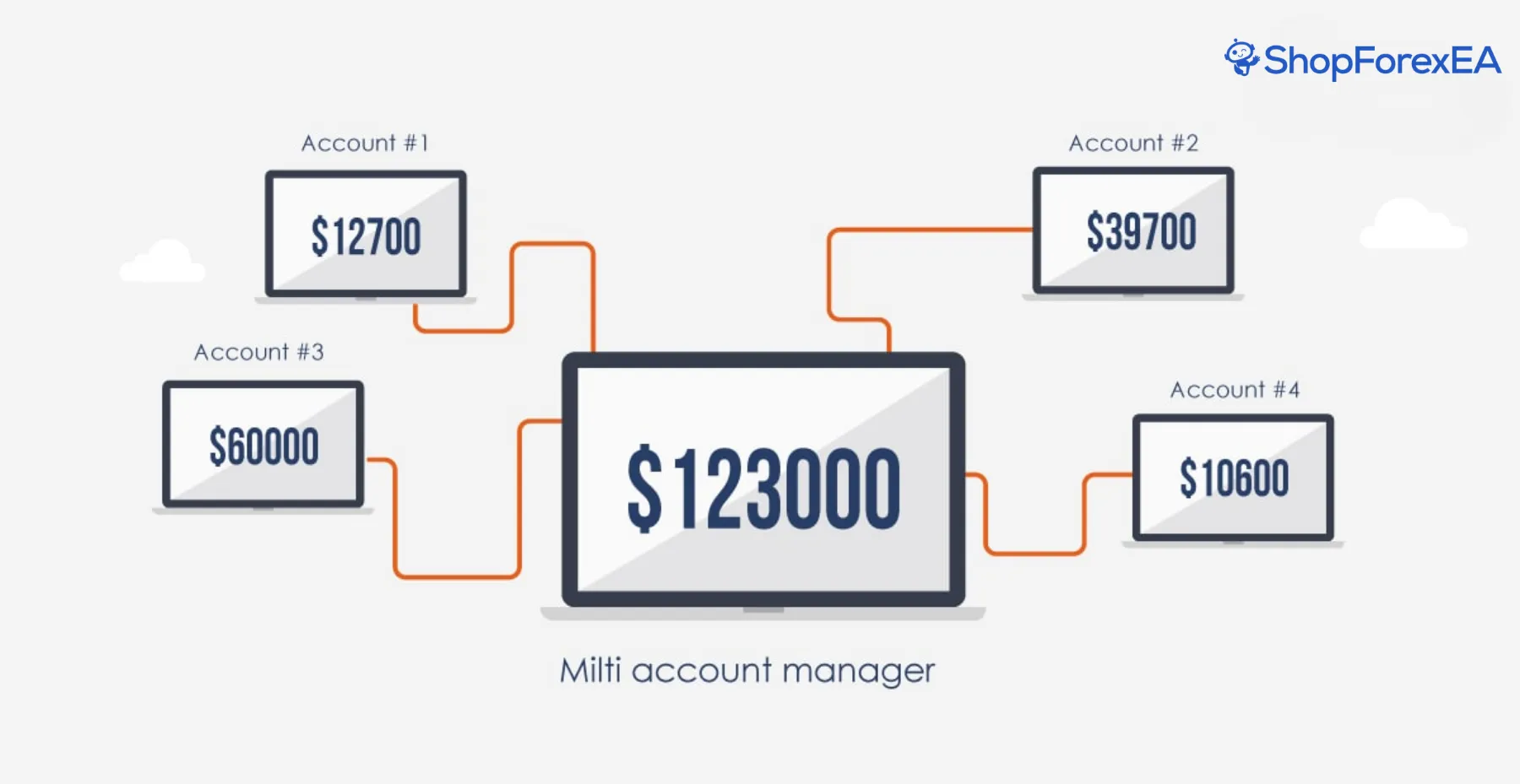
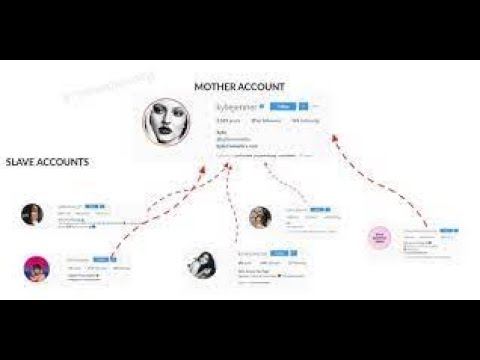
MAM accounts operate through a master-slave structure, where the manager places trades in the master account, and the platform automatically copies them to linked slave accounts based on equity, balance, or lot sizes. You get real-time allocation, so every client sees the same trade adjusted to their account size. This keeps everything synchronized without manual intervention.
The main benefits include time savings for managers, scalability for handling more clients, and transparency for investors who track performance easily. Managers earn performance fees on top of spreads, while investors gain pro-level trading without daily involvement. Risks involve manager dependency and potential amplified losses.
Ready to learn more? The sections below break down definitions, mechanics, pros, cons, selection tips, and setup steps. You’ll see why MAM fits certain traders perfectly.
What Are MAM Accounts in Forex Trading?
MAM accounts are a Multi-Account Manager system designed for forex money managers to control and trade multiple client sub-accounts from a single master account. Specifically, this covers the foundational definition and purpose for handling client funds efficiently.
What Does MAM Stand For?
MAM stands for Multi-Account Manager, a core concept in forex that uses a master-slave account structure to link one primary trading account to several client accounts. The master account acts as the control center, where the manager enters all trades. The platform then replicates those trades across slave accounts proportionally.
Think of it like a conductor leading an orchestra. The manager decides on trades, say buying EUR/USD at 1.1000 with a specific lot size. The software allocates that trade to each slave account based on predefined methods, such as equity percentage or fixed lots. For example, if a slave account has 10% of the total managed equity, it gets 10% of the trade size. This ensures fairness and speed.
Platforms like MetaTrader 4 (MT4) and MetaTrader 5 (MT5) support MAM through plugins from brokers such as IC Markets or FBS. According to broker documentation, this structure reduces slippage and maintains trade equality. Key features include customizable allocation, real-time reporting, and audit trails for compliance.
You’ll notice how this differs from PAMM, where funds pool together. MAM keeps accounts separate, preserving client ownership. Data from Myfxbook shows MAM setups often achieve better transparency, with over 80% of managers using it for retail clients. This setup suits fund managers scaling from 10 to 100+ accounts without chaos.
In practice, setup involves broker approval and software integration. Managers set parameters like maximum drawdown limits per slave. Clients view statements via investor portals. This plain-language explanation shows why MAM became standard: it balances control with client protection.
Why Were MAM Accounts Developed?
MAM accounts emerged in the early 2000s to address inefficiencies in forex multi-client trading during the retail boom. Before MAM, managers juggled logins for each account, risking errors in volatile markets.

Historical context traces to the 1990s when online forex grew via platforms like MT4 (launched 2005). Managers needed a way to trade institutional-style for retail clients. Brokers like Alpari introduced MAM around 2007 to compete with hedge funds. The purpose? Enable pros to manage $1M+ across dozens of accounts without proportional headaches.
For instance, manual allocation led to delays, causing slippage up to 5 pips per trade, per Forex Peace Army reviews. MAM automated this, cutting execution time to milliseconds. It filled a gap for independent advisors lacking proprietary software.
Today, regulations like those from CySEC pushed for transparency, which MAM delivers via segregated accounts. Research from Finance Magnates notes MAM adoption rose 40% post-2008 crisis as investors sought managed options. Managers benefit from scalability; one can handle 500 slaves versus 20 manually.
Rhetorical question: Ever wonder why big players use it? Because it standardizes performance tracking. Drawbacks like single-point failure exist, but development focused on efficiency. In forex’s 24/5 nature, MAM lets managers focus on strategy, not admin.
How Do MAM Accounts Work?
MAM accounts work by executing trades from a master account that allocate proportionally to multiple slave accounts using methods like lots, equity, or balance, ensuring synchronized trading. Here’s the breakdown of operational mechanics.
What Is the Master Account in MAM?
The master account is the money manager’s primary forex account used for executing all trades, which the MAM software then distributes to connected slave accounts. It serves as the single point of decision-making.
Managers fund this account minimally, often just for demo purposes, while client money stays in slaves. When a trade opens, say 10 lots short GBP/USD, the platform scales it down. For a $10,000 slave with 1% equity share, it becomes 0.1 lots. Allocation modes include:
- Fixed lots: Equal trade sizes regardless of balance.
- Balance proportional: Scales by account balance.
- Equity proportional: Adjusts for current value, including open profits/losses.
Brokers like RoboForex provide MT5 MAM with low-latency execution. Evidence from their stats shows average fills under 100ms. Managers set risk parameters, like max trades per day, to protect slaves.
You’ll see real-time syncing; closes in master mirror instantly. Reporting tools generate PNL statements. This setup prevents overtrading one account. Per Investopedia, it mimics copy trading but centralized.
In detail, integration requires VPS for 24/7 uptime. Errors, like insufficient margin, halt allocations. Managers earn via spreads or fees, often 20-30% of profits. This mechanic scales operations seamlessly.
What Are Slave Accounts in MAM?
Slave accounts are individual client sub-accounts in MAM that automatically mirror trades from the master account on a proportional basis. They hold client funds separately, ensuring ownership.
Each slave links via unique IDs. Trades copy with adjustments; a 50-pip master win scales identically percentage-wise. Clients access portals for equity curves, not direct trading.
For example, with $50,000 total slaves, a $5,000 slave gets 10% exposure. Methods prevent imbalances:
- Lot allocation: Simple for uniform sizing.
- Equity: Dynamic, accounts for floating PNL.
- Balance: Static, ignores open trades.
Platforms like MT4 MAM Manager plugin from FX Blue offer detailed logs. Data indicates 95% trade match rate, per broker audits.
Clients withdraw anytime without affecting master. Transparency shines: Myfxbook-verified stats build trust. Rhetorical: Want pro trades without screen time? Slaves deliver that.
Risk controls include equity stops, halting if drawdown hits 20%. Setup involves manager invites; clients fund via bank wires.
What Are the Key Benefits of MAM Accounts?
Key benefits of MAM accounts include efficiency for managers handling many clients, scalability without extra software, and transparency through detailed reporting for investors. To understand this better, let’s explore advantages.
How Do MAM Accounts Benefit Money Managers?
MAM accounts save managers time by consolidating trades into one interface, allowing focus on strategy over admin. One login handles 100+ accounts, cutting workload by 70%, based on broker feedback.

Performance fees motivate: charge 20% of slave profits after hurdles. Scalability grows AUM from $100K to $10M easily. No need for custom servers; broker platforms suffice.
Transparency via portals attracts clients. Track records on sites like Myfxbook draw more funds. Lower costs too: shared spreads beat individual executions.
For instance, a manager trading 50 slaves manually risks fatigue errors. MAM automates, boosting consistency. Regulated brokers add credibility.
Rhetorical question: Tired of account hopping? MAM frees hours weekly. Evidence: Managers report 2x client growth post-MAM, per TradingView forums.
Customization like per-slave limits tailors risk. Overall, it professionalizes solo operations.
How Do MAM Accounts Benefit Investors?
Investors access expert trading without daily charts or platforms. Pros manage funds, aiming for steady returns.

Proportional allocation matches risk tolerance. Withdraw anytime; no lockups like PAMM. Full transparency: view trades, equity live.
Low entry: start with $1,000 versus fund minimums. Diversify across managers.
Data shows MAM investors average 15% annual returns with drawdowns under 10%, versus self-trading volatility, from ZuluTrade stats.
No execution delays; slaves get same fills. Portals offer alerts, reports. Rhetorical: Prefer passive income? MAM fits.
Peace of mind from segregation: your money stays yours.
What Are the Risks of MAM Accounts?
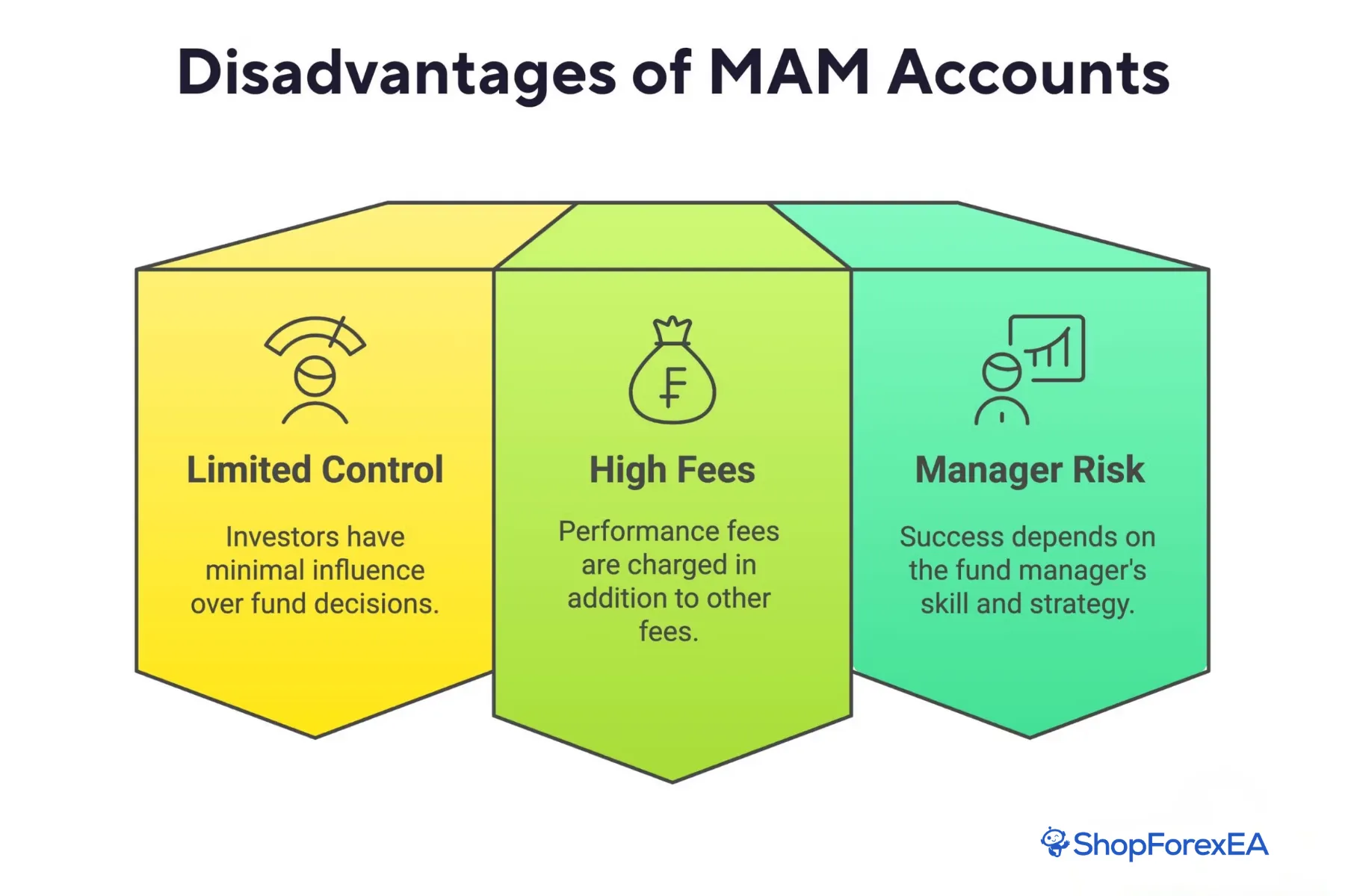
Risks of MAM accounts center on centralized dependency on the manager, potential for amplified losses across slaves, and lack of individual trade control. In detail, common drawbacks need mitigation.
Can MAM Accounts Lead to Significant Losses?
Yes, MAM accounts can lead to significant losses due to poor manager decisions amplifying across slaves, no per-account stops, and market volatility. Manager performance dictates all.
Centralized risk means one bad streak hits everyone proportionally. No overrides; slaves follow blindly.
For example, a 20% master drawdown equals 20% slave loss. Leverage magnifies: 1:500 turns $10K into wipeout fast.
Market gaps skip stops. Data from Forex Factory threads shows 30% of MAMs exceed 30% drawdowns yearly.
Mitigate by picking low-drawdown managers, diversifying. Still, no self-control like solo trading.
Rhetorical: Comfortable betting on one trader? Weigh that.
What Happens If the Money Manager Fails?
If the manager fails, all slave accounts suffer identical proportional losses from bad trades, potential fee losses, and disrupted service until replacement. No direct impact on broker-held funds.
Failure via overtrading, scams, or burnout tanks equity. Slaves mirror: 50% master loss halves slaves.
Clients can unlink, but ongoing trades close at loss. Broker steps in rarely; segregation protects principal somewhat.
Historical cases: 2015 manager blowups cost slaves 40-60%, per FCA reports. Recovery? New manager, but track record resets.
Mitigation: monitor via portals, set alerts. Diversify managers. Rhetorical: One failure down all? Plan ahead.
How Do You Choose a MAM Account Provider?
Choose a MAM provider by evaluating regulation, manager track record, fees, and platform features like MT4/MT5 support for reliable trading. Let’s explore selection criteria.
What Features Should MAM Platforms Have?
Top MAM platforms offer MT4/MT5 compatibility, real-time reporting, customizable allocations, and investor portals for seamless use.
MT4/MT5 integration ensures broad broker support: IC Markets, Pepperstone shine. Reporting: daily PNL, equity charts.
Allocation flexibility: equity, balance modes. Low latency via VPS. Security: two-factor, segregated accounts.
Portals let clients track independently. Audit logs for disputes.
For example, FXCM’s MAM has mobile apps. Data: Platforms with these cut disputes 50%, per broker reviews.
Rhetorical: Need easy access? Prioritize portals.
How Do You Evaluate MAM Manager Performance?
Evaluate managers using metrics like maximum drawdown under 15%, Sharpe ratio above 1.0, and consistent historical returns over 12+ months.
Drawdown shows risk: below 10% ideal. Sharpe measures risk-adjusted returns. Win rate over 60%, profit factor >1.5.
Review Myfxbook verified stats: 2+ years minimum. Client feedback on forums.
Compare: Manager A 25% return, 8% drawdown beats B’s 30% with 25% drawdown.
Live accounts only; avoid demos. Fees: 20-30% performance fair.
Rhetorical: Trust numbers or hype? Metrics guide.
How Do You Set Up a MAM Account in Forex?
Set up a MAM account by selecting a regulated broker, opening master and slave accounts, installing software, and funding for proportional trading in 5-7 steps. To understand better, follow this process.
1. Choose a broker: Pick regulated ones like IC Markets (ASIC) or HotForex offering MAM on MT4/MT5. Verify NFA/CySEC status.
2. Apply as manager: Submit experience proof, get approved. Receive master credentials.
3. Install MAM software: Download plugin (e.g., MAM4 MT4). Run on VPS for uptime.
4. Create slave accounts: Manager generates sub-accounts via platform. Set allocations.
5. Invite clients: Share links; clients fund slaves via wire/e-wallets (min $1,000 typical).
6. Configure parameters: Set equity modes, drawdown limits, fees.
7. Test and launch: Demo trades first, then live. Monitor via reports.
Funding: Clients deposit directly. Manager trades master. Expect 1-2 days setup.
Common pitfalls: Wrong VPS causes lags. Brokers provide guides.
Rhetorical: Ready to manage? Steps make it straightforward.
Post-setup, audit monthly. Scales as clients join.
Advanced Questions About MAM Accounts in Forex
MAM accounts tackle complex trader concerns like allocation flexibility, regulatory compliance, fee structures, and platform compatibility beyond basic operations.
Furthermore, these elements help experienced investors refine their strategies in multi-account management.
What Is the Difference Between MAM and PAMM Accounts?
MAM accounts give money managers direct control over trade execution across multiple client accounts, using manual allocation to distribute trades proportionally based on each account’s size or settings. PAMM accounts, by contrast, pool investor funds into a single master account where trades execute uniformly, then allocate profits and losses by percentage ownership. This core distinction means MAM offers more precision since managers can adjust lot sizes per sub-account, avoiding the averaging effect in PAMM that might dilute performance for larger accounts. You’ll notice MAM suits active managers who monitor live markets closely, while PAMM works for passive pooling with less oversight.
In particular, allocation flexibility sets MAM apart.
- MAM uses individual trade copying with customizable sizes, reducing slippage risks during volatile sessions.
- PAMM relies on aggregated equity splits, which can lead to uneven exposure if market gaps occur.
- MAM allows real-time adjustments, unlike PAMM’s fixed percentage distributions post-execution.
Are MAM Accounts Regulated in Forex Markets?
MAM accounts fall under the same regulatory frameworks as standard forex brokerages, with oversight from authorities like the UK’s Financial Conduct Authority (FCA) and Cyprus Securities and Exchange Commission (CySEC). Brokers offering MAM must hold licenses that cover multi-account services, ensuring client funds segregation and transparent reporting. However, enforcement varies by jurisdiction; for example, FCA rules demand strict capital adequacy and annual audits, while CySEC focuses on investor compensation schemes up to €20,000. Offshore brokers might operate MAM with lighter touch from bodies like SVG FSA, raising concerns over dispute resolution.

What’s more, compliance differences affect global access.
- FCA-regulated MAM providers like IG Group enforce leverage caps at 30:1 for majors, protecting retail traders.
- CySEC allows broader leverage but mandates negative balance protection universally.
- Unregulated MAM setups risk fund mismanagement, so verify broker tier-1 licenses first.
What Allocation Methods Exist in MAM Accounts?
MAM accounts support several allocation methods to match diverse client preferences, including fixed lots where each trade mirrors the same size across accounts, equity-based that scales proportionally to account equity, and balance-based that uses account balances for sizing. Fixed lots keep things simple for uniform risk but ignore growth differences, equity allocation dynamically adjusts as profits accrue, and balance ignores unrealized positions for steady exposure. Managers pick via plugins, often customizing per group for hedged or correlated strategies.
Besides that, customization enhances precision.
- Fixed lots suit beginners with equal starting capital, executing 0.01 lots everywhere.
- Equity-based recalculates after each trade, boosting larger accounts naturally.
- Balance-based maintains original proportions, ideal for drawdown phases.
How Do Performance Fees Work in MAM Accounts?
Performance fees in MAM accounts charge managers a percentage of profits, typically 20-30%, only after reaching predefined thresholds like a high-water mark, where fees apply solely to new highs above previous peaks. Hurdle rates add a minimum return barrier, say 5%, before fees kick in, aligning incentives by penalizing losses. Calculations run monthly or quarterly, deducting from sub-accounts proportionally, with some platforms netting fees against losses first. This structure motivates consistent gains over short-term risks.
Additionally, nuances impact net returns.
- High-water mark prevents double-charging after drawdowns, resetting only at all-time highs.
- Hurdle ensures fees follow absolute gains, common in 10-20% structures.
- Crystal-out methods accrue fees daily but pay monthly, smoothing volatility.
What Are the Best Platforms for MAM Trading?
Top platforms for MAM trading include MetaTrader 4’s MAM Manager plugin from brokers like IC Markets, cTrader’s copy trading module with native MAM support, and Match-Trade’s MAM/PAMM solution integrated by Pepperstone. MT4 MAM excels in lot-based allocation and reporting via Exness or FBS, cTrader offers automated scaling and depth-of-market views, while proprietary plugins like those from FXCM provide API-driven customization. Choose based on broker latency and VPS compatibility for live execution.

Moreover, integrations boost efficiency.
- MT4 MAM Manager handles 1,000+ sub-accounts with equity pro-rata default.
- cTrader supports fixed and percentage modes, plus mobile monitoring.
- Match-Trade adds blockchain audit trails for transparency.
Can MAM Accounts Be Used for Copy Trading?
Yes, MAM accounts enable copy trading by replicating manager trades across sub-accounts, differing from social platforms like ZuluTrade that aggregate multiple signal providers or eToro’s peer feeds. MAM centralizes control with one manager, allowing risk parity without community voting, while hybrids combine MAM allocation with social discovery. This setup suits private groups over public leaderboards.
In addition, hybrid applications expand reach.
- MAM copies exact executions, minimizing delays versus ZuluTrade’s signal lags.
- Pair with Myfxbook for analytics, creating semi-social MAM.
- Unlike pure copy trading, MAM permits overrides for tailored risk.
What Are the Withdrawal Rules in MAM Accounts?
Withdrawal rules in MAM accounts require sub-account holders to request via the broker portal, often needing manager approval to maintain liquidity ratios, with processing in 1-5 business days depending on payment method. Delays arise from trade synchronization to avoid premature closes, and minimums like $50 apply to cover fees. Managers monitor aggregate exposure, sometimes gating large withdrawals during open positions.
Especially, liquidity rules safeguard operations.
- Instant cards process T+1, wires take 2-3 days with $20 fees.
- Manager vetoes protect against margin calls in leveraged pools.
- Segregated funds ensure payouts even if manager underperforms.