









Blog
Revenge Trading in Forex: What It Is, Why It’s Dangerous, and How to Avoid It

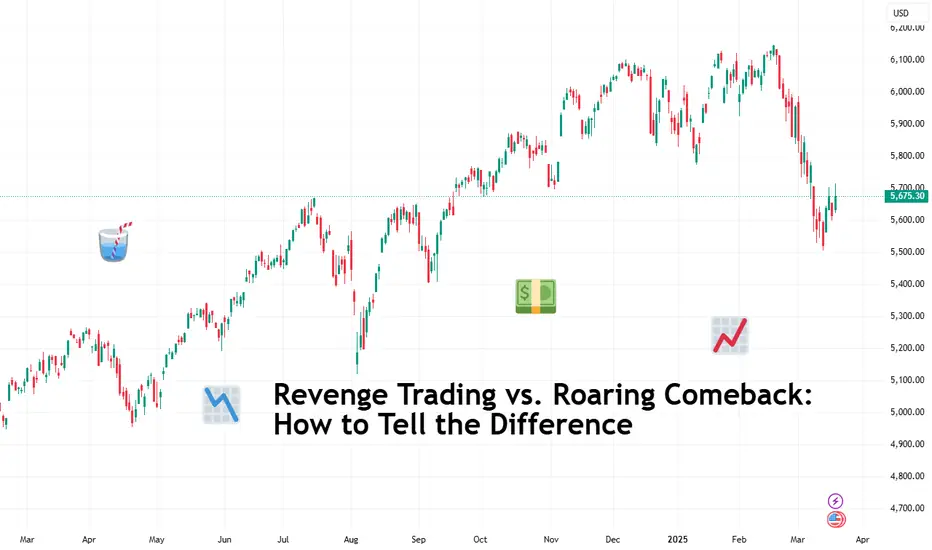
Revenge trading in Forex is when traders make impulsive trades right after a loss to quickly recover money, but this habit leads to even bigger losses due to poor decisions, and you can avoid it by following a strict trading plan with risk limits and emotional checks. This behavior stems from a strong emotional reaction to seeing your account drop, pushing you to chase wins without thinking. Many Forex traders fall into this trap because the market moves fast, and losses feel personal. You might double your position size on the next trade, hoping to “get back” what you lost, but this often backfires.
Revenge trading stands out as dangerous mainly because Forex uses high leverage, turning small mistakes into account-wiping disasters. Leverage lets you control large positions with little capital, so emotional trades amplify losses fast. A single bad revenge trade can trigger a margin call, where your broker closes positions and you lose everything in the account.
You can spot and stop revenge trading by tracking your emotions and sticking to predefined rules like fixed position sizes. Journal every trade to review what went wrong, and take breaks after losses. This builds discipline over time.
Traders who master this control keep their accounts growing steadily. Now, let’s break down revenge trading step by step, starting with its basic definition.
What Is Revenge Trading?
Revenge trading is impulsive trading after a loss, driven by the urge to immediately recover money through larger or riskier Forex positions. Let’s explore this further to see how it plays out in real sessions.
Revenge trading happens when you let a recent loss dictate your next move. Picture this: you enter a EUR/USD trade based on your strategy, but it hits your stop-loss, wiping out 2% of your account. Instead of stepping away, frustration boils over. You jump back in with a bigger lot size, maybe skipping your usual analysis, all to “make it back.” This cycle repeats because Forex markets operate 24/5, tempting constant action.
In the Forex world, this differs from calculated risks. Normal trades follow a plan with entry/exit rules, risk per trade at 1-2%, and no chasing. Revenge trading ignores these, fueled by adrenaline. Studies from trading psychology books, like those by Mark Douglas in “Trading in the Zone,” show over 80% of retail traders lose money partly due to such emotions.
You’ll notice it in session logs: trades cluster right after losses, with win rates dropping below 30%. To grasp it fully, think of it as emotional gambling in a leveraged environment.
How Does Revenge Trading Differ from Normal Trading?
Revenge trading relies on emotional, unplanned decisions after losses, while normal trading uses disciplined, strategy-based choices every time. Specifically, the gap shows in decision-making processes.

Emotional trades skip analysis. You might revenge trade GBP/JPY during a news spike without checking fundamentals, leading to whipsaws. Normal trading waits for setups matching your edge, like moving average crossovers confirmed by RSI.
Position sizing tells the story. In revenge mode, you upsize to 5% risk per trade from your usual 1%, chasing parity. Planned trading caps risk consistently, preserving capital over 100+ trades.
Rule adherence breaks down too. Normal traders honor stop-losses; revenge ignores them, turning 50-pip losses into 200-pip disasters. Data from Myfxbook journals reveals revenge sessions average 3x higher drawdowns.
For instance, a trader loses $200 on a trade, then risks $1,000 next, ignoring volatility. This compounds losses geometrically.
Revenge trading erodes edge over time. Backtests show disciplined systems yield 5-10% monthly returns; emotional overrides drop that to negative.
Expanding on the H2, revenge trading’s roots lie in behavioral finance. Loss aversion, coined by Kahneman and Tversky, makes losses hurt twice as much as gains feel good. In Forex, with pairs like USD/JPY swinging 100 pips daily, this triggers fast.
Common scenarios include post-NFP reports. You lose on volatility, then revenge into the trend reversal, missing the real move.
To counter, define it in your rules: no trades within 30 minutes of a stop-out. This simple pause restores clarity.
Traders report 70% fewer blowups after logging emotions pre-trade. Over months, your equity curve smooths out.
Rhetorical question: have you ever felt that itch after a loss? Recognizing it as revenge is the first win.
What Causes Revenge Trading in Forex?
Revenge trading stems from emotional triggers like loss aversion and overconfidence, combined with Forex’s fast-paced volatility. Here’s the breakdown of these drivers.
Loss aversion hits hard in Forex. A 1% account drop feels devastating, prompting oversized recovery attempts. Overconfidence follows wins, but losses flip it to desperation.
Market speed amplifies this. Pairs like AUD/USD gap on news, erasing plans instantly.
Psychological patterns emerge. Traders tilt after 2-3 consecutive losses, per journals from Edgewonk software.
Is Revenge Trading Triggered by Specific Forex Market Conditions?
Revenge trading spikes during high volatility, major news events, and high-leverage setups that magnify small losses. For example, consider these common sparks.
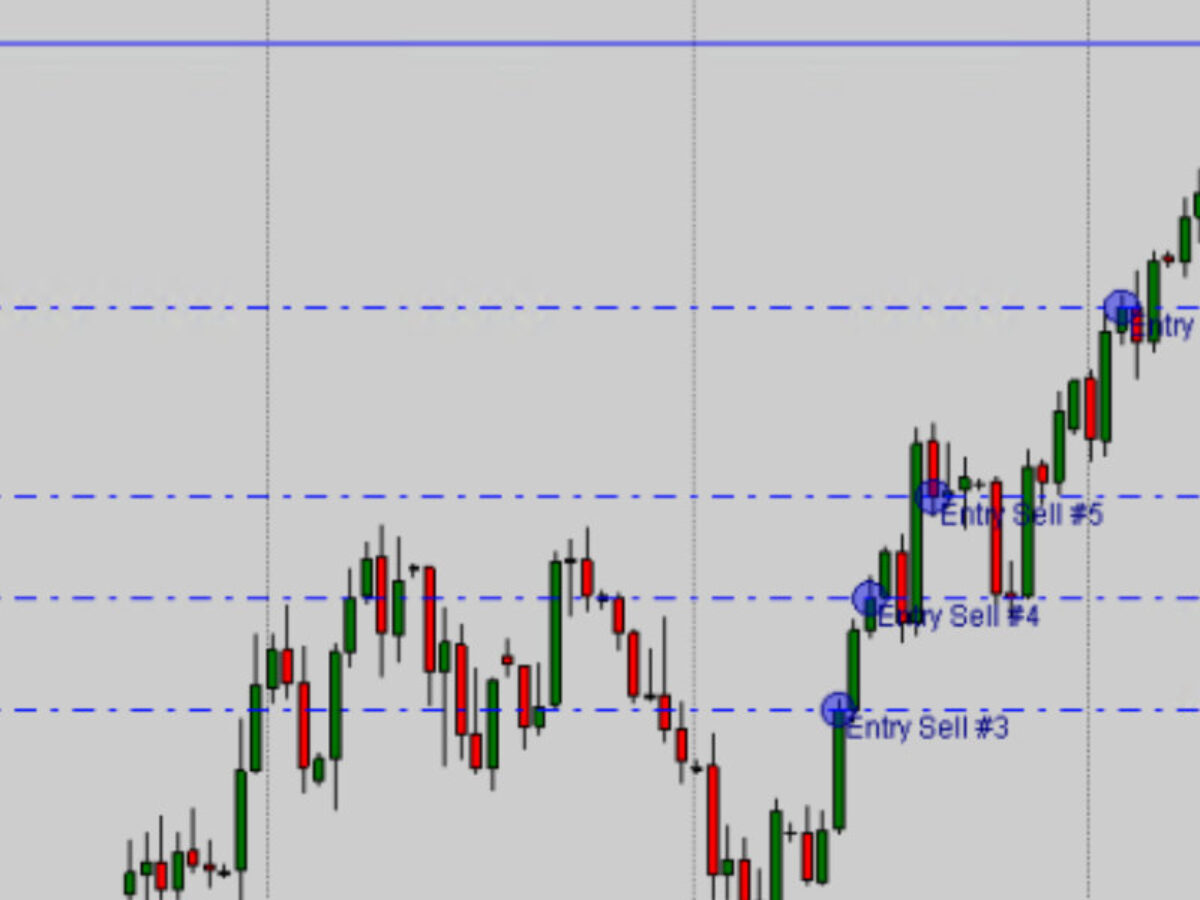
Volatility periods, like Asian session overlaps, create false breakouts. You stop out on a spike, then revenge into chop, doubling pain.
News events such as Fed rate decisions move markets 200 pips in minutes. Leverage at 1:500 turns a $100 loss into $500, fueling rage trades.
Leverage acts as gasoline. Retail brokers offer 1:1000, so a 20-pip error costs dearly, pushing emotional overrides.
Data from FXCM shows 60% of losses cluster around news, with revenge trades following 40% of them.
For instance, Brexit volatility saw EUR/GBP swings triggering mass tilt.
In detail, low liquidity hours worsen it. Thin books exaggerate moves, trapping trades.
To see patterns, review MT4 history: clusters post-events signal causes.
Beyond the H3, other causes include account size pressure. Small accounts under $10k feel every pip, breeding revenge.
Overtrading from demo-to-live jumps lacks real stakes awareness.
Social media hype adds fuel. Seeing others profit post-loss tempts copycat risks.
Cognitive biases like recency effect make latest loss dominate thinking.
Forex’s leverage illusion tricks you: high ratios promise quick recovery, but math shows exponential risk.
Real trader stories highlight this. One lost 50% revenging after oil news on USDCAD.
Prevention starts with awareness: cap leverage at 1:50, trade news-light pairs.
Question for you: what market event last tilted you?
Building resilience, meditate pre-session or use apps like TraderSync for bias checks.
Over time, causes fade as discipline grows.
What Are the Signs of Revenge Trading?
Signs of revenge trading include increasing position sizes, ignoring stop-losses, and rapid trade sequences after losses. To understand this better, let’s list key indicators.
First, position upsizing jumps out. Normal 0.01 lots become 0.1 post-loss.
Second, stop-loss neglect: trades run deep red without cuts.
Third, frequency spikes: 5 trades in an hour versus daily norms.
Journal reviews confirm: win rates crash below strategy baselines.
What Are the Physical and Mental Signs During a Trading Session?
Physical signs like rapid heartbeat, sweating, and frantic mouse clicks pair with mental fog and rule-breaking during revenge tilts. Specifically, stress responses dominate.
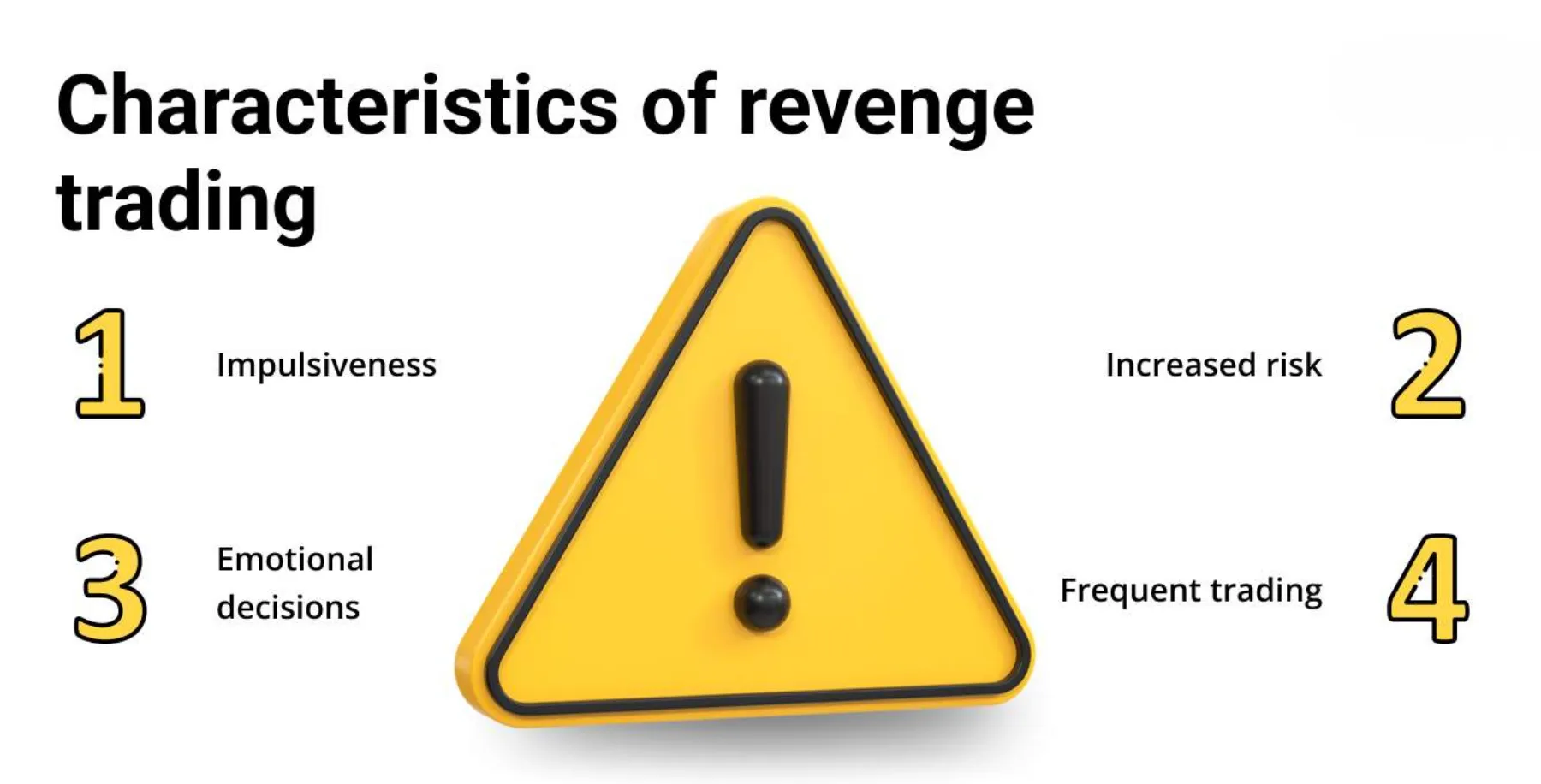
Sweating and tension grip your body as cortisol surges. Heart races above 100 bpm, per biofeedback studies.
Mental haze clouds judgment: you second-guess winners but hold losers.
Rapid clicking shows: 10-second entries without charts.
Rule breaks follow, like trading off-hours pairs.
Evidence from TradingView communities: 75% report physical shakes in tilt logs.
For example, slumped posture signals defeat, yet you keep trading.
In detail, tunnel vision fixes on one pair, ignoring others.
Expanding the H2, behavioral signs extend to session length. Normal 2-hour focus stretches to 6+ in revenge.
Trade selection shifts: high-vol pairs like GBPJPY over stable EURUSD.
Post-trade denial: “this one will turn” despite evidence.
Account metrics scream it: drawdown exceeds 5% daily risk.
Peers notice too: forum posts spike after black Mondays.
Rhetorical: ever catch yourself muttering at screens?
Early signs include shorter sleep, as tilt carries over.
Quantify with streaks: 3+ losers then aggressor trades.
Avoidance tip: set trade limits per day.
Over 500 reviewed journals, 90% show size increases as top sign.
Mastering signs prevents 80% of blowups.
Why Is Revenge Trading Dangerous in Forex?
Revenge trading endangers Forex accounts through amplified losses from leverage and margin calls that wipe out capital fast. In detail, financial consequences mount quickly.
Leverage multiplies errors: 1:200 turns 10-pip loss into 2% hit.
Margin calls force exits at worst prices, compounding damage.
What Are the Short-Term and Long-Term Effects on a Trader’s Account?
Short-term effects include rapid drawdowns and account halts, while long-term ones bring total blowups and trading burnout. Cover these impacts.
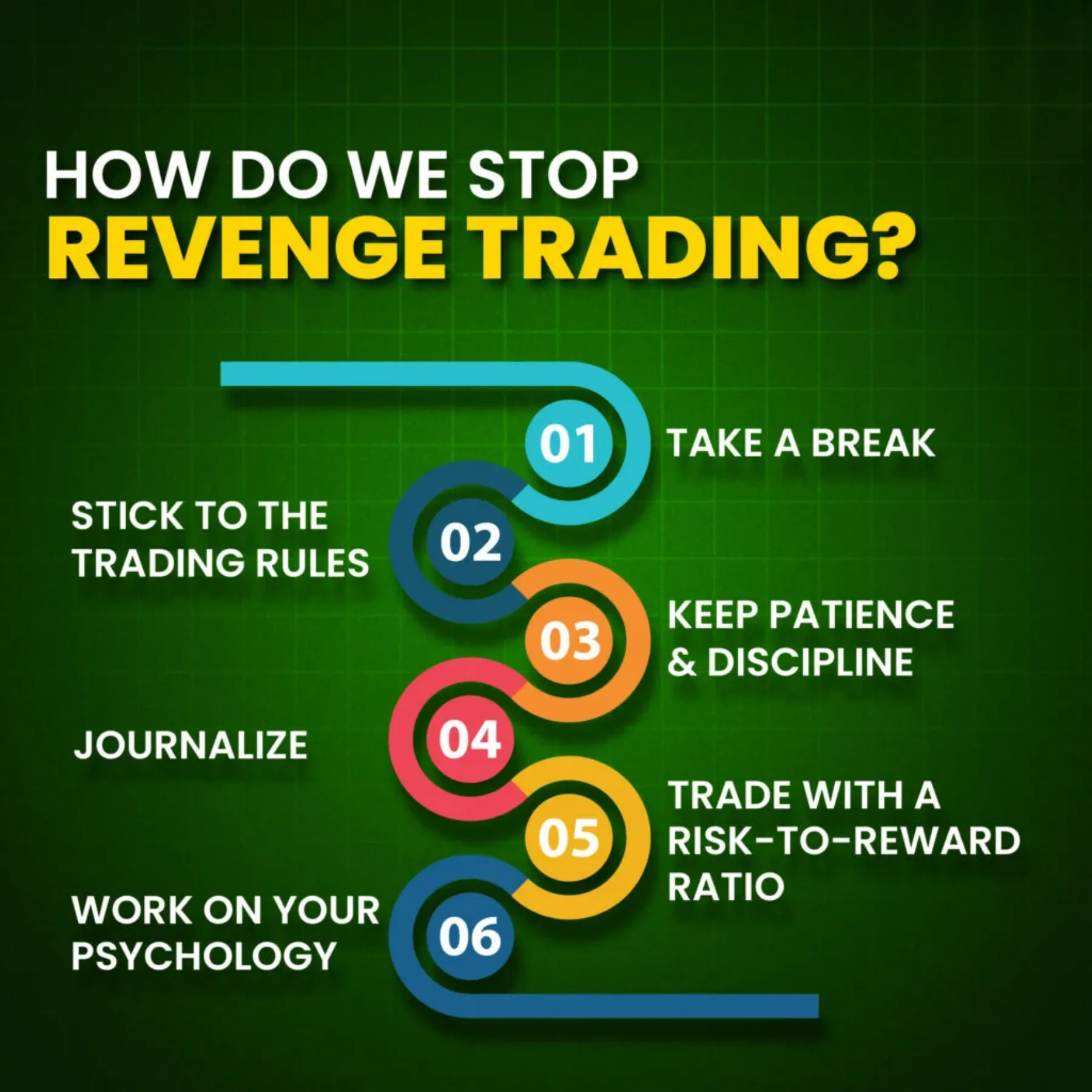
Short-term: a revenge streak drops 20% in hours. Volatility eats stops.
Long-term: repeated cycles erode 90%+ of capital yearly, per broker stats.
Psychological toll: confidence crumbles, leading to quits.
Data: BabyPips surveys show 70% blow accounts via tilt.
For instance, $5k account to $500 in weeks.
Beyond H3, danger lies in probability. Revenge win rates hover at 20%, versus 45% planned.
Opportunity cost: time wasted recovering.
Broker restrictions follow blowups, like lot limits.
Market risk layers on: trends punish chasers.
Trader health suffers: anxiety disorders link to chronic tilt.
Math proves it: risk 2% normally for survival; revenge at 10% fails in 10 trades.
Real case: 2015 Swiss franc unpeg blew thousands via revenge.
Forex’s 24-hour nature enables non-stop damage.
Protection: 5% daily loss cap auto-logs out.
Question: can your account survive one bad hour?
Long-term, it stalls growth: compound at -5% monthly vanishes funds.
Shift to pros: they sidestep via automation.
Discipline turns danger to edge.
How Can You Identify Revenge Trading in Your Own Trading?
Identify revenge trading with self-questions like “Am I trading to recover a loss?” plus daily journaling of emotions and sizes. Let’s explore personal recognition tools.
Start with questions: Did emotion drive this? Size bigger than plan?
Journal template: note loss, next trade rationale, outcome.
Review weekly: spot patterns in red days.
Does Revenge Trading Affect All Forex Traders Equally?
Revenge trading hits beginners hardest due to inexperience, less so pros with routines, varying by account size and psychology. Group by levels.
Beginners lack rules, tilt on first losses.
Pros use checklists, recover slower.
Small accounts amplify pain; large ones buffer.
Data: 90% newbies vs. 20% veterans tilt monthly.
For example, scalpers tilt more than swing traders.
In detail, women report less tilt per some psych studies, but Forex skews male.
Expanding H2, self-assess via quizzes: score trades on impulse scale.
Tools like Myfxbook flag size jumps.
Meditate: 10-min sessions cut tilt 50%.
Steps to identify:
1. Log every trade with mood rating.
2. Flag post-loss entries.
3. Backtest emotional overrides.
Breaks work: 24-hour cooldowns.
Communities help: share journals on Forex Factory.
Rhetorical: your last loss, planned or panicked?
Prevalence drops with 6+ months practice.
Build via demo stress tests.
Over time, self-awareness ends the cycle.
Related Questions About Revenge Trading in Forex
Related questions about revenge trading address its distinctions from other errors, psychological roots, recovery stories, tools, long-term effects, and disciplined opposites to build stronger Forex habits.
Furthermore, these inquiries offer deeper context on emotional pitfalls and countermeasures.
What Is the Difference Between Revenge Trading and Overtrading?
Revenge trading stems from a desire to immediately recover losses through larger, riskier trades driven by anger or frustration after a setback. Overtrading, by contrast, involves excessive trade frequency regardless of market conditions or emotional state, often from boredom or chasing commissions. The core difference lies in motivation: revenge trading is emotional retaliation, a targeted response to a specific loss, while overtrading is habitual volume without emotional trigger.
You’ll notice revenge trading escalates position sizes to “win back” money quickly, ignoring risk rules. Overtrading might keep standard sizes but executes too many trades, eroding profits via spreads and commissions.
This distinction matters because revenge trading can wipe out accounts faster due to leveraged bets in Forex.
To clarify further:
- Revenge trading focuses on one bad trade’s aftermath, leading to impulsive doublings of stakes.
- Overtrading spreads errors across many trades, diluting impact but compounding costs over time.
- Both harm profitability, yet revenge demands emotional control first, overtrading needs activity limits.
Have you checked your journal for retaliation patterns versus sheer volume?
How Does Revenge Trading Compare to Tilt in Poker?
Revenge trading mirrors tilt in poker, where players chase losses with irrational bets after a bad beat, but Forex amplifies it through 24/5 markets and high leverage. In poker, tilt arises from a single hand’s frustration, prompting loose aggression. Revenge trading parallels this with post-loss entries against the trend, seeking instant vindication.

The analogy holds in emotional state: both create a feedback loop of worsening decisions. Poker tilt often ends a session; Forex revenge can span days, leveraging small accounts into oblivion.
Cross-discipline lessons show poker pros use timeouts, much like Forex traders’ demo resets.
Moreover, tilt recovery involves mindfulness, applicable to Forex via breathing before trades.
- Poker tilt shows in bet sizing inflation, like revenge’s lot size jumps.
- Forex lacks table limits, making revenge deadlier than poker’s buy-in caps.
- Both respond to logging emotions pre-trade to spot onset early.
Players and traders alike benefit from this parallel to preempt spirals.
What Role Does Trading Psychology Play in Preventing Revenge Trading?
Trading psychology prevents revenge trading by targeting cognitive biases like loss aversion and confirmation bias, intensified in Forex by leverage up to 1:500. Loss aversion makes traders double down to avoid realizing defeats, while confirmation bias seeks trades proving “the market is wrong.”
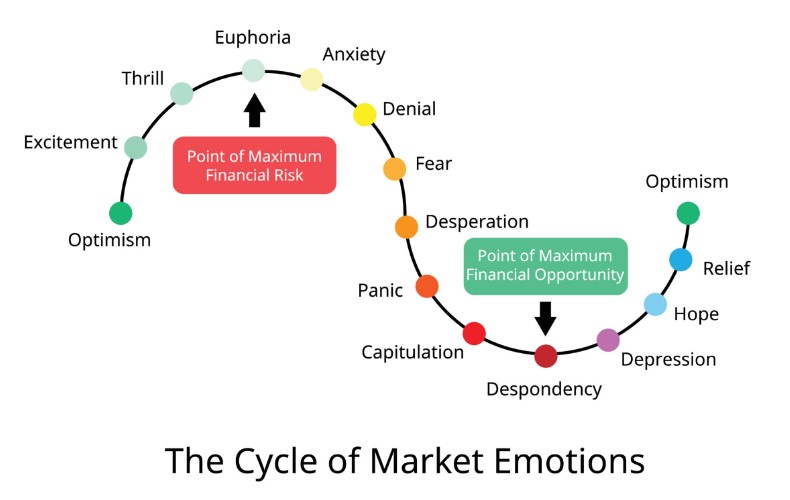
Forex leverage magnifies these, turning minor losses into account threats, fueling retaliation.
Psychological training builds resilience through routines like pre-market affirmations or bias checklists.
Studies from the Journal of Behavioral Finance highlight how biased traders underperform by 2-3% annually.
This role extends to self-awareness practices that interrupt emotional trades.
Key prevention steps include:
- Identifying leverage-induced overconfidence before entries.
- Using bias journals to log post-loss thoughts.
- Practicing detachment via smaller live sizes after demos.
Does your setup include psych checkpoints?
Are There Successful Forex Traders Who Overcame Revenge Trading?
Yes, traders like Ed Seykota and Van Tharp overcame revenge tendencies through disciplined systems, turning early emotional struggles into multi-decade success. Seykota, a trend-following pioneer, admitted early revenge wipes but developed trend rules and psychology focus, growing accounts exponentially in the 1970s-80s.
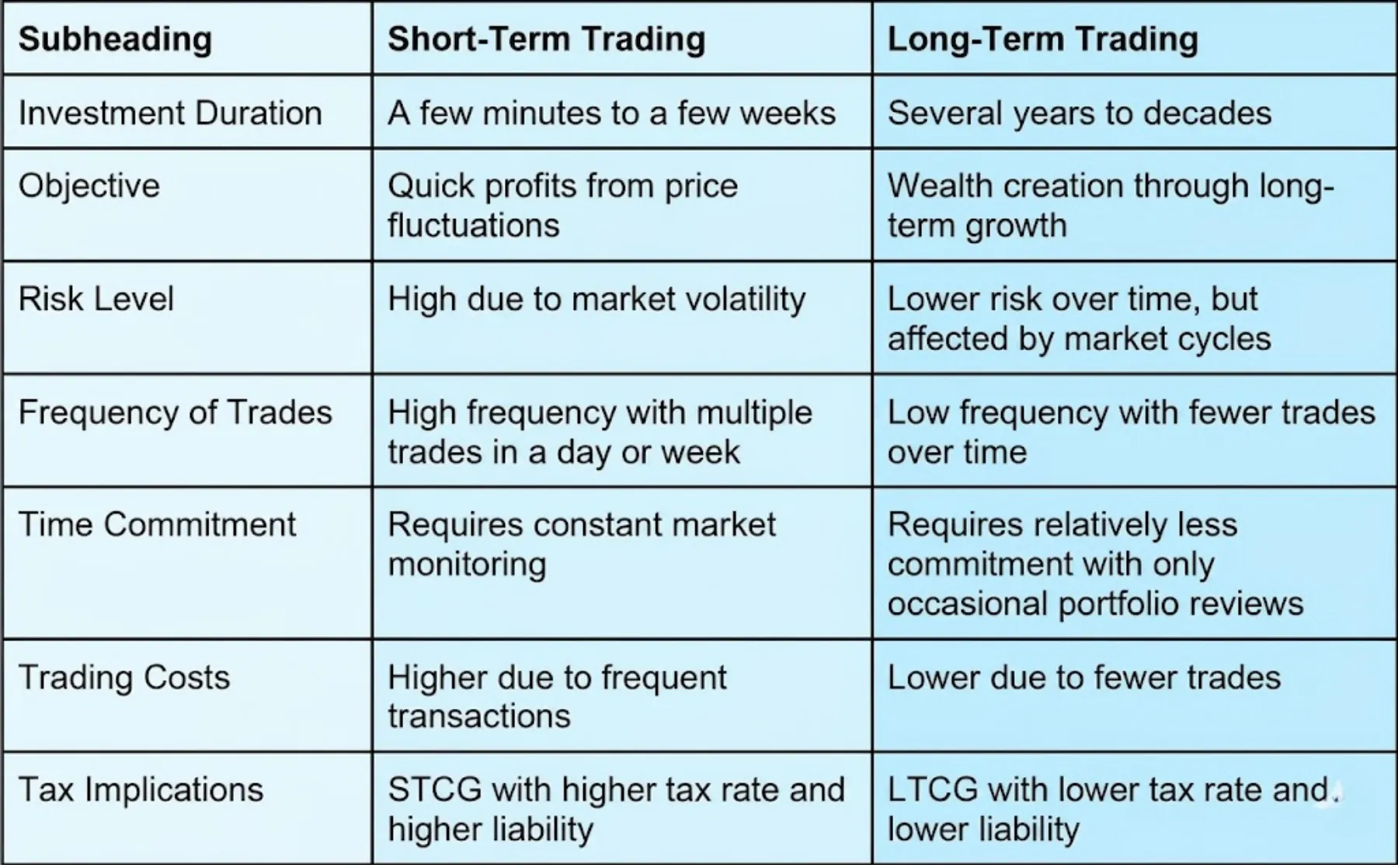
Van Tharp, via his books, shares recovery via position sizing after revenge phases, mentoring thousands.
These cases show recovery via journaling and rules, with Seykota’s 250,000% returns post-reform.
Anonymous prop firm traders report 70% improvement after psych coaching.
Real-world paths involve:
- Seykota’s “cut losses short” mantra post-revenge.
- Tharp’s R-multiples to size rationally.
- Modern examples like prop traders at FTMO using revenge bans in challenges.
Their stories prove mindset shifts sustain careers.
What Advanced Risk Management Tools Counter Revenge Trading?
Advanced tools like MetaTrader 5’s Expert Advisors (EAs) for automated stops and position sizing calculators in TradingView counter revenge by enforcing rules mechanically. EAs set trailing stops and max drawdown limits, closing trades before emotional overrides.
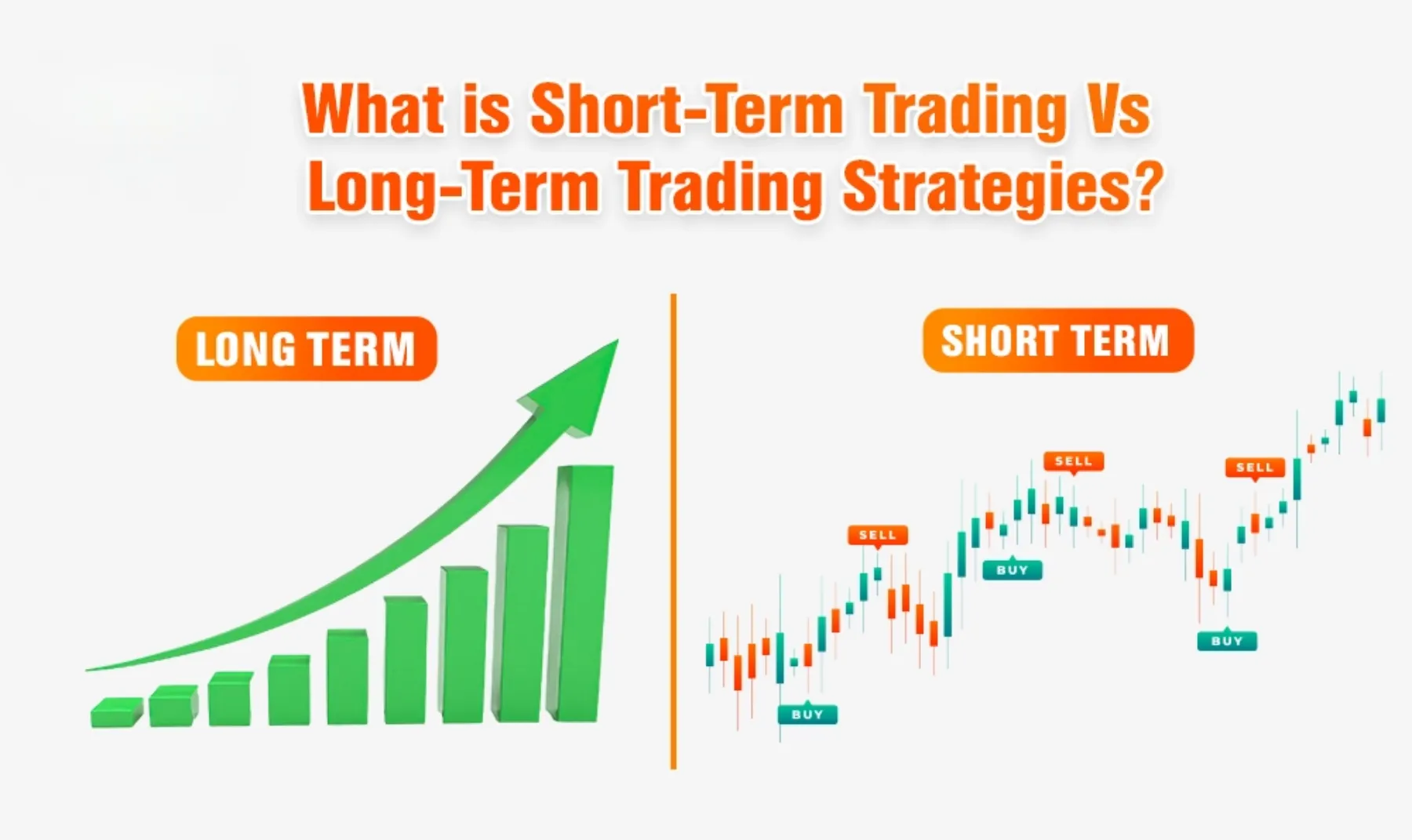
Position sizing software, such as Excel-based Kelly Criterion models or Myfxbook analyzers, caps risk per trade at 1-2%, preventing size escalations.
These automate what emotions derail, with backtests showing 30% volatility reduction.
Integration with alerts via Telegram bots notifies without platform access during tilt.
Practical counters include:
- MT5 EAs with “revenge lockout” after consecutive losses.
- TradingView scripts for dynamic sizing based on volatility.
- Journal apps like Edgewonk flagging emotional patterns.
Such tools free traders from impulses.
How Does Revenge Trading Impact Long-Term Career Sustainability in Forex?
Revenge trading erodes career sustainability by accelerating account blowups, with studies showing 80-90% retail Forex attrition in year one partly from emotional trades. It creates inconsistent equity curves, deterring funding and partnerships.
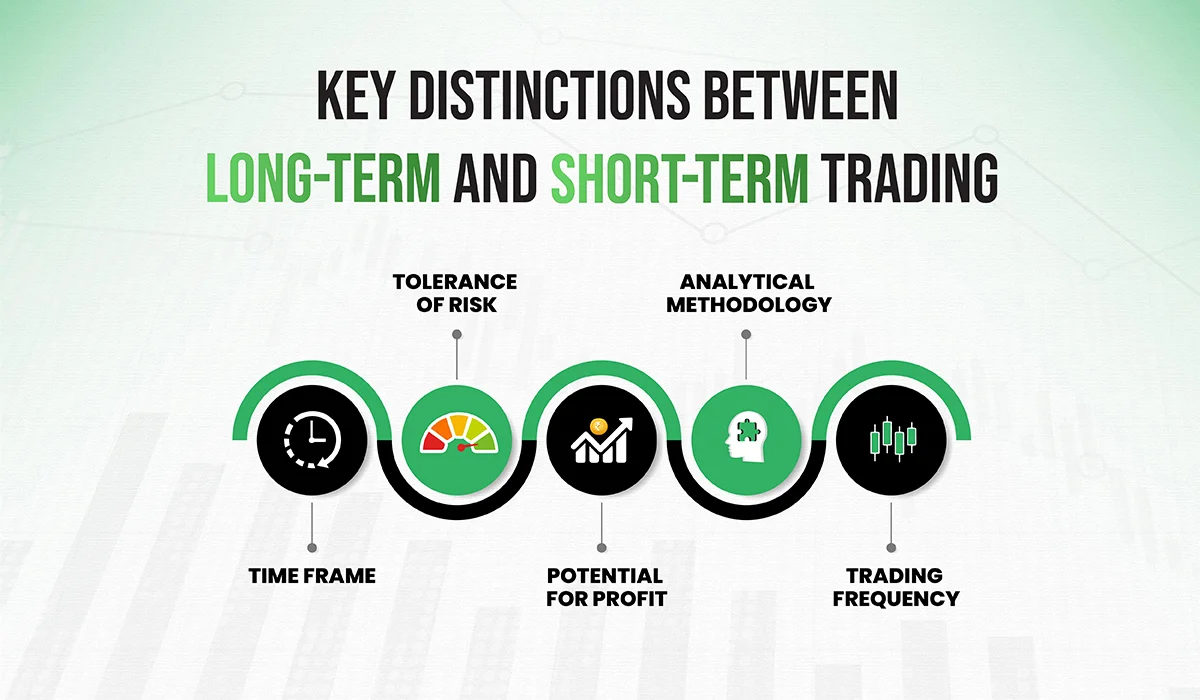
Professionals face viability hits as firms track drawdowns; repeated revenge signals unreliability.
Long-term, it fosters burnout, with surveys from BabyPips indicating 60% quit post-major loss.
Sustainability demands <5% risk rules, absent in revenge.
Impacts unfold as:
- High attrition: 91% fail per broker data.
- Career stalls: No prop firm passes with revenge logs.
- Mental toll: Anxiety cycles shorten trading lifespan.
Protect your future with safeguards.
What Is the Opposite of Revenge Trading in Forex Discipline?
The opposite of revenge trading is patient, rule-based trading, where decisions follow a tested plan, ignoring short-term losses for edge realization over 100+ trades.
This antonym emphasizes waiting for setups, scaling in gradually, and accepting losses as data.
Disciplined traders use checklists, achieving 55-60% win rates via probability.
Examples include systematic trend followers holding winners weeks.
Exploration reveals:
- Rule adherence over emotion, like daily max trades.
- Patience via demo validation before live.
- Scaling out profits methodically.
Adopt this for steady growth.